
Apr . 01, 2024 17:55 Back to list
oem production ptfe hose manufacturer Performance Analysis
Introduction
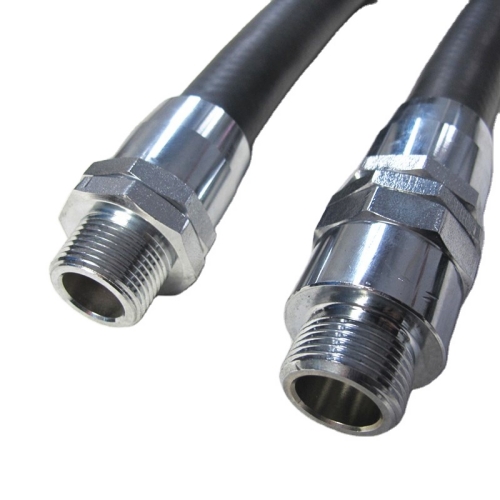
Polytetrafluoroethylene (PTFE) hose, manufactured via OEM production, represents a critical component across diverse industrial applications, including chemical processing, automotive, aerospace, and medical. Its inherent properties – exceptional chemical inertness, high-temperature resistance, and low coefficient of friction – position it as a preferred fluid transfer solution in environments where other materials would rapidly degrade. This guide provides an in-depth technical overview of PTFE hose production, material science, performance characteristics, failure modes, and relevant industry standards. OEM production focuses on tailoring hose specifications (dimensions, pressure ratings, fitting compatibility) to meet specific customer needs, demanding rigorous quality control throughout the manufacturing process. The primary pain point for end-users lies in ensuring consistent performance and longevity of the hose, given the potential for degradation under extreme conditions and the critical nature of fluid containment in many applications. This document aims to address these concerns through a detailed examination of the engineering principles underpinning PTFE hose design and manufacture.
Material Science & Manufacturing
PTFE, (C2F4)n, is a synthetic fluoropolymer of tetrafluoroethylene. Its raw material is derived from hydrofluoric acid. The manufacturing of PTFE hose begins with PTFE resin, typically in granular form. Key physical properties influencing hose performance include a melting point of 327°C, a density of 2.2 g/cm3, and an extremely low coefficient of friction (0.04). Chemical resistance is paramount; PTFE is unaffected by most acids, bases, and solvents. However, it is susceptible to attack by molten alkali metals and certain fluorinated compounds at elevated temperatures. Manufacturing processes vary depending on the hose construction. Extrusion is common for seamless tubing, where PTFE resin is forced through a die under high pressure and temperature (around 380°C). Sintering follows, a process where the extruded tube is heated to a controlled temperature below the melting point, causing the PTFE particles to fuse, creating a dense, homogenous structure. For corrugated hoses, a helical mandrel is used during extrusion to impart the desired wave pattern. Reinforcement layers, such as stainless steel braid, are often incorporated to enhance pressure resistance. Parameter control during sintering is critical; insufficient sintering leads to porosity and reduced mechanical strength, while excessive sintering can cause degradation and embrittlement. Further processing may involve flaring, fitting attachment (crimping, threading, or bonding), and dimensional inspection. Post-sintering cooling rates also impact crystallinity and final product properties.
Performance & Engineering
PTFE hose performance is dictated by several key engineering considerations. Burst pressure, determined by the hose dimensions, wall thickness, and reinforcement type, is a primary specification. Force analysis involves calculating the hoop stress in the hose wall under internal pressure, considering the material’s tensile strength and elongation. Environmental resistance is crucial; while PTFE is chemically inert, prolonged exposure to UV radiation can cause surface degradation, leading to embrittlement. Temperature fluctuations induce thermal expansion and contraction; careful design is needed to accommodate these movements, particularly in systems with rigid connections. Compliance requirements vary by industry. For automotive applications (fuel lines, brake lines), SAE J30R9 and FMVSS standards govern material specifications and performance testing. In the chemical processing industry, hoses must meet FDA standards for food contact applications and adhere to relevant environmental regulations regarding volatile organic compound (VOC) emissions. Functional implementation often involves consideration of fluid compatibility; although PTFE is generally inert, certain aggressive fluids may permeate through the hose wall over extended periods. Electrostatic discharge (ESD) can also be a concern in handling flammable fluids; conductive PTFE hose variants are available to mitigate this risk. Fatigue life, determined by repeated flexing and pressure cycling, is a key parameter in dynamic applications.
Technical Specifications
| Parameter | Unit | Typical Value (Standard Grade PTFE) | Reinforced PTFE (Stainless Steel Braid) |
|---|---|---|---|
| Operating Pressure | PSI | 500 | 2000 |
| Burst Pressure | PSI | 2000 | 8000 |
| Temperature Range | °F | -400 to +500 | -400 to +500 |
| Tensile Strength | PSI | 2000 | 3500 |
| Elongation at Break | % | 150 | 100 |
| Chemical Resistance | Rating (1-5, 5=Excellent) | 5 | 5 |
Failure Mode & Maintenance
PTFE hose, despite its robustness, is susceptible to several failure modes. Fatigue cracking, particularly at flex points, can occur under repeated bending and pressure cycling. This is exacerbated by improper installation or excessive bending radius. Delamination of reinforcement layers can occur due to corrosion of the braid or inadequate bonding between the PTFE and the reinforcement. Degradation due to exposure to high-energy radiation or aggressive chemicals can lead to embrittlement and loss of mechanical properties. Oxidation at high temperatures, although slow, can eventually compromise the PTFE structure. Permeation of fluids through the hose wall, while generally low, can increase with temperature and fluid concentration. Maintenance involves regular visual inspection for cracks, bulges, or discoloration. Avoid sharp bends and ensure proper support to prevent excessive stress. Periodic pressure testing can verify the hose's integrity. If chemical exposure is known, compatibility should be re-verified. Cleaning should be performed with mild detergents and water; avoid abrasive cleaners or solvents. Proper storage is crucial; avoid direct sunlight and extreme temperatures. Replace hoses exhibiting signs of degradation or exceeding their service life. Regular fitting inspections are also necessary to confirm secure connections and prevent leaks.
Industry FAQ
Q: What is the impact of PTFE resin molecular weight on hose performance?
A: Higher molecular weight PTFE resins generally exhibit improved creep resistance, tensile strength, and chemical resistance. However, they can be more difficult to process and may require higher sintering temperatures. OEM manufacturers often select resin grades based on the specific application requirements, balancing performance characteristics with processability.
Q: How does stainless steel braid reinforcement affect hose flexibility?
A: While stainless steel braid significantly increases pressure resistance, it reduces hose flexibility compared to unreinforced PTFE tubing. The braid count (number of wires per inch) impacts this trade-off; higher braid counts offer greater strength but reduced flexibility. Careful selection of braid type and construction is essential to achieve the desired balance.
Q: What testing is performed to ensure batch-to-batch consistency in PTFE hose production?
A: Rigorous quality control testing is performed throughout the manufacturing process. This includes dimensional inspection, pressure testing (hydrostatic and pneumatic), tensile strength testing, elongation testing, and visual inspection for defects. Statistical process control (SPC) is used to monitor key process parameters and ensure consistent product quality.
Q: Can PTFE hose be used with vacuum applications?
A: PTFE hose is generally suitable for vacuum applications, but care must be taken to prevent collapse. Reinforced PTFE hose with a spiral core is often used to provide structural support and prevent implosion under vacuum. The vacuum level and operating temperature should be considered when selecting the appropriate hose construction.
Q: What are the considerations for fitting selection and attachment to PTFE hose?
A: Fittings must be compatible with the PTFE material and the fluid being conveyed. Crimping is a common method for attaching fittings, but the crimp parameters must be carefully controlled to avoid damaging the hose. Threaded fittings should be properly sealed to prevent leaks. Bonding adhesives specifically formulated for PTFE can also be used, but surface preparation is critical for a strong and durable bond.
Conclusion
The production of OEM PTFE hose is a complex process demanding precise control of material science and manufacturing parameters. Its superior chemical resistance, high-temperature capability, and low friction properties make it indispensable in various critical applications. Understanding the potential failure modes and implementing appropriate maintenance procedures are essential to ensure long-term reliability and safety.
Future developments in PTFE hose technology will likely focus on enhancing permeation resistance, improving flexibility without compromising strength, and incorporating advanced materials for specialized applications. Continuous improvement in manufacturing processes and quality control will remain paramount to meeting the evolving demands of diverse industries.