
Apr . 01, 2024 17:55 Back to list
oem parker hydraulic hose fittings suppliers Performance Analysis
Introduction
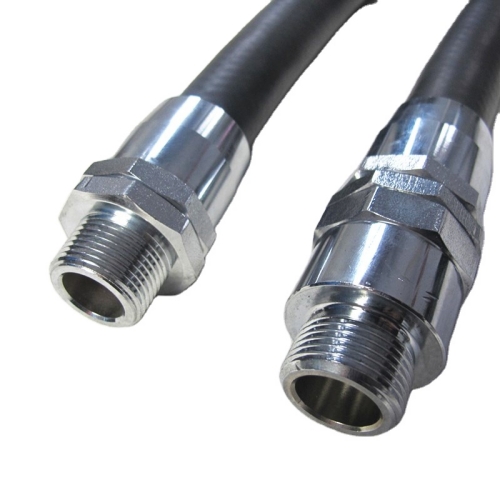
OEM Parker hydraulic hose fittings represent a critical component within fluid power systems, facilitating the secure and reliable transfer of hydraulic fluid in a diverse range of industrial and mobile applications. These fittings, manufactured to Parker specifications, are not simply connectors; they are engineered elements designed to withstand extreme pressures, temperatures, and corrosive environments. This guide will delve into the material science, manufacturing processes, performance characteristics, potential failure modes, and maintenance considerations associated with OEM Parker hydraulic hose fittings, providing a comprehensive technical overview for engineers, procurement specialists, and maintenance personnel. The industry faces key challenges related to maintaining consistent quality across global sourcing, ensuring compatibility with evolving hydraulic fluids, and mitigating the risk of catastrophic failure due to improper installation or material degradation. Understanding these nuances is paramount to maximizing system uptime and minimizing operational costs.
Material Science & Manufacturing
The performance of OEM Parker hydraulic hose fittings is inextricably linked to the materials used in their construction and the precision of their manufacturing processes. Common materials include carbon steel (typically ASTM A105 or equivalent), alloy steel (4140, 4130), stainless steel (304, 316), and brass (C36000). The selection depends heavily on the intended application, fluid compatibility, and pressure requirements. Carbon steel offers high strength and cost-effectiveness but is susceptible to corrosion. Alloy steels provide increased strength and toughness. Stainless steel offers superior corrosion resistance but generally at a higher cost. Brass is used in low-pressure applications and provides good machinability. Manufacturing processes vary depending on the fitting type. Forged fittings are commonly used for high-pressure applications, providing superior strength and fatigue resistance. The forging process involves heating the material and shaping it under compressive forces. Machining follows to achieve the final dimensions and thread profiles. Seamless fittings are produced through extrusion or drawing processes, eliminating potential weld weaknesses. Thread rolling is a preferred method for creating threads, as it work-hardens the material, increasing thread strength and fatigue life. Critical parameters include material composition verification via spectroscopic analysis, precise control of forging temperature and pressure, accurate thread gauging (using calibrated ring and plug gauges to meet SAE J1926 standards), and surface finish inspection to minimize stress concentration points. Heat treatment, such as hardening and tempering, is often employed to achieve desired mechanical properties. Non-destructive testing (NDT) methods like magnetic particle inspection (MPI) and ultrasonic testing (UT) are employed to detect internal flaws and surface cracks.
Performance & Engineering
The engineering design of OEM Parker hydraulic hose fittings centers around withstanding significant internal pressure, resisting external loads, and maintaining leak-free performance. Force analysis is crucial, particularly in high-pressure systems, to ensure the fitting body and threads can handle the applied stress. Finite Element Analysis (FEA) is frequently utilized to simulate stress distribution under various loading conditions. Burst pressure testing, conducted per ISO 3766, verifies the fitting’s ability to withstand extreme pressures without catastrophic failure. Fatigue testing, performed according to SAE J1926, assesses the fitting’s resistance to cyclic loading, simulating real-world operating conditions. Environmental resistance is another critical factor. Fittings exposed to corrosive environments must be manufactured from compatible materials or coated with protective layers. Salt spray testing (ASTM B117) is a standard method for evaluating corrosion resistance. The choice of sealant materials (e.g., PTFE tape, thread sealants) is also paramount to ensure a leak-tight seal. Compliance requirements, such as those outlined in ISO 8434-1 (hydraulic hose assemblies), dictate material traceability, testing procedures, and documentation requirements. Furthermore, proper installation is paramount. Incorrect torque application can lead to thread damage, leaks, or premature failure. Torque wrenches calibrated to traceable standards should always be used, and recommended torque values (specified by Parker) must be adhered to. Consideration must be given to the hose assembly angle and potential bending moments, which can induce stress on the fitting.
Technical Specifications
| Parameter | Unit | Specification (Typical) | Testing Standard |
|---|---|---|---|
| Maximum Working Pressure (MWP) | PSI | Up to 10,000 (depending on fitting type & size) | ISO 3766 |
| Burst Pressure | PSI | 3x MWP (minimum) | ISO 3766 |
| Tensile Strength (Material) | MPa | >550 (Carbon Steel), >800 (Alloy Steel) | ASTM E8 |
| Yield Strength (Material) | MPa | >300 (Carbon Steel), >600 (Alloy Steel) | ASTM E8 |
| Operating Temperature Range | °C | -40 to +120 (depending on sealant & material) | SAE J1926 |
| Thread Type | - | NPT, BSP, SAE J1926, Metric | ISO 965-1, SAE J531 |
Failure Mode & Maintenance
OEM Parker hydraulic hose fittings can fail through several mechanisms. Fatigue cracking, often initiated at thread roots or stress concentration points, is a common mode of failure due to cyclic loading. Corrosion, particularly in aggressive environments, can lead to pitting and weakening of the fitting material. Galling, resulting from metal-to-metal contact under high loads, can damage threads and prevent proper sealing. Over-tightening can cause thread stripping and deformation, compromising the joint integrity. Improper installation, such as cross-threading, can also lead to immediate failure or premature wear. Leakage, while not a catastrophic failure, indicates a compromised seal and requires immediate attention. Regular inspection is crucial for preventative maintenance. Visually inspect fittings for signs of corrosion, cracking, or deformation. Check for leaks around the thread connections. Torque values should be re-verified periodically, especially after initial installation and during routine maintenance. Lubrication of threads during installation is essential to prevent galling and ensure proper torque application. Damaged fittings should be replaced immediately. Proper storage is also important; fittings should be protected from moisture and corrosive environments. For critical applications, consider implementing a scheduled maintenance program that includes ultrasonic testing or magnetic particle inspection to detect internal flaws before they lead to failure. Maintain detailed records of inspection and maintenance activities for traceability and analysis.
Industry FAQ
Q: What is the significance of the pressure rating on a hydraulic hose fitting, and how does it relate to the hose itself?
A: The pressure rating on a fitting indicates the maximum sustained pressure the fitting can safely withstand. It’s crucial that the fitting’s pressure rating always equals or exceeds the hose’s working pressure. The weakest link determines system performance; a higher-rated hose with a lower-rated fitting creates a failure point. Consider temperature as well, as elevated temperatures can reduce pressure ratings.
Q: What material is best suited for hydraulic fittings used in saltwater environments?
A: 316 Stainless Steel is the preferred material for saltwater applications due to its superior corrosion resistance compared to 304 stainless steel or carbon steel. However, even 316 can benefit from protective coatings or cathodic protection in severely corrosive conditions. Regular inspection for crevice corrosion is vital.
Q: What are the potential consequences of using incompatible sealants with hydraulic fluids?
A: Incompatible sealants can swell, shrink, or degrade when exposed to certain hydraulic fluids, leading to leaks or complete sealant failure. This can contaminate the hydraulic system and damage pumps or valves. Always verify sealant compatibility with the specific fluid used.
Q: How does thread type (NPT, BSP, SAE) impact fitting interchangeability and performance?
A: Different thread types are not interchangeable. NPT (National Pipe Taper) is a tapered thread, while BSP (British Standard Pipe) can be tapered or parallel. SAE J1926 is a straight thread with an O-ring seal. Using the wrong thread type can result in leaks or damage to the threads. Proper identification and matching are critical.
Q: What is the role of proper torque application in preventing fitting failures?
A: Proper torque application is paramount. Under-torqueing can lead to leaks, while over-torqueing can damage the threads. Always use a calibrated torque wrench and adhere to Parker’s recommended torque specifications for the specific fitting size and material. Lubricating the threads before tightening is crucial.
Conclusion
OEM Parker hydraulic hose fittings are engineered components demanding careful consideration of material selection, manufacturing precision, and proper installation. Their reliable performance is integral to the safety and efficiency of hydraulic systems across diverse industries. Understanding the underlying principles of force analysis, environmental resistance, and potential failure modes is crucial for minimizing downtime and maximizing operational lifespan.
Continued advancements in materials science and manufacturing techniques are driving the development of more robust and reliable fittings. Predictive maintenance strategies, incorporating sensor technology and data analytics, will increasingly play a role in proactively identifying and mitigating potential failures. A commitment to adherence to relevant industry standards and best practices remains paramount in ensuring the long-term integrity of hydraulic systems.