
Apr . 01, 2024 17:55 Back to list
oem one wire braided hydraulic hose supplier Performance Analysis
Introduction
OEM one-wire braided hydraulic hoses are critical components in fluid power systems across numerous industries, including construction, agriculture, manufacturing, and automotive. They function to transmit hydraulic fluid to power actuators and machinery, facilitating crucial operational functions. These hoses are distinguished by their single layer of high-tensile strength wire braid reinforcement embedded within a robust rubber compound. This construction provides a balance between flexibility, pressure resistance, and cost-effectiveness, positioning them as a prevalent choice for medium-pressure hydraulic applications. The industry faces increasing demands for higher operating pressures, improved chemical resistance, and extended service life, driving ongoing innovation in hose materials and manufacturing techniques. This guide provides a detailed technical overview of these hoses, covering material science, manufacturing processes, performance characteristics, failure modes, and relevant industry standards, designed for engineers, procurement professionals, and maintenance personnel.
Material Science & Manufacturing
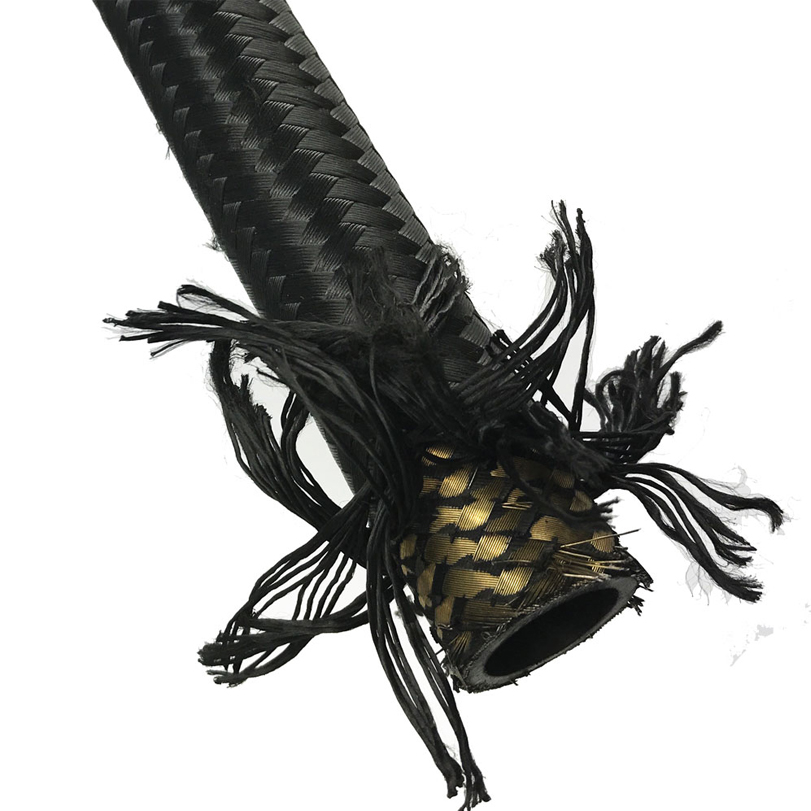
The core of a one-wire braided hydraulic hose comprises several key material components. The inner tube, typically constructed from a synthetic rubber compound such as nitrile (NBR), chloroprene (CR), or ethylene propylene diene monomer (EPDM), must exhibit excellent resistance to the specific hydraulic fluid being conveyed. NBR is commonly used for petroleum-based fluids, CR offers superior oil and weather resistance, and EPDM excels in phosphate ester fluids. The reinforcement braid is almost exclusively high-tensile steel wire, precisely formed into a single helical layer. The wire gauge and braid angle directly influence the hose’s pressure rating and flexibility. The outer cover, generally made from a blended synthetic rubber like CR or a specialized polyurethane, provides protection against abrasion, ozone, weathering, and chemical attack.
Manufacturing involves several critical steps. The inner tube is extruded through a die to achieve the desired bore diameter and wall thickness. The steel wire is simultaneously braided around a mandrel, ensuring consistent braid coverage and pitch. The braided assembly is then vulcanized – a process involving heat and pressure – to bond the rubber inner tube and outer cover to the steel wire, creating a monolithic structure. Precise temperature and pressure control during vulcanization are paramount to achieving optimal adhesion and mechanical properties. Post-vulcanization, hoses undergo rigorous testing, including burst pressure tests, impulse tests, and dimensional checks, to verify compliance with industry standards. Parameter control during extrusion (temperature, screw speed) and braiding (tension, pitch) are critical to achieving dimensional accuracy and consistent performance.

Performance & Engineering
The performance of a one-wire braided hydraulic hose is dictated by its ability to withstand internal pressure, external forces, and environmental conditions. Burst pressure, the maximum pressure the hose can withstand before failure, is a key specification. Impulse pressure, representing cyclical pressure fluctuations, is equally important, as repeated pressure spikes can lead to fatigue failure. Hose flexibility, measured by bend radius, impacts ease of installation and resistance to kinking. Tensile strength, defining the hose’s resistance to stretching, is crucial for applications involving pulling forces.
Engineering considerations include proper hose sizing to minimize flow restriction and velocity. Excessive flow velocity can cause erosion of the inner tube. Hose routing must avoid sharp bends and abrasion points. The selection of fittings is critical, ensuring compatibility with the hose material and pressure rating. Static electricity buildup can be a concern with certain fluids; therefore, conductive hoses or grounding measures may be necessary. Compliance requirements often necessitate adherence to specific standards regarding fluid compatibility, fire resistance, and environmental protection. Finite element analysis (FEA) is frequently employed to simulate stress distributions within the hose under various loading conditions, optimizing design parameters for improved performance and longevity.
Technical Specifications
| Parameter | Unit | Typical Value (NBR Inner Tube, Steel Wire Braid, CR Cover) | Test Standard |
|---|---|---|---|
| Working Pressure | MPa | 20 | SAE J517 |
| Burst Pressure | MPa | 80 | SAE J517 |
| Temperature Range | °C | -40 to +100 | SAE J517 |
| Inner Diameter | mm | 19.1 | ISO 4413 |
| Outer Diameter | mm | 28.6 | ISO 4413 |
| Minimum Bend Radius | mm | 178 | SAE J517 |
Failure Mode & Maintenance
One-wire braided hydraulic hoses are susceptible to several failure modes. Fatigue cracking, arising from repeated flexing and pressure cycling, often initiates at the braid crossover points. Abrasion of the outer cover can expose the steel wire, leading to corrosion and eventual hose failure. Pinholes in the inner tube can occur due to fluid contamination or degradation of the rubber compound. End fitting failure, often caused by improper installation or corrosion, is a common point of weakness. Delamination between the rubber and the steel braid occurs when vulcanization is insufficient or when the hose is exposed to extreme temperatures. Oxidation of the rubber compounds can lead to hardening and cracking.
Preventative maintenance is crucial for extending hose life. Regular visual inspections should be conducted to identify signs of abrasion, cracking, or leakage. Hoses should be replaced if any damage is observed. Proper hose routing and support are essential to minimize stress and abrasion. Hydraulic fluid should be maintained at the recommended cleanliness level to prevent internal erosion. Fittings should be inspected for corrosion and replaced as needed. Avoid over-pressurization of the system. Storing hoses in a cool, dry environment away from direct sunlight can prevent premature degradation. Implement a hose management program that includes tracking hose age and usage to ensure timely replacement.
Industry FAQ
Q: What is the impact of hydraulic fluid type on hose selection?
A: Hydraulic fluid compatibility is paramount. Different fluids require specific inner tube materials. Petroleum-based fluids typically utilize NBR, while phosphate ester fluids demand EPDM. Using an incompatible fluid will cause the inner tube to swell, degrade, and ultimately fail. Fluid velocity and viscosity also influence hose selection; higher viscosity fluids require larger bore diameters to reduce pressure drop.
Q: How does the braid angle affect hose performance?
A: A steeper braid angle generally provides higher pressure resistance but reduces hose flexibility. A shallower angle offers greater flexibility but compromises pressure capacity. The optimal angle is a trade-off based on the application requirements. The wire gauge also affects pressure handling; thicker wire provides higher strength.
Q: What are the consequences of exceeding the maximum working pressure?
A: Exceeding the maximum working pressure significantly reduces hose life and increases the risk of catastrophic failure. Repeated over-pressurization causes fatigue cracking and delamination. Sudden, extreme over-pressure can lead to immediate hose rupture, posing a safety hazard to personnel and equipment.
Q: How can I prevent abrasion damage to the hose outer cover?
A: Proper hose routing is critical. Avoid routing hoses near moving parts, sharp edges, or abrasive surfaces. Use hose guards or sleeves to provide additional protection in high-wear areas. Regularly inspect hoses for signs of abrasion and replace them if the cover is damaged.
Q: What are the key differences between one-wire and two-wire braided hoses?
A: Two-wire braided hoses offer significantly higher pressure ratings and greater burst strength compared to one-wire hoses, due to the increased reinforcement. However, they are generally less flexible and more expensive. One-wire hoses are suitable for medium-pressure applications where flexibility is important, while two-wire hoses are preferred for high-pressure systems.
Conclusion
OEM one-wire braided hydraulic hoses represent a vital component in numerous industrial applications, providing a cost-effective and reliable solution for fluid power transmission. Understanding the material science, manufacturing processes, and performance characteristics of these hoses is crucial for engineers and procurement professionals to ensure optimal system performance and longevity. Careful consideration of fluid compatibility, pressure requirements, and environmental conditions is paramount in hose selection and installation.
The ongoing development of advanced rubber compounds and manufacturing techniques promises to further enhance the performance and durability of these hoses. Implementing proactive maintenance programs, including regular inspections and timely replacement, is essential for maximizing hose life and minimizing the risk of costly downtime. Adherence to relevant industry standards, such as SAE and ISO, ensures product quality and safety.