
Apr . 01, 2024 17:55 Back to list
oem one wire braided hydraulic hose manufacturers Performance Analysis
Introduction
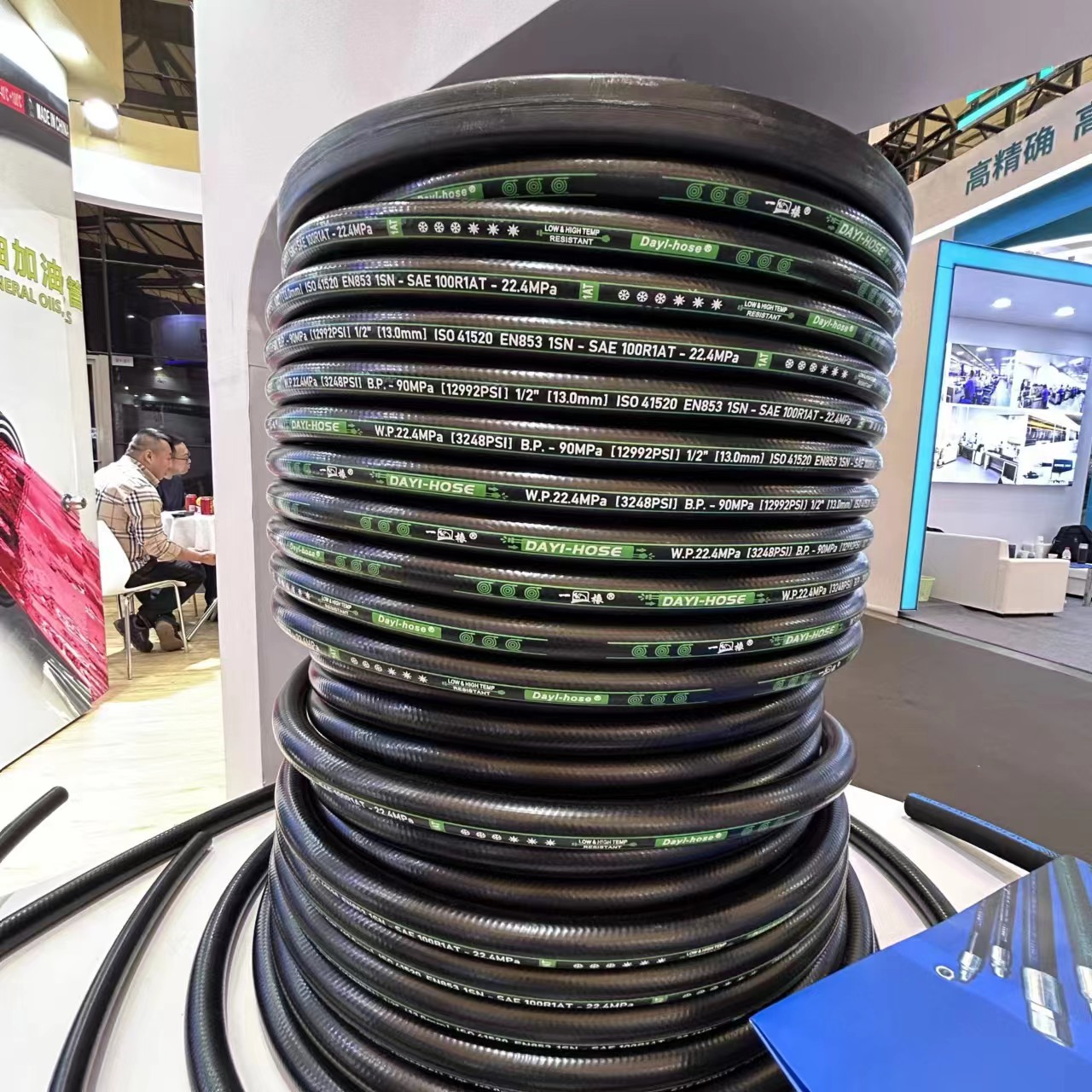
OEM one wire braided hydraulic hose represents a critical component in fluid power systems across diverse industrial applications, including construction machinery, agricultural equipment, material handling, and automotive systems. These hoses are characterized by a single layer of high-tensile steel wire spiraled around a flexible rubber inner tube, protected by a durable outer cover. Their primary function is the reliable and safe transmission of hydraulic fluid under high pressure and varying temperatures. This guide provides a comprehensive technical overview of these hoses, encompassing material science, manufacturing processes, performance characteristics, failure modes, and industry standards, aimed at procurement professionals, engineers, and maintenance personnel. Understanding the nuances of their construction and operation is essential to mitigate risks associated with hydraulic system failures and ensure optimal operational efficiency. The industry currently faces challenges related to increasing pressure requirements, miniaturization of hydraulic systems, and demand for extended service life in harsh environments, driving innovation in hose materials and manufacturing techniques.
Material Science & Manufacturing
The performance of one wire braided hydraulic hose is intrinsically linked to the properties of its constituent materials. The inner tube is commonly composed of oil-resistant synthetic rubber compounds, primarily nitrile rubber (NBR), chloroprene rubber (CR), or ethylene propylene diene monomer (EPDM), selected based on the intended fluid compatibility and operating temperature range. NBR offers excellent resistance to petroleum-based fluids, CR provides good ozone and weathering resistance, and EPDM excels in applications involving phosphate ester fluids. The reinforcing layer consists of high-tensile strength steel wire, typically carbon steel, drawn to specific diameters and treated for corrosion resistance (zinc plating is common). The outer cover is usually a blend of synthetic rubbers, like CR or polyurethane, offering abrasion resistance, weathering protection, and resistance to oil and chemicals.
Manufacturing involves a multi-stage process. First, the inner tube is extruded to the desired dimensions. The steel wire is then spiraled around the tube using a precision winding machine, ensuring consistent pitch and coverage. This spiraling process imparts the hose’s pressure-bearing capability. The assembly is then vulcanized – a heat and pressure curing process – to bond the rubber compounds to the steel wire and create a cohesive structure. Key parameters during vulcanization include temperature, pressure, and time, all of which significantly impact the final hose properties. After vulcanization, the outer cover is extruded over the braided reinforcement. Finally, the hose undergoes rigorous quality control checks, including pressure testing, impulse testing, and dimensional inspection. Precise control over rubber compound formulations, wire tension during spiraling, and vulcanization parameters is crucial to achieving consistent performance and preventing premature failure. The braiding angle impacts burst pressure and flexibility; a smaller angle generally provides higher burst pressure but reduced flexibility.

Performance & Engineering
The performance of one wire braided hydraulic hose is governed by several critical engineering parameters. Burst pressure, the maximum pressure the hose can withstand before rupture, is a fundamental specification, determined by the wire gauge, spiral angle, and rubber compound strength. Working pressure is significantly lower, typically 50-75% of the burst pressure, providing a safety factor. Impulse pressure, representing the repeated pressure surges experienced in hydraulic systems, is also critical; hoses must withstand these fluctuations without fatigue failure. Tensile strength, the resistance to axial pull, is important for applications involving bending and flexing. Flexibility, or bend radius, determines the hose’s ability to be routed in confined spaces.
Environmental resistance is paramount. Hoses must maintain their integrity when exposed to temperature extremes, ozone, UV radiation, and a variety of fluids including hydraulic oils, fuels, and coolants. Chemical compatibility is assessed through immersion testing, determining the hose’s resistance to swelling, degradation, and loss of mechanical properties. Force analysis considers the hoop stress generated by internal pressure and the axial stress induced by bending. Compliance requirements are dictated by industry regulations and application-specific standards (see Section 7). Proper hose assembly, including the selection of compatible fittings and correct crimping procedures, is essential for ensuring reliable performance and preventing leaks. Improperly crimped fittings can lead to premature failure and potentially hazardous situations. Finite Element Analysis (FEA) is increasingly employed in the design phase to optimize hose geometry and reinforcement patterns for specific application requirements.
Technical Specifications
| Parameter | Unit | Typical Value (NBR Inner Tube) | Typical Value (EPDM Inner Tube) |
|---|---|---|---|
| Working Pressure | MPa | 20 | 15 |
| Burst Pressure | MPa | 80 | 60 |
| Temperature Range | °C | -40 to +100 | -50 to +120 |
| Inner Diameter | mm | 6-51 | 6-51 |
| Outer Diameter | mm | 10-64 | 10-64 |
| Minimum Bend Radius | mm | 4D (D = Inner Diameter) | 5D (D = Inner Diameter) |
Failure Mode & Maintenance
Failure modes in one wire braided hydraulic hose are varied and often interconnected. Fatigue cracking, initiated by repeated bending and flexing, is a common failure mechanism, particularly in applications with high impulse pressures. This occurs due to the cyclical stress exceeding the fatigue limit of the steel wire. Corrosion, both internal and external, can weaken the steel wire and rubber compounds, reducing burst pressure and increasing the risk of leaks. Internal corrosion can occur due to incompatibility between the hose materials and the hydraulic fluid. External corrosion is often caused by exposure to salt spray, humidity, or harsh chemicals. Abrasion damage to the outer cover can expose the reinforcement layer to corrosion and damage.
Delamination, the separation of the rubber layers from the steel wire, can occur due to poor bonding during vulcanization or exposure to extreme temperatures. Degradation of the rubber compounds, caused by ozone, UV radiation, or chemical attack, leads to loss of flexibility and cracking. Oxidation of the hydraulic fluid can also contribute to rubber degradation. Maintenance best practices include regular visual inspections for signs of damage (cracks, abrasions, leaks), periodic pressure testing, and proper fluid maintenance to prevent contamination and oxidation. Hoses should be replaced if any signs of damage are detected. Proper routing and support mechanisms should be employed to minimize bending stress and prevent abrasion. When replacing hoses, always use compatible fittings and ensure proper crimping procedures are followed. Documenting hose replacement dates and operating conditions can help identify potential failure patterns and optimize maintenance schedules.
Industry FAQ
Q: What is the impact of different steel wire grades on hose performance?
A: Higher tensile strength steel wire directly correlates to increased burst pressure and improved fatigue life. However, increased wire strength can also reduce hose flexibility. The selection of the appropriate wire grade involves a trade-off between pressure capacity and flexibility, tailored to the specific application requirements. Wire surface finish also impacts bonding with the rubber compounds.
Q: How does fluid temperature affect the lifespan of a hydraulic hose?
A: Elevated temperatures accelerate the degradation of rubber compounds, reducing their elasticity and increasing the risk of cracking. Conversely, low temperatures can reduce flexibility and increase the susceptibility to cracking. Selecting a hose material with a temperature rating appropriate for the operating conditions is crucial.
Q: What are the key considerations when selecting fittings for one wire braided hose?
A: Fittings must be compatible with the hose material and pressure rating. Proper crimping is essential to ensure a leak-free seal. Using incorrect fittings or improper crimping procedures can significantly reduce hose lifespan and create safety hazards. Fitting materials should be chosen based on fluid compatibility and environmental conditions.
Q: How can I prevent corrosion in hydraulic hoses?
A: Utilize hydraulic fluids with corrosion inhibitors. Ensure proper sealing to prevent moisture ingress. Select hoses with corrosion-resistant steel wire coatings (e.g., zinc plating). Regularly inspect hoses for signs of corrosion and replace them if necessary. Protect hoses from exposure to harsh chemicals and salt spray.
Q: What is the role of the outer cover in hydraulic hose performance?
A: The outer cover provides crucial protection against abrasion, weathering, ozone, UV radiation, and chemical attack. It also contributes to the hose’s overall durability and lifespan. Selecting a cover material with appropriate properties for the specific application is essential. A damaged or degraded outer cover can expose the reinforcement layer to corrosion and damage.
Conclusion
OEM one wire braided hydraulic hose remains a foundational element in numerous industrial applications, demanding a thorough understanding of its material science, manufacturing processes, and performance characteristics. Selecting the correct hose for a given application requires careful consideration of operating pressure, temperature, fluid compatibility, and environmental conditions. Proper installation, maintenance, and adherence to industry standards are paramount to ensuring reliable operation and preventing costly failures.
Future advancements in hydraulic hose technology are likely to focus on the development of new materials with enhanced temperature and chemical resistance, improved fatigue life, and reduced weight. The increasing demand for miniaturization and higher pressures will drive innovation in hose construction techniques. Furthermore, the integration of sensor technology into hoses will enable real-time monitoring of pressure, temperature, and structural integrity, facilitating predictive maintenance and improving system reliability.