
Apr . 01, 2024 17:55 Back to list
oem one wire braided hydraulic hose factories Performance Analysis
Introduction
OEM one-wire braided hydraulic hose represents a critical component within fluid power systems, serving as a flexible conduit for the transmission of pressurized hydraulic fluid. Positioned between the hose fittings and the hydraulic power unit (HPU), its primary function is to deliver fluid to actuators and other components, enabling the operation of machinery across diverse industrial applications. This guide provides a comprehensive technical overview of these hoses, covering material science, manufacturing processes, performance characteristics, failure modes, and relevant industry standards. A key pain point in the industry centers around maintaining consistent burst pressures and ensuring long-term fluid compatibility across varying operating temperatures and fluid types. OEM manufacturers are increasingly scrutinized for providing hoses that meet stringent automotive and aerospace specifications, demanding advanced material formulations and rigorous quality control. The current market necessitates not just standardized hoses, but customized solutions catering to increasingly complex hydraulic system designs.
Material Science & Manufacturing
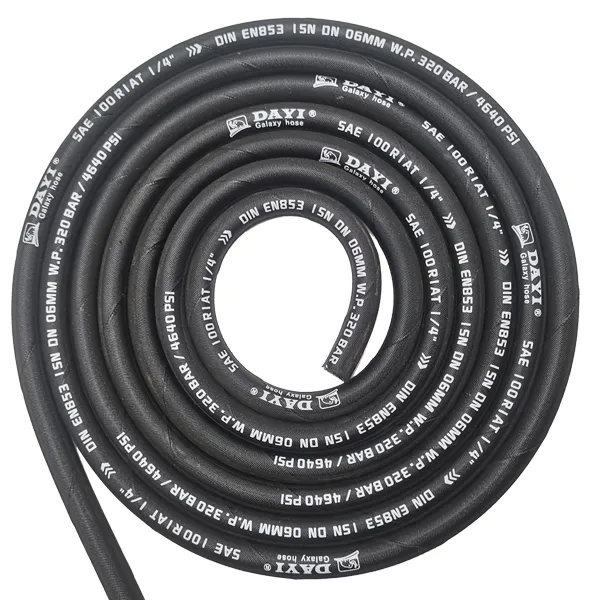
One-wire braided hydraulic hoses are typically constructed from an inner tube, reinforcement layers, and an outer cover. The inner tube is commonly composed of synthetic rubber compounds, specifically Nitrile (NBR) for oil-based hydraulic fluids, or Fluorocarbon (FKM/Viton) for compatibility with aggressive fluids like phosphate ester-based fluids, and high-temperature applications. NBR exhibits excellent abrasion resistance and flexibility, while FKM offers superior chemical resistance and thermal stability. The reinforcement layer, crucial for pressure containment, is a single braid comprised of high-strength steel wire. The wire’s tensile strength directly impacts the hose’s burst pressure. Steel wire is typically coated with zinc or other corrosion-resistant materials to prevent rust and maintain braid integrity. The outer cover is generally made from Chloroprene (CR) rubber, providing abrasion, ozone, and weathering resistance. Manufacturing begins with extrusion of the inner tube to the desired dimensions. The steel wire is then braided helically around the inner tube, with precise braid angle control (typically 55-70 degrees) to optimize pressure resistance and flexibility. Finally, the outer cover is extruded over the braid, followed by curing – a vulcanization process using heat and pressure to crosslink the rubber compounds, resulting in the final hose properties. Critical parameters include rubber compound formulation, braid density, wire tensile strength, and curing temperature/time. Variations in these parameters directly affect hose performance and lifespan.
Performance & Engineering
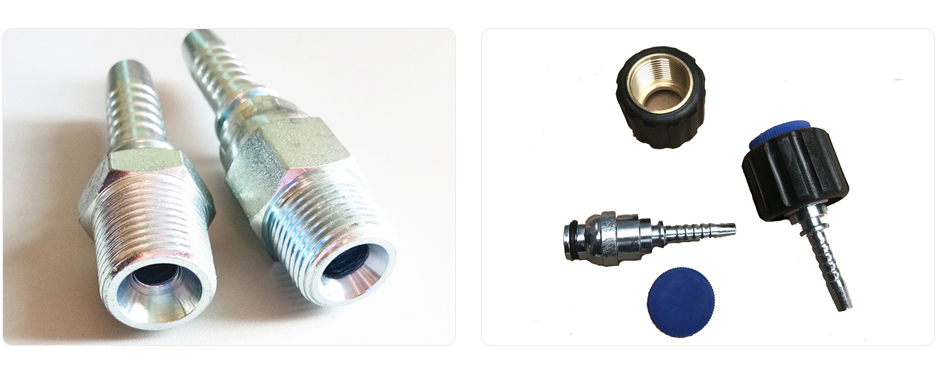
The performance of one-wire braided hydraulic hose is governed by several key engineering principles. Burst pressure is determined by the tensile strength of the steel wire and the braid’s construction. A higher wire tensile strength and tighter braid angle increase burst pressure. Fatigue resistance – the ability to withstand repeated pressure cycles – is affected by the inner tube’s flexibility and the outer cover’s abrasion resistance. Hose flex radius is a critical parameter, with a smaller flex radius indicating greater flexibility. However, exceeding the minimum bend radius can cause kinking and hose failure. Environmental resistance is crucial; hoses must withstand exposure to temperature extremes, ozone, UV radiation, and various chemicals. Compliance with industry standards (SAE J517, DIN EN 853, ISO 6897) dictates specific performance requirements, including pressure ratings, temperature ranges, and fluid compatibility. Force analysis during hose assembly is vital. Improper crimping of fittings can significantly reduce hose strength and lead to premature failure. Proper fitting selection and crimping procedures are essential to ensure a secure and reliable connection. Furthermore, consideration must be given to fluid velocity; excessive velocity can induce erosion of the inner tube, reducing hose lifespan.
Technical Specifications
| Parameter | Unit | Typical Value (NBR Inner Tube) | Typical Value (FKM Inner Tube) |
|---|---|---|---|
| Working Pressure | MPa | 20 | 17 |
| Burst Pressure | MPa | 80 | 68 |
| Temperature Range | °C | -40 to +100 | -20 to +150 |
| Inner Tube Material | - | Nitrile (NBR) | Fluorocarbon (FKM/Viton) |
| Reinforcement | - | Single Steel Wire Braid | Single Steel Wire Braid |
| Outer Cover Material | - | Chloroprene (CR) | Chloroprene (CR) |
Failure Mode & Maintenance
Common failure modes in one-wire braided hydraulic hoses include burst failure due to exceeding pressure limits, fatigue cracking caused by repeated pressure cycles and flexing, abrasion damage to the outer cover, and chemical degradation of the inner tube. Burst failures are often initiated at imperfections in the wire braid or at the hose-fitting interface. Fatigue cracking typically originates at areas of high stress concentration, such as bends and fittings. Abrasion can lead to reinforcement exposure, accelerating corrosion and ultimately causing a leak. Chemical degradation results in swelling, cracking, and loss of elasticity in the inner tube. Preventative maintenance includes regular visual inspections for abrasion, cracking, and leaks. Hose flexes should be inspected for signs of kinking or excessive wear. Proper fluid maintenance – filtering and maintaining fluid cleanliness – is crucial to prevent internal abrasion and degradation. Hoses should be replaced at regular intervals, based on manufacturer recommendations and operating conditions. When replacing hoses, ensure compatibility with the hydraulic fluid and proper fitting selection. Crimping procedures must be validated and consistently applied. Failure analysis of failed hoses can provide valuable insights into the root cause of failure and inform preventative maintenance strategies.
Industry FAQ
Q: What is the impact of hydraulic fluid type on hose lifespan?
A: The type of hydraulic fluid significantly impacts hose lifespan. Incompatible fluids can cause swelling, cracking, or degradation of the inner tube material. For example, using petroleum-based fluids with FKM inner tubes can lead to reduced flexibility and premature failure. Conversely, phosphate ester fluids require FKM or other specialty elastomers for compatibility. Regular fluid analysis is recommended to monitor fluid condition and ensure compatibility with the hose material.
Q: How does the braid angle affect hose performance?
A: The braid angle directly affects both pressure resistance and flexibility. A steeper braid angle (closer to 90 degrees) provides higher pressure resistance but reduces flexibility. A shallower angle (closer to 55 degrees) offers greater flexibility but lowers pressure capacity. OEMs must balance these factors to meet specific application requirements.
Q: What are the common causes of hose kinking and how can it be prevented?
A: Kinking occurs when the hose is bent beyond its minimum bend radius, causing internal collapse and restriction of fluid flow. Common causes include improper routing, insufficient space, and excessive bending forces. Prevention involves ensuring adequate hose routing, using appropriate fittings, and avoiding sharp bends. Using hoses with smaller bend radii when space is limited can also mitigate this issue.
Q: What quality control measures are essential during hose manufacturing?
A: Essential quality control measures include raw material testing (rubber compounds, steel wire), dimensional inspection of inner tubes and outer covers, braid density verification, pressure testing (burst and impulse testing), and leak testing. Statistical Process Control (SPC) should be implemented to monitor key process parameters and ensure consistent product quality.
Q: How important is proper crimping of fittings, and what are the risks of improper crimping?
A: Proper crimping of fittings is paramount for hose integrity. Improper crimping – either under-crimping or over-crimping – can significantly reduce hose strength and lead to premature failure. Under-crimping results in a loose connection prone to leakage, while over-crimping can damage the hose reinforcement, reducing its burst pressure. Crimping equipment should be calibrated regularly, and operators should be trained on proper procedures.
Conclusion
OEM one-wire braided hydraulic hoses are integral to the reliable operation of hydraulic systems. Their performance is dictated by a complex interplay of material properties, manufacturing processes, and engineering design. Understanding these factors is critical for selecting the appropriate hose for a given application, ensuring long-term durability and minimizing the risk of failure. The selection process must consider fluid compatibility, pressure requirements, temperature ranges, and environmental conditions.
Looking ahead, the industry is moving toward higher-performance hose materials and more sophisticated manufacturing techniques. Advances in rubber compounding and wire braiding technology are enabling the development of hoses with increased burst pressures, improved fatigue resistance, and enhanced chemical compatibility. Furthermore, the integration of sensor technology into hoses will allow for real-time monitoring of hose condition and proactive maintenance scheduling, maximizing system uptime and reducing operational costs.