
Apr . 01, 2024 17:55 Back to list
oem one wire braided high pressure hydraulic hose supplier Performance Analysis
Introduction
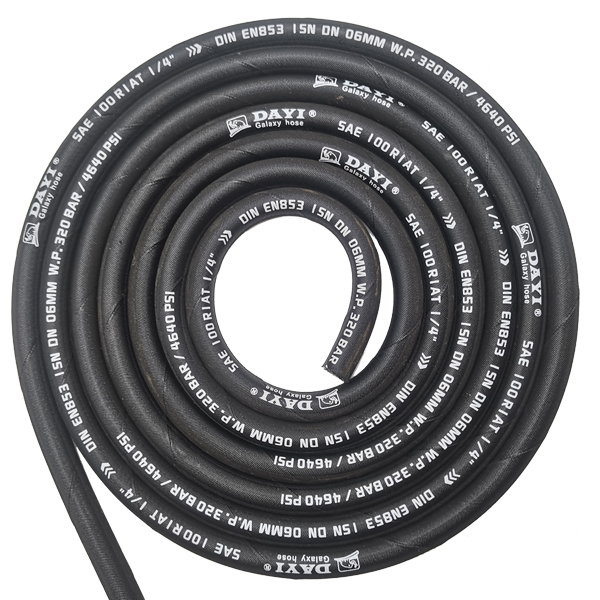
OEM one wire braided high pressure hydraulic hose represents a critical component in fluid power systems across diverse industries including construction, agriculture, mining, and manufacturing. These hoses are engineered to transmit hydraulic fluid under extreme pressure, providing the power necessary for operation of hydraulic machinery. The “one wire braid” refers to a single layer of high-tensile steel wire spirally wound around the hose’s inner tube, providing reinforcement against pressure and abrasion. Their OEM status signifies they are manufactured to specific customer specifications, offering customization in length, fitting types, and performance characteristics. Core performance parameters include working pressure, burst pressure, temperature range, and fluid compatibility. The selection of appropriate hose construction is paramount to system reliability and safety, directly impacting equipment uptime and operational costs. This guide will provide a comprehensive technical overview, addressing material science, manufacturing processes, performance considerations, failure modes, and relevant industry standards.
Material Science & Manufacturing
The construction of a one-wire braided hydraulic hose involves several key material choices and manufacturing processes. The inner tube is typically composed of nitrile rubber (NBR), also known as Buna-N, for its excellent resistance to petroleum-based hydraulic fluids. NBR exhibits good abrasion resistance and flexibility at varying temperatures. Alternatives include chloroprene rubber (CR) for improved ozone and weathering resistance, and fluorocarbon rubber (FKM/Viton) for use with highly aggressive fluids and extreme temperatures, although at a significantly increased cost. The reinforcement layer, the defining characteristic of this hose type, consists of high-tensile steel wire. The steel grade is typically carbon steel, chosen for its strength and cost-effectiveness. Wire diameter and pitch (spacing between wires) are critical parameters affecting pressure capacity. The outer cover is generally constructed from a synthetic rubber blend, commonly a combination of chloroprene and nitrile, offering abrasion, ozone, and weathering protection.
The manufacturing process begins with extrusion of the inner tube to precise dimensions. The steel wire is then spirally wound onto the inner tube using specialized braiding machinery. Precise tension control during braiding is vital to ensure uniform reinforcement and prevent hose distortion. Following braiding, the outer cover is extruded over the reinforcement layer. Curing, a vulcanization process, is then performed to cross-link the rubber compounds, imparting elasticity, strength, and chemical resistance. Quality control involves hydrostatic pressure testing to verify burst pressure, impulse pressure testing to assess fatigue resistance, and dimensional checks to confirm adherence to specifications. Proper bonding between layers is crucial; inadequate adhesion leads to delamination and premature failure.
Performance & Engineering
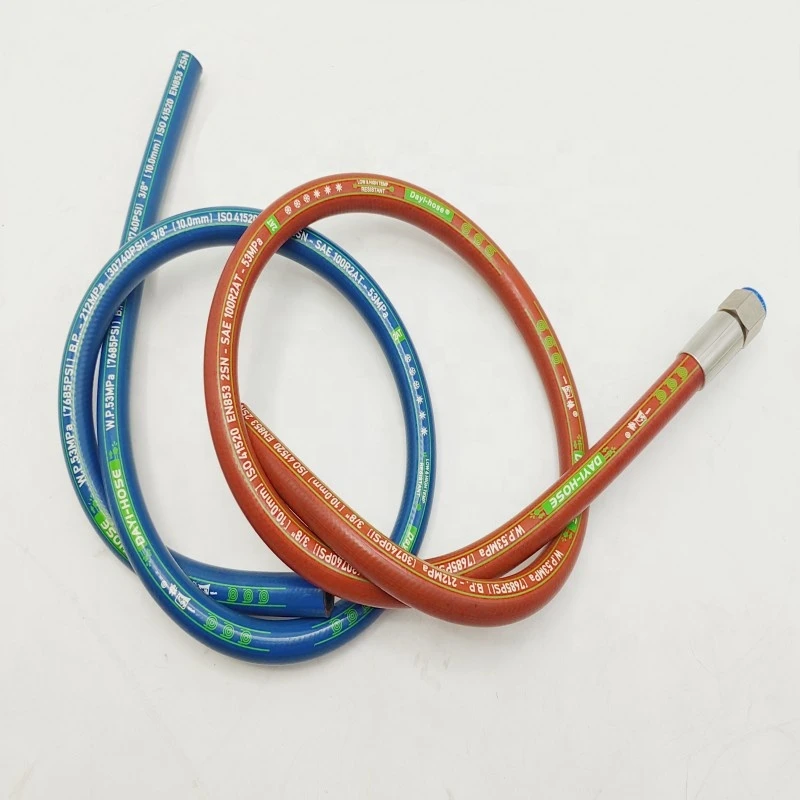
The performance of a one-wire braided hydraulic hose is dictated by several engineering principles. Stress analysis, employing Hoops stress theory, is crucial in determining the hose’s ability to withstand internal pressure. The tensile strength of the steel wire and the elasticity of the rubber compounds directly influence the hose’s burst pressure and working pressure. Fatigue life, the hose’s resistance to repeated pressure cycles, is affected by factors such as fluid pulsation, temperature fluctuations, and the presence of contaminants. Impulse pressure testing, simulating these conditions, is a key performance metric.
Environmental resistance is another critical factor. Exposure to ultraviolet (UV) radiation, ozone, and extreme temperatures can degrade the rubber compounds, reducing flexibility and increasing the risk of cracking. Fluid compatibility is also paramount. Incompatible fluids can cause swelling, softening, or hardening of the rubber, leading to leaks or failure. Proper fitting selection is essential to ensure a secure, leak-free connection. Fittings must be rated for the hose’s working pressure and compatible with the hydraulic fluid. Incorrect fitting installation can create stress concentrations, leading to premature failure at the fitting connection. Hose bend radius is also a significant consideration; exceeding the minimum bend radius can cause kinking and hose damage.
Technical Specifications
| Parameter | Unit | Typical Value (NBR Inner Tube) | Typical Value (FKM Inner Tube) |
|---|---|---|---|
| Working Pressure | MPa | 20 | 25 |
| Burst Pressure | MPa | 80 | 100 |
| Temperature Range | °C | -40 to +100 | -20 to +150 |
| Inner Diameter | mm | 6 – 51 | 6 – 51 |
| Outer Diameter | mm | 10 – 64 | 10 – 64 |
| Wire Braid Coverage | % | 40-50 | 40-50 |
Failure Mode & Maintenance
One-wire braided hydraulic hoses are susceptible to several failure modes. Fatigue cracking, caused by repeated pressure cycles and fluid pulsation, is a common issue, often initiating at the inner tube-braid interface. Abrasion, resulting from contact with abrasive surfaces, can wear away the outer cover, exposing the reinforcement layer to corrosion. Corrosion, particularly in humid environments or with incompatible fluids, weakens the steel wire, reducing its strength. Kinking, caused by exceeding the minimum bend radius, damages the inner tube and can lead to leaks. Delamination, the separation of layers, occurs due to inadequate bonding or exposure to extreme temperatures. Fitting failure, due to improper installation or corrosion, is also a frequent cause of leaks.
Preventive maintenance is crucial to maximizing hose life. Regular visual inspections should be conducted to identify signs of abrasion, cracking, or leaks. Hose routing should be carefully planned to avoid sharp bends, abrasive surfaces, and excessive heat. Fluid cleanliness is paramount; filters should be used to remove contaminants that can accelerate wear and corrosion. Correct fitting installation, using appropriate tools and torque specifications, is essential. Hoses should be replaced at recommended intervals or when signs of damage are detected. Proper storage, away from direct sunlight and extreme temperatures, is also important to prevent degradation.
Industry FAQ
Q: What is the impact of fluid velocity on hose life?
A: Higher fluid velocity increases the rate of erosion and can exacerbate fatigue cracking. Increased velocity also leads to higher pressure drops, potentially requiring larger hose diameters or increased pump pressure. Maintaining appropriate fluid velocity, within the manufacturer’s recommendations, is crucial for extending hose life.
Q: How does hose layline affect performance?
A: The layline, the visible spiral on the outer cover, indicates the direction of wire winding. It's critical to ensure proper layline orientation during assembly to avoid hose twisting under pressure. Incorrect layline alignment can lead to increased stress and premature failure.
Q: What is the significance of impulse pressure rating?
A: Impulse pressure rating indicates the hose’s ability to withstand repeated pressure surges and pulsations, common in hydraulic systems. A higher impulse pressure rating is essential for applications with significant pressure fluctuations, such as those involving hydraulic hammers or rapid valve switching.
Q: Can I use a one-wire braided hose with synthetic lubricant fluids?
A: Compatibility depends on the specific fluid and hose material. While NBR is compatible with many petroleum-based fluids, synthetic fluids may require FKM or other specialized inner tube materials. Always consult a fluid compatibility chart before using a hose with synthetic lubricants.
Q: What are the limitations of one-wire braided hose compared to two-wire or spiral-wound hoses?
A: One-wire braided hoses generally have lower pressure ratings and fatigue resistance compared to two-wire braided or spiral-wound hoses. They are best suited for moderate pressure applications. Spiral-wound hoses offer the highest pressure capacity but are also more expensive and less flexible.
Conclusion
OEM one wire braided high pressure hydraulic hoses are a foundational element in numerous hydraulic power systems. Their construction, relying on carefully selected materials – NBR, CR, FKM, and high-tensile steel – and a controlled manufacturing process, dictates their performance characteristics. Understanding the interplay between working pressure, burst pressure, temperature range, and fluid compatibility is essential for proper hose selection.
Proactive maintenance, including regular inspections, proper routing, fluid cleanliness, and correct fitting installation, is vital for maximizing hose lifespan and preventing catastrophic failures. While offering a balance between cost and performance, one-wire braided hoses are not suitable for all applications, and careful consideration should be given to alternative constructions, such as two-wire braid or spiral wound designs, when dealing with exceptionally high pressures or demanding operating conditions.