
Apr . 01, 2024 17:55 Back to list
oem one fiber braid hydraulic hose suppliers Performance Analysis
Introduction
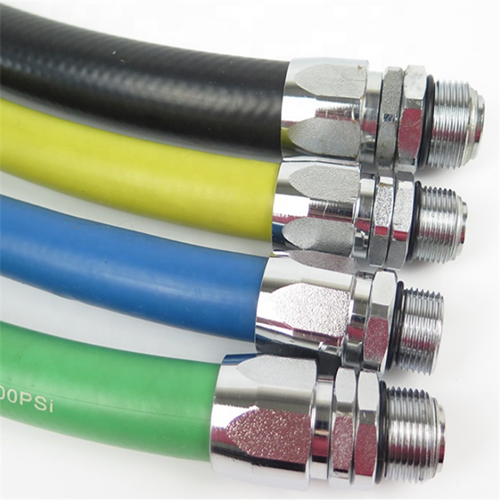
OEM one fiber braid hydraulic hoses represent a critical component in fluid power systems across diverse industries including construction, agriculture, manufacturing, and automotive. These hoses, distinguished by a single layer of high-tensile fiber reinforcement embedded within a flexible rubber matrix, deliver fluid conveyance under pressure. Their position within the industrial chain is as a direct downstream product of rubber compounding and textile braiding technologies. Core performance characteristics center around burst pressure, working pressure, flexibility, temperature resistance, and resistance to fluid compatibility. They provide a cost-effective solution for lower-pressure applications where the extreme durability of spiral-wound hoses is not required. A key industry pain point is maintaining consistent quality across OEM suppliers, as variations in braiding density and rubber compound formulation directly impact hose lifespan and safety. This guide provides a comprehensive technical overview of one fiber braid hydraulic hoses, covering materials, manufacturing, performance, failure modes, and relevant standards.
Material Science & Manufacturing
The construction of a one fiber braid hydraulic hose involves several key materials and processes. The inner tube is typically composed of synthetic rubber compounds such as Nitrile (NBR), Ethylene Propylene Diene Monomer (EPDM), or Chloroprene (CR), selected based on fluid compatibility requirements. NBR excels in oil resistance, EPDM in water and weathering resistance, and CR in resistance to ozone and heat. The reinforcement layer consists of high-tensile strength fiber – typically polyester, nylon, or aramid – woven into a single braid. Polyester provides good strength and elasticity, nylon offers higher impact resistance, and aramid boasts exceptional strength-to-weight ratio. The outer cover is also a synthetic rubber compound, generally a blend of CR and NBR to provide abrasion resistance, weathering protection, and ozone resistance. Manufacturing begins with extrusion of the inner tube to the desired dimensions and wall thickness. The fiber braid is then applied over the inner tube using a specialized braiding machine. Precise tension control during braiding is crucial; insufficient tension leads to braid slippage and premature failure, while excessive tension can deform the inner tube. Following braiding, the hose assembly undergoes vulcanization – a curing process involving heat and pressure – which crosslinks the rubber polymers, enhancing strength, elasticity, and chemical resistance. Critical parameters during vulcanization include temperature, time, and pressure. Post-vulcanization, the hose is inspected for defects, tested for pressure integrity, and cut to specified lengths. Quality control is paramount, including dimensional checks, pressure testing (hydrostatic and impulse), and material analysis. Adherence to controlled cooling rates post-vulcanization is also important to minimize internal stress.
Performance & Engineering
The performance of a one fiber braid hydraulic hose is governed by a complex interplay of material properties and engineering design. Burst pressure, the maximum pressure the hose can withstand before rupture, is a primary performance metric. Working pressure is significantly lower, typically 50-75% of the burst pressure, and represents the safe operating pressure. Hose flexibility, influenced by the rubber compound’s durometer (hardness) and the braid angle, impacts ease of installation and routing. Environmental resistance encompasses temperature range (both high and low), UV exposure, ozone resistance, and resistance to chemical attack from the conveyed fluid. Force analysis during operation involves consideration of internal pressure, external bending moments, and axial loads. Hoses are often subjected to impulse pressures – rapid pressure fluctuations – which can lead to fatigue failure. The fiber braid acts as a stress-bearing element, resisting hoop stress caused by internal pressure. Compliance requirements vary by region and application. For instance, SAE J517 specifies performance characteristics for hydraulic hoses in North America, while EN 856 defines standards in Europe. Furthermore, specific industries may impose additional requirements, such as fire resistance in mining applications or food-grade compatibility in food processing. Finite Element Analysis (FEA) is increasingly used to optimize hose design and predict performance under various loading conditions. This allows engineers to accurately assess stress distribution, identify potential failure points, and refine material selection and geometry.
Technical Specifications
| Parameter | Unit | Typical Value (NBR/Polyester) | Typical Value (EPDM/Nylon) |
|---|---|---|---|
| Working Pressure | MPa | 10 | 8 |
| Burst Pressure | MPa | 30 | 24 |
| Temperature Range | °C | -40 to +100 | -40 to +120 |
| Inner Diameter | mm | 6 - 51 | 6 - 51 |
| Outer Diameter | mm | 10 - 63 | 12 - 68 |
| Braid Coverage | % | 30-40 | 35-45 |
Failure Mode & Maintenance
One fiber braid hydraulic hoses are susceptible to several failure modes. Fatigue cracking, initiated by repeated flexing and impulse pressures, is a common occurrence. This often starts at braid crossover points where stress concentration is highest. Hose kinking, resulting from excessive bending, can damage the inner tube and lead to leaks. Abrasion of the outer cover, caused by contact with abrasive surfaces, can expose the braid to corrosion and accelerate failure. Chemical degradation occurs when the conveyed fluid is incompatible with the rubber compound, leading to swelling, cracking, and loss of flexibility. Oxidation, particularly in EPDM hoses exposed to ozone and UV radiation, can cause surface cracking and embrittlement. Braid slippage, stemming from inadequate adhesion between the braid and the rubber matrix, reduces the hose’s burst pressure capacity. Maintenance practices include regular visual inspections for signs of wear, abrasion, and cracking. Avoid sharp bends and excessive flexing. Ensure proper fluid compatibility. Store hoses in a cool, dry place away from direct sunlight and ozone sources. Implement a preventative maintenance schedule based on operating conditions and hose usage. If a hose shows signs of damage, it should be replaced immediately. Regular pressure testing can also help identify potential weaknesses before catastrophic failure occurs. Proper hose assembly techniques, including the correct crimp size and fitting selection, are critical for maximizing hose lifespan and preventing premature failure.
Industry FAQ
Q: What is the primary difference between a one fiber braid hose and a two fiber braid hose in terms of pressure capacity?
A: A two fiber braid hose generally exhibits a significantly higher pressure capacity than a one fiber braid hose due to the increased reinforcement provided by the additional braid layer. The doubled braid coverage enhances the hose’s ability to withstand internal pressure and resist hoop stress, leading to a higher burst pressure and working pressure rating.
Q: How does the choice of inner tube material (NBR vs. EPDM) impact the hose’s performance in different applications?
A: NBR is typically preferred for applications involving petroleum-based fluids, oils, and fuels due to its excellent oil resistance. EPDM, on the other hand, excels in applications requiring resistance to water, weathering, ozone, and heat, making it suitable for outdoor and automotive applications. The fluid being conveyed is the determining factor.
Q: What is the impact of improper hose crimping on the hose’s longevity and safety?
A: Improper crimping – whether under-crimped or over-crimped – can severely compromise the hose’s integrity. Under-crimping results in a weak connection between the hose and the fitting, leading to leaks and potential separation. Over-crimping can damage the hose reinforcement, reducing its burst pressure capacity and increasing the risk of failure.
Q: What are the key considerations when selecting a hose for high-temperature applications?
A: For high-temperature applications, it's crucial to select a hose with an inner tube and outer cover formulated to withstand the elevated temperatures. EPDM generally offers better high-temperature resistance than NBR. The working pressure should also be derated at higher temperatures, as the rubber’s strength decreases with increasing temperature. Consider hoses specifically designed for high-temperature service.
Q: How can I determine if a hose is experiencing fatigue failure before it ruptures?
A: Early signs of fatigue failure include localized cracking, bulging, or discoloration near the braid or fittings. Regular visual inspections are critical. If you observe any of these symptoms, the hose should be taken out of service immediately and replaced. Impulse testing can also reveal subtle signs of weakness.
Conclusion
OEM one fiber braid hydraulic hoses remain a vital and cost-effective solution for a wide range of hydraulic applications where moderate pressures and flexibility are paramount. Their performance is intrinsically linked to the careful selection of materials, precise manufacturing processes, and diligent adherence to industry standards. Understanding the potential failure modes and implementing proactive maintenance practices are essential for maximizing hose lifespan and ensuring operational safety.
Future developments in hose technology will likely focus on enhancing material properties – such as improved abrasion resistance and chemical compatibility – and optimizing hose designs through advanced modeling techniques. Continued emphasis on quality control and standardized testing procedures will be crucial for maintaining the reliability and performance of these critical components in demanding industrial environments.