
Apr . 01, 2024 17:55 Back to list
oem one fiber braid hydraulic hose supplier Performance Analysis
Introduction
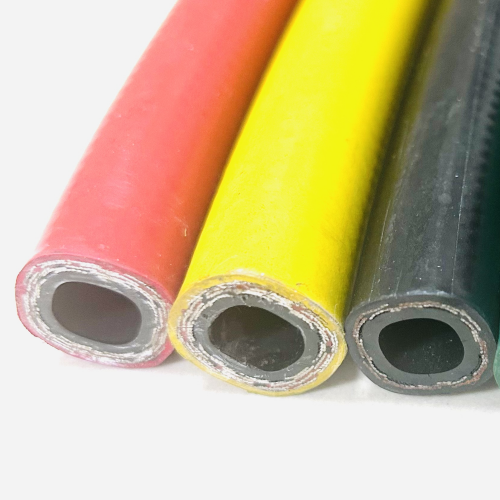
OEM one fiber braid hydraulic hose represents a crucial component within fluid power systems, serving as a flexible conduit for the transmission of hydraulic fluid under pressure. Positioned within the industrial chain as a critical intermediary between hydraulic power units (HPUs), pumps, valves, and actuators, its performance directly impacts system efficiency, reliability, and safety. These hoses are commonly utilized across diverse sectors including construction machinery, agricultural equipment, material handling, and industrial manufacturing. Core performance characteristics center around pressure capacity, burst strength, temperature resistance, and fluid compatibility, directly dictating the operating parameters and lifespan of the hose assembly. The “one fiber braid” designation indicates a single layer of high-tensile strength fiber reinforcement, typically steel wire, embedded within a rubber matrix, providing moderate pressure capability and flexibility. Understanding these parameters is fundamental to mitigating potential system failures and optimizing operational longevity.
Material Science & Manufacturing
The construction of a one fiber braid hydraulic hose begins with the selection of appropriate raw materials. The inner tube, in direct contact with the hydraulic fluid, is typically composed of oil-resistant synthetic rubber compounds such as Nitrile (NBR), Ethylene Propylene Diene Monomer (EPDM), or Chloroprene (CR). NBR is favored for its resistance to petroleum-based fluids, EPDM for phosphate ester fluids and high-temperature applications, and CR for its broad chemical compatibility and weathering resistance. The reinforcement layer consists of high-tensile steel wire, manufactured to precise diameter and surface finish specifications. The outer cover, providing environmental protection and abrasion resistance, is commonly composed of Chloroprene or polyurethane-based rubber. Manufacturing proceeds through several key stages: inner tube extrusion, fiber braid winding, outer cover extrusion, and end fitting crimping. Extrusion parameters (temperature, screw speed, die geometry) are tightly controlled to ensure dimensional accuracy and homogenous rubber compound distribution. The steel wire braid is wound helically around a mandrel, maintaining consistent pitch and tension to maximize reinforcement effectiveness. Vulcanization, a heat-induced chemical process, crosslinks the rubber polymers, imparting elasticity and durability. Precise control of vulcanization time and temperature is critical to achieve optimal material properties. End fittings, typically steel or stainless steel, are crimped onto the hose using specialized machinery, creating a leak-proof seal.
Performance & Engineering
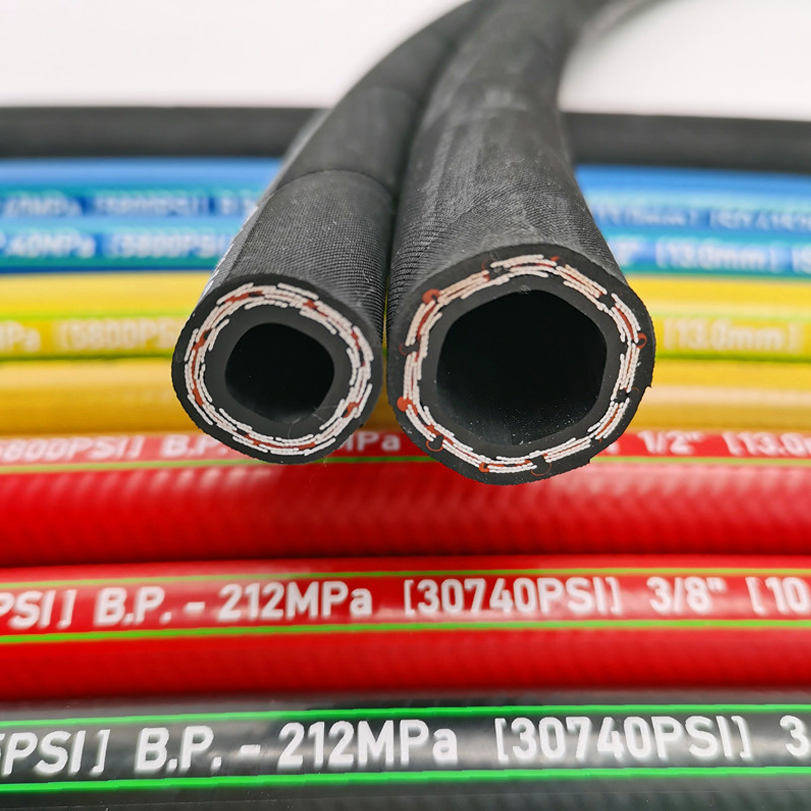
The performance of a one fiber braid hydraulic hose is fundamentally governed by its ability to withstand internal pressure without failure. Burst pressure, typically specified as a multiple of the working pressure, represents the maximum pressure the hose can endure before rupture. This is directly correlated with the tensile strength of the reinforcement braid and the rubber compound’s elongation at break. Hose assemblies are subjected to rigorous testing procedures, including hydrostatic pressure testing, impulse testing, and temperature cycling, to validate their performance characteristics. Force analysis considers hoop stress within the hose wall, induced by internal pressure. The reinforcement braid bears the brunt of this stress, preventing hose expansion and maintaining dimensional stability. Environmental resistance is another critical engineering consideration. Exposure to extreme temperatures, ozone, UV radiation, and corrosive fluids can degrade the rubber compounds, reducing their flexibility and strength. The selection of appropriate rubber materials and the incorporation of UV stabilizers and antioxidants are vital for enhancing environmental durability. Compliance requirements, dictated by standards such as SAE J517 and EN 856, specify minimum performance criteria and testing protocols. The hose’s bend radius also impacts performance; exceeding the minimum bend radius can induce stress concentrations and premature failure. Proper routing and support are therefore essential.
Technical Specifications
| Parameter | Unit | Specification (Typical) | Testing Standard |
|---|---|---|---|
| Working Pressure | MPa | 10 - 25 | SAE J517 |
| Burst Pressure | MPa | 30 - 75 | SAE J517 |
| Temperature Range | °C | -40 to +100 | SAE J517 |
| Inner Tube Material | - | NBR, EPDM, CR | ASTM D2000 |
| Reinforcement | - | Single Steel Wire Braid | SAE J517 |
| Outer Cover Material | - | CR, Polyurethane | ASTM D2000 |
Failure Mode & Maintenance
One fiber braid hydraulic hoses are susceptible to several failure modes. Fatigue cracking, initiated by repeated pressure cycling and flexing, typically occurs at the hose ends or around fittings. Delamination, the separation of the rubber layers, can result from inadequate bonding during manufacturing or exposure to corrosive fluids. Abrasion, caused by external contact with abrasive surfaces, can wear through the outer cover, exposing the reinforcement braid to corrosion. Oxidation and UV degradation can embrittle the rubber compounds, reducing their flexibility and strength. Leakage at the crimp connection is a common failure point, often due to improper crimping or corrosion of the fitting. Preventative maintenance is crucial for extending hose lifespan. Regular visual inspections should be conducted to identify signs of wear, cracking, or leakage. Hoses should be replaced if they exhibit any signs of damage. Proper hose routing and support, avoiding sharp bends and abrasive contact, can minimize stress and abrasion. Hydraulic fluid should be maintained clean and free of contaminants to prevent internal abrasion and corrosion. Crimping procedures must adhere to manufacturer’s specifications to ensure a secure and leak-proof connection. Periodic pressure testing can identify potential weaknesses before catastrophic failure occurs.
Industry FAQ
Q: What is the primary difference between a one fiber braid hose and a two fiber braid hose in terms of operational capacity?
A: The primary difference lies in the pressure capacity and burst strength. A two fiber braid hose, with its doubled reinforcement, can withstand significantly higher working pressures and burst pressures compared to a one fiber braid hose. While a one fiber braid hose is suitable for lower-pressure applications, a two fiber braid hose is preferred for systems requiring higher performance and enhanced safety margins.
Q: How does the type of hydraulic fluid impact the selection of the inner tube material?
A: Hydraulic fluid compatibility is paramount. Petroleum-based fluids typically require NBR inner tubes, while phosphate ester fluids necessitate EPDM. Chloroprene (CR) offers broader chemical compatibility but may not be suitable for all fluids. Selecting the incorrect inner tube material can lead to swelling, cracking, and premature hose failure.
Q: What are the critical considerations when specifying the hose bend radius?
A: Exceeding the minimum bend radius induces stress concentrations within the hose wall, potentially leading to fatigue cracking. The specified bend radius should be strictly adhered to during installation. Support mechanisms should be used to prevent excessive bending and ensure proper hose routing.
Q: What is the significance of the 'impulse testing' mentioned in the technical specifications?
A: Impulse testing simulates the cyclical pressure surges that occur in many hydraulic systems. It assesses the hose’s ability to withstand repeated pressure fluctuations without failure. Successful completion of impulse testing demonstrates the hose’s robustness and suitability for dynamic applications.
Q: What maintenance procedures are recommended to prevent corrosion of the hose fittings?
A: Regular cleaning of the fittings to remove dirt, debris, and corrosive contaminants is essential. Applying a corrosion inhibitor specifically designed for hydraulic systems can provide additional protection. Inspect fittings for signs of rust or pitting, and replace them if necessary.
Conclusion
OEM one fiber braid hydraulic hoses serve as vital components in numerous industrial applications, demanding a thorough understanding of their material properties, manufacturing processes, and performance characteristics. The selection of appropriate materials, precise manufacturing control, and adherence to industry standards are all crucial for ensuring reliable and safe operation. A clear understanding of potential failure modes and the implementation of proactive maintenance procedures are equally vital to maximizing hose lifespan and preventing costly downtime.
Moving forward, advancements in rubber compounding and reinforcement technologies will likely lead to enhanced hose performance and durability. The increasing focus on sustainability may drive the development of bio-based rubber compounds and recyclable hose materials. Continued adherence to stringent quality control measures and comprehensive testing protocols will remain essential for maintaining the integrity and reliability of these critical components within hydraulic systems.