
Apr . 01, 2024 17:55 Back to list
oem one fiber braid hydraulic hose manufacturer Performance Analysis
Introduction
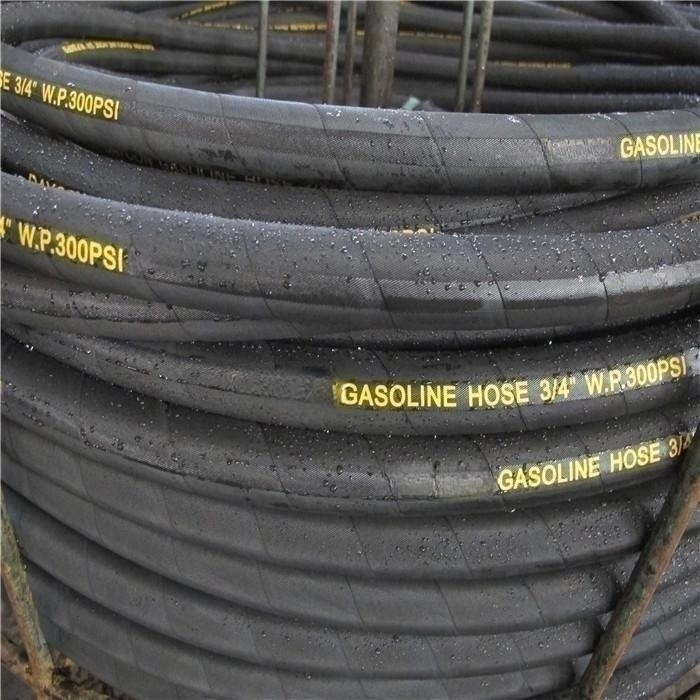
One fiber braid hydraulic hose represents a crucial component in fluid power systems across diverse industrial applications, including construction machinery, agricultural equipment, and manufacturing processes. This hose type is characterized by its internal rubber tube reinforced with a single layer of high-tensile fiber braid, typically comprised of polyester or aramid, providing enhanced pressure resistance and durability compared to non-reinforced hoses. OEM (Original Equipment Manufacturer) production focuses on meeting stringent performance and safety standards, tailoring hose specifications to specific application requirements. Its technical position within the industry chain is as a critical intermediary component, linking fluid power sources (pumps, valves) to actuators (cylinders, motors) and demanding precise engineering and materials selection. Core performance characteristics include working pressure, burst pressure, temperature range, fluid compatibility, and bend radius, all impacting system reliability and operational safety. The OEM sector focuses on providing consistent quality and customized solutions based on detailed application analysis.
Material Science & Manufacturing
The core materials utilized in one fiber braid hydraulic hose construction necessitate a detailed understanding of their physical and chemical properties. The inner tube is typically composed of synthetic rubber compounds, predominantly nitrile butadiene rubber (NBR) or chloroprene rubber (CR), chosen for their resistance to petroleum-based hydraulic fluids. NBR offers excellent abrasion resistance and oil compatibility, while CR demonstrates superior resistance to ozone and weathering. The fiber reinforcement braid, usually polyester or aramid, contributes significantly to the hose’s pressure-withstanding capability. Polyester provides good tensile strength and dimensional stability at a lower cost, while aramid (e.g., Kevlar) delivers exceptional strength-to-weight ratio and high-temperature resistance. The outer cover often consists of chloroprene rubber (CR) or polyurethane, providing abrasion, ozone, and UV protection.
Manufacturing involves a multi-stage process. First, the synthetic rubber compound is mixed, calendered into a sheet, and then extruded to form the inner tube. Precise control of extrusion parameters – temperature, screw speed, and die pressure – is critical to ensure consistent wall thickness and avoid defects. The fiber braid is then helically wrapped over the inner tube, maintaining consistent tension and overlap. This is a critical parameter controlling burst pressure. Following braiding, the hose assembly undergoes vulcanization – a curing process employing heat and pressure to crosslink the rubber polymers, enhancing its mechanical properties and fluid resistance. The outer cover is subsequently extruded, and the hose is inspected for dimensional accuracy, pressure testing (hydrostatic testing), and potential defects. Quality control measures throughout each stage, including raw material inspection, in-process monitoring, and final product testing, are paramount to ensuring reliability.
Performance & Engineering
The performance of one fiber braid hydraulic hose is fundamentally governed by principles of fluid mechanics and material stress analysis. Working pressure is determined by the tensile strength of the fiber braid, the rubber compound’s elongation at break, and the hose diameter. A larger diameter hose generally has a lower working pressure for a given braid construction. Burst pressure is typically 3-4 times the working pressure and is a crucial safety parameter. Environmental resistance is paramount; hydraulic systems often operate in harsh conditions involving wide temperature fluctuations, exposure to chemicals, and abrasive particles. Hose materials must maintain their flexibility and integrity across the specified temperature range (-40°C to +100°C is common). Fluid compatibility is also critical; incompatibility can lead to swelling, degradation, and eventual hose failure.
Engineering considerations include hose bend radius – a minimum bend radius is specified to prevent kinking and localized stress concentrations. Fatigue life is assessed through cyclic pressure testing, simulating repeated loading and unloading scenarios. Compliance requirements, such as those stipulated by SAE (Society of Automotive Engineers) standards (e.g., SAE J517 for hydraulic hose performance) and EN standards (e.g., EN 853 for hydraulic hose specifications), dictate acceptable performance levels and testing procedures. Finite Element Analysis (FEA) is commonly employed to model stress distributions within the hose structure under various loading conditions, optimizing design and material selection for enhanced performance and longevity. Proper end fitting crimping is crucial; insufficient or excessive crimping can compromise the hose’s integrity and lead to leakage or failure.
Technical Specifications
| Parameter | Unit | Specification (Typical) | Testing Standard |
|---|---|---|---|
| Working Pressure | MPa | 10 – 25 | SAE J517 / EN 853 |
| Burst Pressure | MPa | 30 – 75 | SAE J517 / EN 853 |
| Temperature Range | °C | -40 to +100 | SAE J517 / EN 853 |
| Inner Tube Material | - | NBR / CR | ASTM D2000 |
| Reinforcement Braid | - | Polyester / Aramid | ASTM D790 |
| Outer Cover Material | - | CR / Polyurethane | ASTM D2000 |
Failure Mode & Maintenance
Failure modes in one fiber braid hydraulic hose are often attributable to degradation of materials, exceeding pressure limits, or improper installation/maintenance. Common failure modes include burst due to exceeding working pressure, leading to catastrophic fluid loss. Fatigue cracking, initiated by repeated flexing and pressure cycling, can occur in the braid or rubber compounds, gradually weakening the hose. Abrasion from external sources can damage the outer cover, exposing the reinforcement braid to corrosion and further degradation. Chemical attack from incompatible fluids can cause swelling, softening, and ultimately, failure of the inner tube. Kinking, resulting from excessive bending below the minimum bend radius, can cause localized stress and eventual rupture.
Preventative maintenance is critical to extending hose life and ensuring system safety. Regular visual inspections should be conducted to identify signs of abrasion, cracking, or swelling. Pressure testing should be performed periodically to verify the hose’s integrity. Proper routing and support are essential to minimize stress and abrasion. End fittings should be inspected for corrosion or damage. When replacing a hose, ensure compatibility with the hydraulic fluid and operating conditions. Avoid twisting the hose during installation. If a hose exhibits any signs of damage, it should be replaced immediately. Correct crimping procedures during fitting installation are vital and should adhere to fitting manufacturer recommendations. Following these guidelines minimizes the risk of failure and maximizes the operational lifespan of the hose.
Industry FAQ
Q: What is the primary difference between polyester and aramid fiber braid in terms of hydraulic hose performance?
A: Aramid fiber braid, like Kevlar, offers significantly higher tensile strength and temperature resistance compared to polyester. While polyester provides adequate performance for many applications at a lower cost, aramid is preferred for high-pressure, high-temperature, or demanding applications where exceptional strength-to-weight ratio is crucial. Aramid provides better resistance to stretch under load, maintaining hose dimensions and preventing internal wear.
Q: How does temperature affect the performance of NBR and CR inner tube materials?
A: NBR (Nitrile Butadiene Rubber) generally exhibits good performance across a moderate temperature range (-40°C to +120°C), but its flexibility can decrease at lower temperatures. CR (Chloroprene Rubber) provides better resistance to ozone, weathering, and a wider temperature range (-40°C to +150°C), making it suitable for outdoor or harsh environments. Extreme temperatures, whether high or low, can affect the rubber's elasticity and resistance to hydraulic fluid degradation.
Q: What is the significance of hydrostatic testing in hydraulic hose quality control?
A: Hydrostatic testing is a critical non-destructive testing method used to verify the structural integrity of hydraulic hoses. The hose is internally pressurized to a level significantly higher than its working pressure (typically 1.5 times) and held for a specified duration. This test identifies any leaks, weaknesses, or defects in the hose construction, ensuring it meets safety and performance standards.
Q: What are the common causes of hose kinking, and how can it be prevented?
A: Hose kinking occurs when the hose is bent below its minimum bend radius, causing internal collapse and restricting fluid flow. Common causes include improper routing, insufficient support, and excessive bending forces. Prevention involves adhering to the manufacturer's specified minimum bend radius, providing adequate support along the hose length, and avoiding sharp turns or obstructions.
Q: What standards should be considered when specifying hydraulic hoses for a mobile hydraulic system?
A: Key standards to consider include SAE J517 (hydraulic hose performance), SAE J1926 (hose fittings), EN 853 (hydraulic hose specifications), and ISO 4413 (hydraulic fluid power - general rules relating to systems). These standards define performance requirements, testing procedures, and safety guidelines, ensuring compatibility and reliability within the hydraulic system.
Conclusion
One fiber braid hydraulic hose remains a workhorse solution for numerous fluid power applications due to its cost-effectiveness, durability, and reliable performance. However, optimal performance relies on a comprehensive understanding of material science, manufacturing processes, and application-specific engineering considerations. Proper material selection, precise control of manufacturing parameters, and adherence to relevant industry standards are paramount to ensuring hose integrity and safety.
Looking ahead, advancements in materials and manufacturing technologies will likely focus on enhancing hose performance characteristics such as temperature resistance, chemical compatibility, and fatigue life. The integration of smart monitoring systems, capable of detecting early signs of degradation or damage, will further improve system reliability and preventative maintenance capabilities. Careful consideration of these technical factors ensures the continued relevance and effectiveness of one fiber braid hydraulic hoses in modern industrial applications.