
Apr . 01, 2024 17:55 Back to list
oem one fiber braid hydraulic hose factory Performance Analysis
Introduction
OEM one fiber braid hydraulic hose constitutes a critical component in fluid power systems across diverse industrial applications, including construction machinery, agricultural equipment, and manufacturing processes. These hoses are engineered to safely and efficiently transmit hydraulic fluid, enabling the operation of actuators and motors. Positioned within the hydraulic system as the conduit for pressurized fluid, the hose’s performance directly impacts system reliability, efficiency, and safety. Core performance characteristics revolve around pressure capacity, burst strength, flexibility, and resistance to chemical degradation and abrasion. A key market driver is the increasing demand for more compact and higher-performing hydraulic systems, necessitating hoses with tighter bend radii and enhanced durability. This guide provides a comprehensive technical overview of OEM one fiber braid hydraulic hoses, covering material science, manufacturing processes, performance parameters, failure modes, and relevant industry standards.
Material Science & Manufacturing
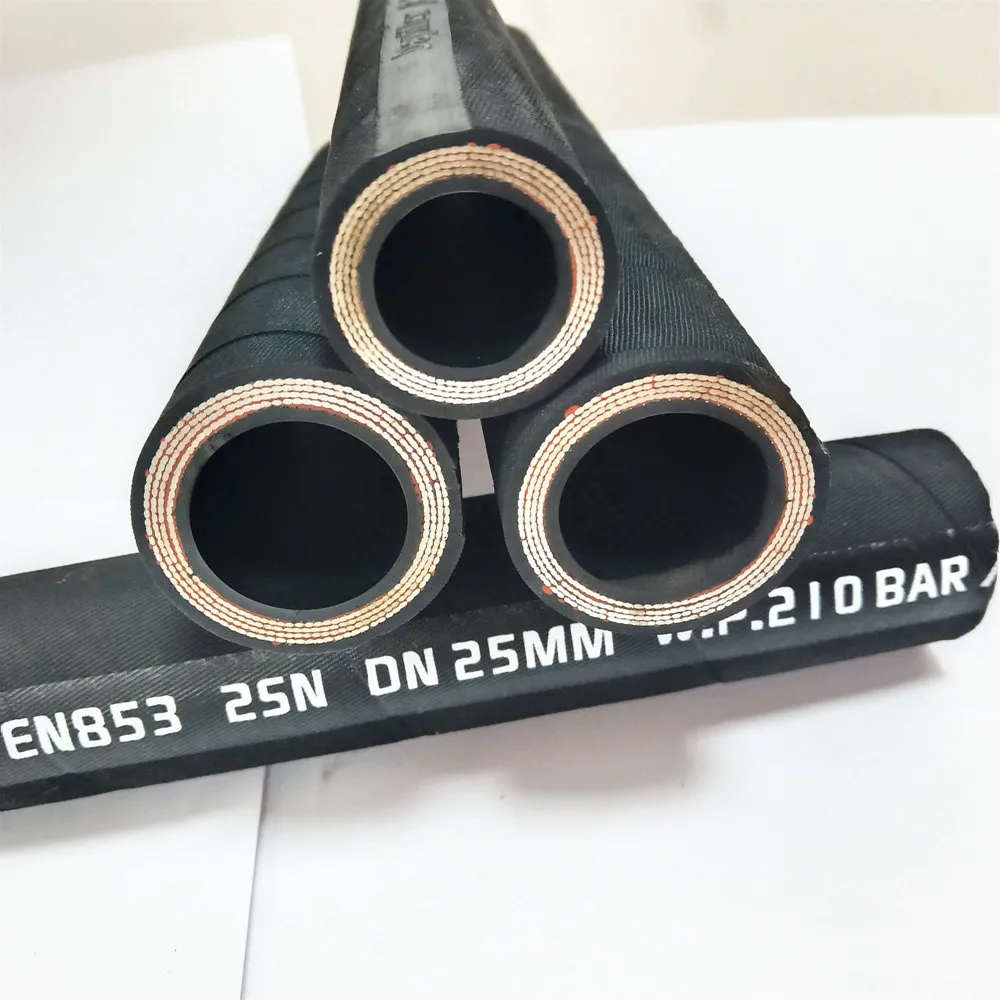
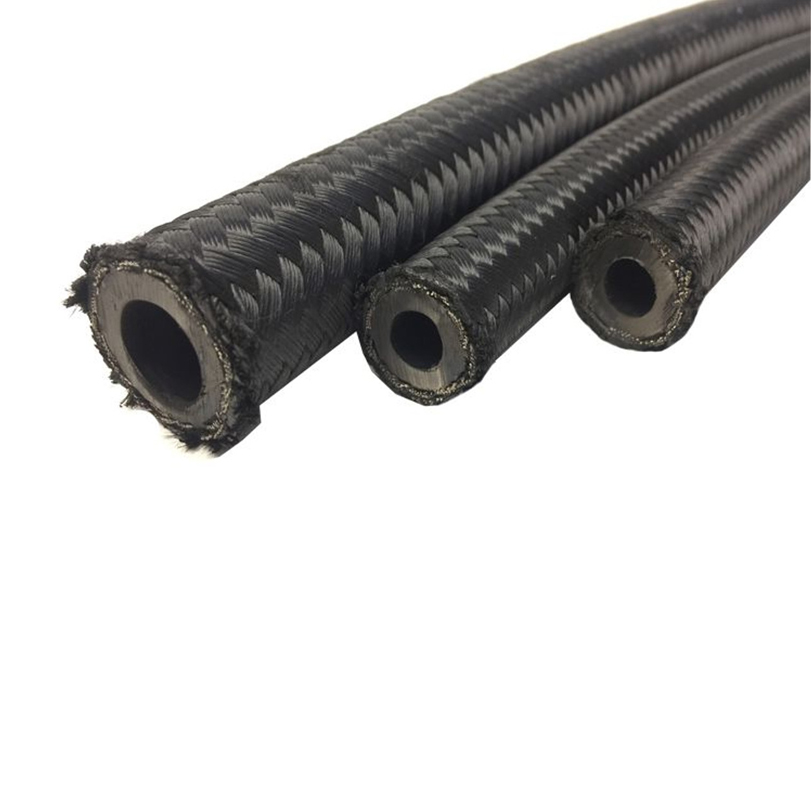
The construction of a one fiber braid hydraulic hose typically involves four primary layers: the inner tube, the reinforcement layer, the outer cover, and bonding agents. The inner tube is commonly composed of synthetic rubbers such as nitrile (NBR), also known as Buna-N, for oil resistance, or ethylene propylene diene monomer (EPDM) for compatibility with phosphate ester fluids. NBR offers tensile strength ranging from 15-25 MPa, while EPDM typically exhibits 10-20 MPa. The reinforcement layer, crucial for pressure containment, utilizes a single braid of high-strength steel wire. The wire’s tensile strength is generally in the range of 1700-2100 MPa and undergoes a rigorous drawing process to achieve the necessary properties. The outer cover is typically made of chloroprene rubber (CR), known for its excellent abrasion resistance and weathering characteristics, with a hardness range of 60-70 Shore A. Bonding agents, formulated with specific adhesion promoters, are essential for ensuring a robust and durable bond between the rubber layers and the steel reinforcement.
Manufacturing begins with extrusion of the inner tube, followed by application of the bonding agent. The steel wire braid is then applied via a helical winding process, ensuring precise and consistent coverage. Another layer of bonding agent is applied before extruding the outer cover. Post-extrusion, the hose undergoes a vulcanization process – curing under heat and pressure – to crosslink the rubber polymers, significantly enhancing strength, elasticity, and chemical resistance. Key parameters during vulcanization include temperature (typically 150-180°C), pressure (7-10 bar), and time (30-60 minutes). Precise control of these parameters is vital to prevent under-curing (leading to reduced strength) or over-curing (resulting in brittleness). Final inspection includes pressure testing to 1.5 times the working pressure and dimensional checks to verify adherence to specifications.
Performance & Engineering
The performance of a one fiber braid hydraulic hose is heavily influenced by its ability to withstand internal pressure, external loads, and environmental stressors. Force analysis reveals that hoop stress within the inner tube is the primary determinant of burst pressure. This stress is calculated using the Barlow formula: σ = (P r) / t, where σ is hoop stress, P is internal pressure, r is the inner radius, and t is the wall thickness. Therefore, increasing wall thickness and reducing inner radius directly enhance burst pressure. Flexibility is determined by the hose’s bend radius, which must be maintained above a minimum value to prevent kinking and flow restriction. The steel braid contributes to axial stiffness, resisting elongation under pressure.
Environmental resistance is crucial. Exposure to elevated temperatures can degrade rubber compounds, reducing their elasticity and increasing the risk of cracking. Ozone cracking, a common issue with unsaturated rubbers like NBR, can be mitigated through the addition of antiozonants. Chemical compatibility is also paramount; exposure to incompatible fluids can cause swelling, softening, or dissolution of the inner tube. Compliance requirements, such as those outlined in SAE J517 (Hydraulic Hose – Performance Characteristics) and EN 853 (Hydraulic hoses – Rubber hoses for oil transfer – Requirements and test methods), dictate minimum performance standards for burst pressure, impulse pressure, and temperature range. Proper hose routing and support are essential engineering considerations, minimizing stress concentrations and preventing abrasion against adjacent components.
Technical Specifications
| Parameter | Unit | Typical Value (NBR Inner Tube) | Typical Value (EPDM Inner Tube) |
|---|---|---|---|
| Working Pressure | MPa | 20 | 16 |
| Burst Pressure | MPa | 80 | 64 |
| Temperature Range | °C | -40 to +100 | -40 to +120 |
| Minimum Bend Radius | mm | 4D (D=Hose ID) | 6D (D=Hose ID) |
| Tensile Strength (Reinforcement) | MPa | 1800 | 1800 |
| Outer Cover Hardness | Shore A | 65 | 65 |
Failure Mode & Maintenance
Failure modes in one fiber braid hydraulic hoses are commonly attributed to several factors. Fatigue cracking, induced by repeated flexing and pressure cycling, initiates at stress concentrations (e.g., near fittings). Delamination, the separation of rubber layers, often occurs due to inadequate bonding or exposure to aggressive fluids. Degradation of the rubber compound, resulting from exposure to heat, ozone, or UV radiation, manifests as cracking and loss of elasticity. Oxidation, particularly in EPDM formulations, can lead to embrittlement and failure. Abrasion, caused by contact with abrasive surfaces, progressively wears away the outer cover, exposing the reinforcement braid to corrosion. Fitting failure, involving loosening or corrosion of the crimped connection, is another common cause of leaks.
Preventative maintenance is critical. Regular visual inspections should be conducted to identify signs of cracking, abrasion, or swelling. Hose assemblies should be replaced at recommended intervals, typically every 5-7 years, or sooner if damage is detected. Proper hose routing and support are essential to minimize stress and abrasion. Fluid contamination should be prevented through the use of filters. When replacing hoses, it is crucial to use compatible fittings and ensure proper crimping. Storage of hoses should be in a cool, dry, and dark environment, away from ozone sources and direct sunlight. A program of routine pressure testing can also detect weakening before catastrophic failure.
Industry FAQ
Q: What is the primary difference between NBR and EPDM inner tubes in hydraulic hose applications?
A: NBR (Nitrile Butadiene Rubber) offers superior resistance to petroleum-based hydraulic fluids, making it suitable for most common applications. EPDM (Ethylene Propylene Diene Monomer) provides excellent resistance to phosphate ester fluids, high temperatures, and weathering, but has lower oil resistance compared to NBR. The choice depends on the specific fluid compatibility requirements of the system.
Q: How does the steel wire braid contribute to the hose’s pressure rating?
A: The steel wire braid acts as the primary reinforcement layer, resisting hoop stress caused by internal pressure. The number of wires, wire diameter, and braid angle directly influence the hose’s burst and working pressure. A tighter braid angle and larger wire diameter increase pressure capacity but can reduce flexibility.
Q: What are the critical considerations for selecting the correct hose bend radius?
A: Maintaining a bend radius above the manufacturer’s minimum specification is essential to prevent kinking, flow restriction, and premature failure. A tighter bend radius increases stress concentration in the hose wall. The hose ID significantly impacts the minimum bend radius.
Q: What is the significance of impulse pressure testing in hydraulic hose evaluation?
A: Impulse pressure testing simulates the effects of pressure pulsations and surges commonly encountered in hydraulic systems. It assesses the hose’s ability to withstand cyclical pressure loads without fatigue failure. A higher impulse pressure rating indicates greater durability in dynamic applications.
Q: How can I mitigate the risk of ozone cracking in NBR hoses?
A: Ozone cracking can be minimized by avoiding exposure to ozone-rich environments, such as those near electrical equipment. The addition of antiozonants to the rubber compound provides further protection. Proper storage in a sealed container can also help prevent ozone exposure.
Conclusion
OEM one fiber braid hydraulic hoses represent a foundational element in numerous hydraulic systems, demanding careful consideration of material properties, manufacturing techniques, and performance characteristics. The interplay between inner tube composition, reinforcement strength, and outer cover durability dictates the hose’s ability to withstand pressure, temperature, and environmental stressors. Understanding failure modes and implementing proactive maintenance strategies are vital for ensuring long-term reliability and preventing catastrophic system failures.
Future trends in hydraulic hose technology are focused on developing lighter-weight materials, enhancing chemical resistance, and improving hose traceability through embedded sensors. Adherence to industry standards like SAE J517 and EN 853 remains paramount for ensuring safety and performance. Continued innovation in rubber compounding and braiding techniques will drive further improvements in hose durability and efficiency.