
Apr . 01, 2024 17:55 Back to list
oem lpg hose suppliers suppliers Performance Analysis
Introduction
Liquefied Petroleum Gas (LPG) hoses are critical components in the safe and efficient transfer of LPG for various applications, including residential heating, cooking, industrial processes, and automotive fuel systems. OEM LPG hose suppliers provide specialized hoses tailored to specific equipment and regulatory standards. These hoses differ significantly from general-purpose rubber tubing, demanding stringent material selection, manufacturing control, and performance testing. The market is driven by increasing demand for LPG as a cleaner fuel source, coupled with stricter safety regulations worldwide. Core performance characteristics revolve around permeation resistance, pressure handling capacity, burst strength, and resistance to degradation from LPG's chemical properties and environmental factors. A significant pain point for OEMs is consistently sourcing hoses that meet precise specifications and maintain quality across large production runs while adhering to relevant international safety standards. This guide provides a comprehensive technical overview of LPG hoses, covering materials, manufacturing, performance, failure modes, and industry standards.
Material Science & Manufacturing
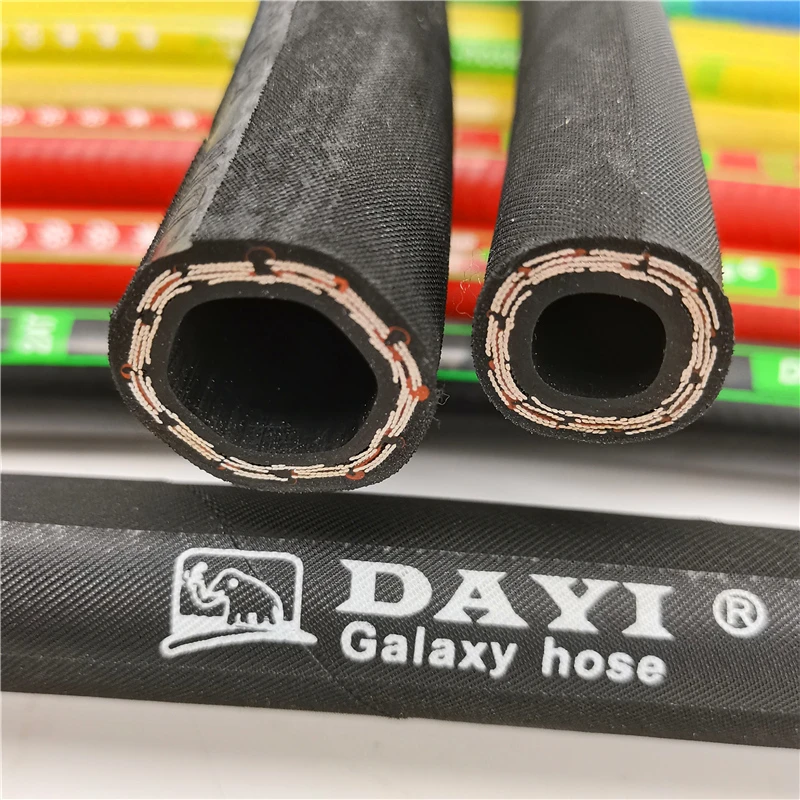
LPG hoses are typically constructed from a multi-layered composite structure. The inner layer, in direct contact with LPG, is commonly made of a specialized synthetic rubber compound, predominantly nitrile rubber (NBR) or fluorocarbon rubber (FKM/Viton). NBR offers good resistance to aliphatic hydrocarbons present in LPG, while FKM provides superior resistance to both aliphatic and aromatic hydrocarbons, as well as higher temperature performance, though at a greater cost. The reinforcement layer is typically a high-tensile strength braided textile or spiral-wound steel wire. Textiles, such as polyester or nylon, offer flexibility and resistance to kinking, while steel wire provides significantly higher burst pressure capabilities. The outer cover is usually made of Chloroprene rubber (CR/Neoprene), offering excellent weather resistance, abrasion resistance, and ozone resistance.
Manufacturing processes begin with the compounding of rubber formulations, rigorously controlled for batch consistency. Extrusion is used to create the inner tube and outer cover, ensuring precise dimensions and wall thickness. The reinforcement layer is then applied, either through braiding or spiral winding, with tension carefully controlled to achieve the desired strength characteristics. Multiple layers are then assembled and vulcanized – a chemical process involving heat and pressure – to bond the materials together and develop the final physical properties. Critical parameters during vulcanization include temperature, pressure, and cure time, which directly impact the rubber’s elasticity, tensile strength, and resistance to aging. Post-vulcanization processes involve trimming, quality inspection (including pressure testing and leak testing), and final packaging. A critical quality control step is permeation testing to ensure the hose meets specified barrier properties.

Performance & Engineering
The performance of an LPG hose is dictated by several critical engineering parameters. Burst pressure, determined by the reinforcement layer and vulcanization process, is a fundamental safety requirement. Hoses must withstand pressures significantly exceeding normal operating conditions to prevent catastrophic failure. Permeation rate, the rate at which LPG molecules pass through the hose wall, is vital to prevent fuel loss and reduce environmental impact. Permeation is influenced by the rubber compound's molecular structure and density. Flexibility and bend radius are also important, especially in applications requiring frequent movement or tight installation spaces. Tensile strength and elongation at break define the hose's resistance to tearing and stretching under load. Furthermore, the hose must exhibit resistance to degradation from exposure to UV radiation, ozone, and temperature fluctuations.
Force analysis during hose operation considers internal pressure, bending stresses, and external loads. Finite Element Analysis (FEA) is frequently employed to model stress distribution and optimize hose design for specific applications. Compliance requirements, such as those stipulated by EN 1763 (European Standard) or CGA V-11 (Compressed Gas Association standards in the US), mandate specific performance criteria and testing procedures. The selection of appropriate materials and manufacturing processes directly influences the hose’s ability to meet these regulatory requirements. Consideration must be given to the compatibility of hose materials with LPG additives, such as odorants, which can affect long-term performance.
Technical Specifications
| Parameter | Unit | Typical Value (NBR Inner/CR Cover) | Typical Value (FKM Inner/CR Cover) |
|---|---|---|---|
| Working Pressure | bar | 15 | 20 |
| Burst Pressure | bar | 45 | 60 |
| Inner Diameter | mm | 6.3 – 19 | 6.3 – 19 |
| Outer Diameter | mm | 11 – 25 | 11 – 25 |
| Permeation Rate (Propane) | cm³/m²/day | < 2 | < 1 |
| Tensile Strength | MPa | 15 | 20 |
| Temperature Range | °C | -30 to +70 | -20 to +150 |
Failure Mode & Maintenance
Common failure modes in LPG hoses include permeation-induced swelling and softening of the rubber, leading to increased permeability and eventual leakage. Fatigue cracking can occur at the bend radius due to repeated flexing, especially if the hose is subjected to excessive stress or operates outside its specified temperature range. Delamination, the separation of layers, can result from inadequate bonding during vulcanization or exposure to aggressive chemicals. Oxidation and UV degradation can cause the outer cover to become brittle and crack, compromising its protective function. Internal degradation of the rubber due to chemical attack from LPG additives or contaminants can also lead to failure.
Preventative maintenance involves regular visual inspection for cracks, swelling, or discoloration. Hoses should be replaced if any signs of damage are detected. Avoid sharp bends and kinking. Protect hoses from direct sunlight and extreme temperatures. Ensure compatibility of hose materials with LPG additives used in the specific application. Storage should be in a cool, dry, and dark environment. Periodic leak testing using a soap solution is recommended. Document all inspections and maintenance activities to track hose performance and identify potential issues. Proper installation, avoiding over-tightening of connections, is crucial to prevent premature failure.
Industry FAQ
Q: What is the significance of permeation testing, and what standards are typically used?
A: Permeation testing is critical to quantify the rate at which LPG escapes through the hose wall. Excessive permeation poses safety hazards and leads to fuel loss. Common standards include ISO 14801 and SAE J30. The test involves immersing the hose in LPG and measuring the weight gain over a specified period.
Q: How does the choice of reinforcement material (textile vs. steel wire) impact hose performance?
A: Textile reinforcement provides flexibility and resistance to kinking but has lower burst pressure capability. Steel wire reinforcement offers significantly higher burst strength, making it suitable for high-pressure applications. The choice depends on the specific application requirements.
Q: What are the implications of using non-compatible rubber compounds with LPG additives?
A: Incompatible additives can cause the rubber to swell, soften, or degrade, leading to increased permeability and eventual hose failure. It's crucial to verify compatibility with the specific LPG blend used in the application.
Q: What is the expected service life of a typical LPG hose?
A: The service life varies depending on operating conditions and environmental factors. Generally, LPG hoses are recommended for replacement every 5-10 years, even if no visible damage is present. Regular inspection is crucial to identify potential issues before failure occurs.
Q: What safety certifications are commonly required for LPG hoses?
A: Common certifications include EN 1763 (European Union), CGA V-11 (United States), and various national certifications specific to the country of use. These certifications ensure that the hose meets specific safety standards and performance criteria.
Conclusion
The selection and application of OEM LPG hoses require a thorough understanding of material science, manufacturing processes, and performance characteristics. Ensuring compliance with relevant international safety standards is paramount to prevent catastrophic failure and protect users. Factors such as working pressure, permeation rate, temperature range, and chemical compatibility must be carefully considered to match the hose to the specific application requirements.
Future advancements in LPG hose technology are likely to focus on developing more robust rubber compounds with lower permeation rates, exploring alternative reinforcement materials for increased strength and reduced weight, and incorporating smart sensing capabilities for real-time monitoring of hose integrity. Regular inspection and preventative maintenance remain essential for maximizing hose service life and ensuring ongoing safety.