
Apr . 01, 2024 17:55 Back to list
oem lpg hose suppliers supplier Performance Analysis

Introduction
Liquefied Petroleum Gas (LPG) hoses are critical components in fuel delivery systems, utilized across diverse applications including residential heating, industrial processes, and automotive fuel systems. As an OEM (Original Equipment Manufacturer) supplier of LPG hoses, ensuring product integrity, safety, and adherence to stringent industry standards is paramount. This technical guide provides an in-depth exploration of LPG hose technology, covering material science, manufacturing processes, performance characteristics, failure modes, and relevant regulatory compliance. The core performance characteristics focus on pressure resistance, permeation resistance, flexibility, and compatibility with LPG compositions. A key pain point within the industry is maintaining consistent quality across large-scale production runs while simultaneously meeting evolving safety regulations and the demand for increasingly specialized hose applications. This guide is designed for procurement managers, engineers, and quality control professionals involved in the sourcing and application of LPG hoses.
Material Science & Manufacturing
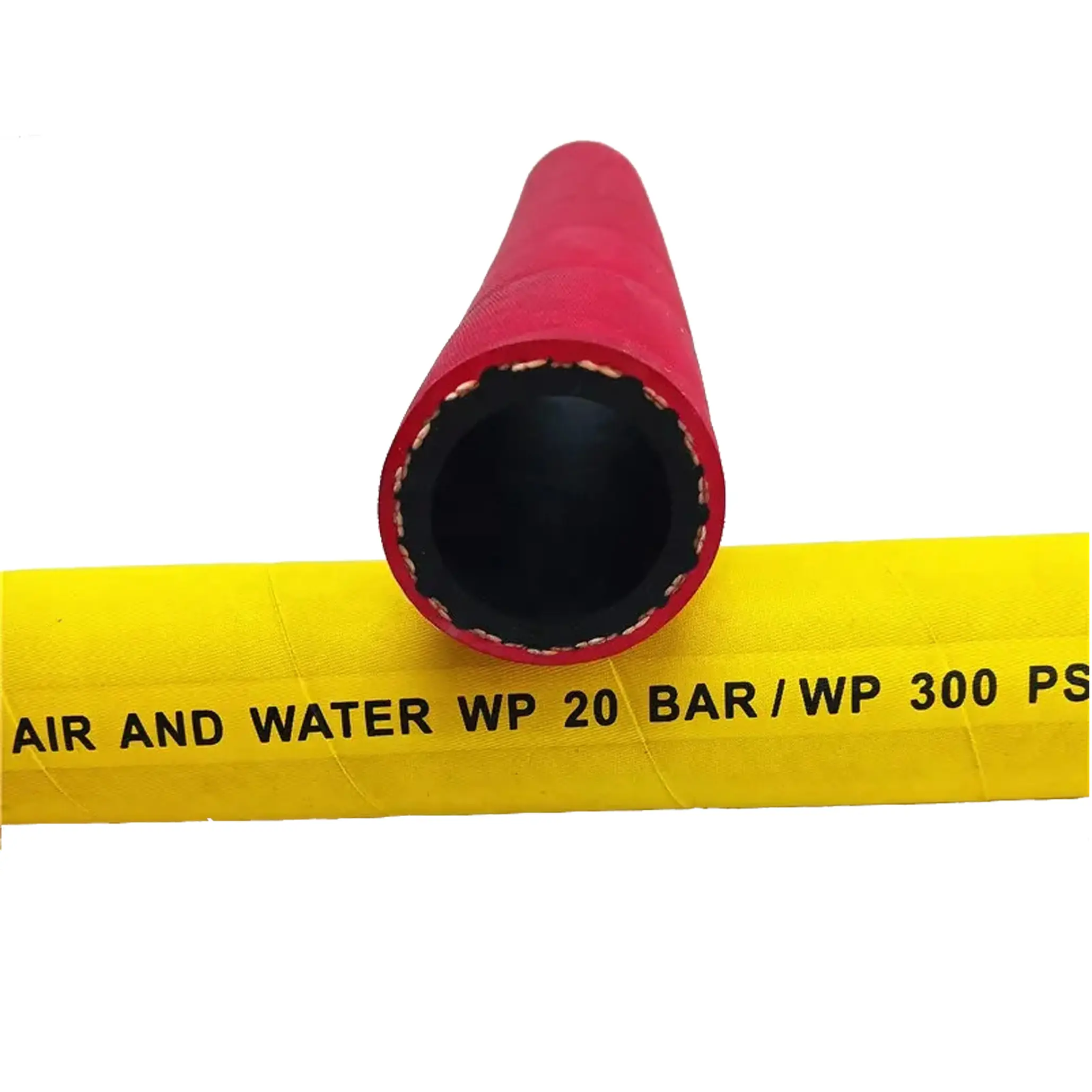
LPG hoses are typically constructed from a multi-layered composition. The inner core, in direct contact with LPG, is commonly made of a specialized synthetic rubber compound resistant to LPG's chemical constituents. Nitrile rubber (NBR) and ethylene propylene diene monomer (EPDM) are frequently employed due to their excellent resistance to hydrocarbons and weathering. The reinforcement layer provides structural integrity and pressure resistance. High-tensile strength textile braiding, typically using polyester or nylon fibers, is common. The outer cover provides protection against abrasion, ozone, UV radiation, and general environmental degradation. Common materials include Chloroprene rubber (CR) and EPDM.
Manufacturing processes begin with rubber compound mixing, where raw elastomers are blended with reinforcing fillers (carbon black, silica), plasticizers, antioxidants, and curing agents. This mixture is then extruded to form the inner tube. The reinforcement braid is applied using a specialized braiding machine, ensuring consistent coverage and angle. Subsequently, the outer cover is extruded over the braided structure. Critical parameters during extrusion include die temperature, screw speed, and cooling rates. Post-extrusion, the hose undergoes vulcanization (curing) – a chemical process involving heat and pressure – to crosslink the rubber molecules, achieving desired physical properties like elasticity and tensile strength. Quality control at each stage involves dimensional checks, hardness testing, tensile strength evaluation, and visual inspection for defects. The selection of the correct curing agent and optimization of the curing cycle are critical to avoid under-curing (resulting in poor mechanical properties) or over-curing (leading to brittleness).
Performance & Engineering
The performance of an LPG hose is governed by several key engineering principles. Burst pressure, defined as the pressure at which the hose fails catastrophically, is a primary safety parameter. This is directly related to the tensile strength of the reinforcement layers and the elongation at break of the rubber compounds. Permeation resistance, the ability of the hose material to prevent LPG molecules from diffusing through the hose wall, is crucial to prevent fuel loss and environmental contamination. Permeation rates are affected by the rubber compound’s molecular structure and density. Flexibility, measured by bend radius, is vital for ease of installation and use in confined spaces. This is influenced by the rubber compound's plasticization and the hose wall thickness.
Force analysis under operational conditions considers internal pressure, external bending stresses, and potential impact forces. Finite Element Analysis (FEA) is frequently employed to model hose behavior and identify stress concentration points. Environmental resistance is evaluated through exposure testing to ozone, UV radiation, temperature extremes, and chemical resistance to common contaminants. Compliance with relevant standards, such as EN 1763-1 (European Standard for LPG hoses) and CGA V-11 (Compressed Gas Association Standard), is mandatory. These standards dictate minimum performance requirements for burst pressure, permeation, and aging resistance. Static electricity buildup can also be a concern; therefore, hoses may incorporate conductive additives to dissipate static charge.
Technical Specifications
| Parameter | Unit | Typical Value | Test Method |
|---|---|---|---|
| Working Pressure | bar | 15 | EN 1763-1 |
| Burst Pressure | bar | 60 | EN 1763-1 |
| Permeation Rate (LPG) | g/m²/day | < 2 | ASTM D1434 |
| Tensile Strength (Reinforcement) | MPa | 1500 | ASTM D1622 |
| Elongation at Break (Inner Tube) | % | 300 | ASTM D412 |
| Hardness (Outer Cover) | Shore A | 65 | ASTM D2240 |
Failure Mode & Maintenance
LPG hoses are susceptible to several failure modes. Fatigue cracking, caused by repeated flexing and pressure cycles, is a common issue, particularly at connection points. Delamination, the separation of hose layers, can occur due to poor bonding during manufacturing or exposure to harsh chemicals. Rubber degradation, resulting from ozone attack, UV exposure, and temperature extremes, leads to embrittlement and loss of flexibility. Oxidation, caused by exposure to oxygen, can also contribute to rubber degradation. Abrasion damage, caused by contact with rough surfaces, can compromise the outer cover and expose the reinforcement layers.
Preventive maintenance is crucial to extend hose life and ensure safety. Regular visual inspections should be conducted to identify cracks, abrasions, and signs of degradation. The hose should be protected from direct sunlight, extreme temperatures, and contact with sharp objects. Connections should be tightened periodically to prevent leaks. If any damage is detected, the hose should be replaced immediately. Avoid bending the hose beyond its specified minimum bend radius. Storage of hoses should be in a cool, dry, and dark environment. Periodic pressure testing can help identify weaknesses before catastrophic failure. Replacement should adhere to the manufacturer's recommended service life, typically 5-7 years, or as dictated by relevant regulatory requirements.
Industry FAQ
Q: What is the significance of permeation testing for LPG hoses?
A: Permeation testing is critical because LPG is a volatile fuel. Excessive permeation leads to fuel loss, potentially creating a fire hazard and contributing to environmental pollution. Regulatory standards impose strict limits on permissible permeation rates to ensure safe and environmentally responsible operation.
Q: How does temperature affect the performance of an LPG hose?
A: Both high and low temperatures can negatively impact performance. High temperatures can accelerate rubber degradation and reduce pressure resistance. Low temperatures can cause the rubber to become brittle and reduce flexibility, increasing the risk of cracking. Hose materials must be selected to maintain their properties within the expected operating temperature range.
Q: What are the key differences between NBR and EPDM rubber in LPG hose applications?
A: NBR offers superior resistance to oil-based LPG compositions, making it ideal for the inner tube. EPDM excels in weathering resistance, ozone resistance, and UV protection, making it a preferred choice for the outer cover. Often, a combination of both is utilized to optimize overall performance.
Q: What role does the reinforcement layer play in hose safety?
A: The reinforcement layer, typically braided textile, provides the primary structural integrity of the hose, preventing it from bursting under pressure. The tensile strength and weave pattern of the reinforcement are crucial parameters dictating the hose's maximum working pressure and burst strength.
Q: How can we verify the quality of an LPG hose from a new supplier?
A: Comprehensive testing is essential. This includes verifying compliance with relevant standards (EN 1763-1, CGA V-11), performing burst pressure testing, permeation testing, and assessing the rubber compound's physical properties (hardness, tensile strength, elongation). A thorough review of the supplier's quality control procedures is also vital.
Conclusion
The selection and implementation of LPG hoses require a comprehensive understanding of material science, manufacturing processes, performance characteristics, and safety regulations. OEM suppliers must prioritize consistent quality control, rigorous testing, and adherence to international standards to ensure reliable and safe operation. Choosing the correct rubber compounds, optimizing reinforcement layer construction, and implementing effective preventative maintenance programs are crucial to maximizing hose lifespan and minimizing the risk of failure.
Looking ahead, advancements in rubber technology, such as the development of nanocomposites and bio-based elastomers, hold the potential to enhance LPG hose performance and sustainability. Continuous monitoring of regulatory changes and adapting manufacturing processes accordingly will be essential for maintaining compliance and meeting evolving industry demands. A commitment to ongoing research and development will enable LPG hose suppliers to deliver increasingly innovative and reliable products.