
Apr . 01, 2024 17:55 Back to list
oem lpg flexible gas hose factory Performance Analysis
Introduction
LPG (Liquefied Petroleum Gas) flexible hoses are critical components in the safe and efficient transfer of LPG in a variety of applications, ranging from residential heating and cooking to industrial processes and vehicle refueling. OEM LPG flexible gas hose factories specialize in the design and manufacturing of these hoses to meet stringent safety standards and performance requirements. These hoses differ significantly from standard rubber hoses due to the specific materials used to resist LPG permeation, chemical attack, and pressure fluctuations. The core function is to provide a leak-proof, durable, and flexible connection between LPG supply sources and appliances. The technical challenge lies in balancing flexibility, allowing for ease of installation and maneuverability, with resistance to degradation from the LPG itself and the external environment. The industry faces increasing pressure to reduce permeation rates, improve burst pressure ratings, and enhance resistance to aging and temperature extremes. This guide provides a comprehensive overview of the materials, manufacturing processes, performance characteristics, failure modes, and relevant standards associated with OEM LPG flexible gas hoses.
Material Science & Manufacturing
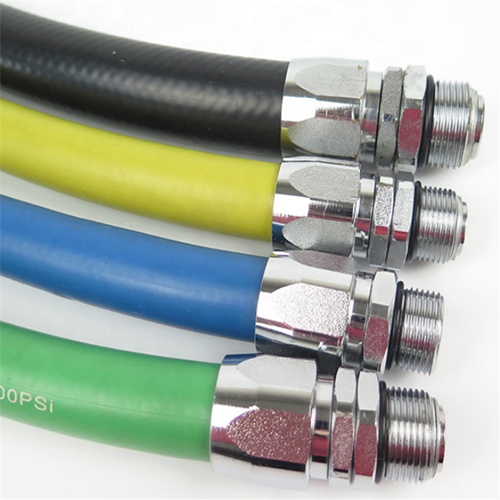
The primary material for LPG flexible hoses is a synthetic rubber compound, typically a blend of nitrile rubber (NBR) and polychloroprene rubber (CR), often referred to as Neoprene. NBR provides excellent resistance to oils and fuels, including LPG, while CR enhances resistance to ozone, weathering, and abrasion. The specific ratio of NBR to CR is carefully controlled to optimize performance characteristics. Reinforcement is crucial. High-tensile strength synthetic fibers, such as polyester or aramid (e.g., Kevlar), are braided or spiraled within the rubber matrix to provide structural integrity and resist bursting pressure. The fiber count and braid angle are key parameters. The hose cover typically consists of a specialized EPDM (ethylene propylene diene monomer) rubber formulation, offering superior resistance to UV degradation, ozone cracking, and extreme temperatures.
Manufacturing typically involves several key steps: Compound Mixing: Precise blending of rubber polymers, reinforcing fillers (carbon black, silica), plasticizers, curing agents, and anti-aging additives. Precise temperature and mixing time control are vital for consistent material properties. Extrusion: The rubber compound is extruded through a die to form the inner tube, outer cover, and any intermediate layers. Die design dictates wall thickness and dimensional accuracy. Reinforcement Application: The synthetic fiber reinforcement is applied either by braiding or spiraling. Braid tension and uniformity are critical for burst strength. Hose Assembly: The inner tube, reinforcement layers, and outer cover are combined. Curing (Vulcanization): The assembled hose is cured in a heated autoclave or oven, initiating cross-linking of the rubber molecules and developing its final physical and chemical properties. Cure time, temperature, and pressure are tightly controlled. End Fitting Attachment: Metal fittings (brass, stainless steel) are crimped or swaged onto the hose ends to provide secure connections. Fitting quality and crimp integrity are paramount for leak prevention. Pressure Testing & Inspection: Each hose undergoes rigorous pressure testing (hydrostatic or pneumatic) and visual inspection to ensure it meets performance specifications and quality standards.
Performance & Engineering
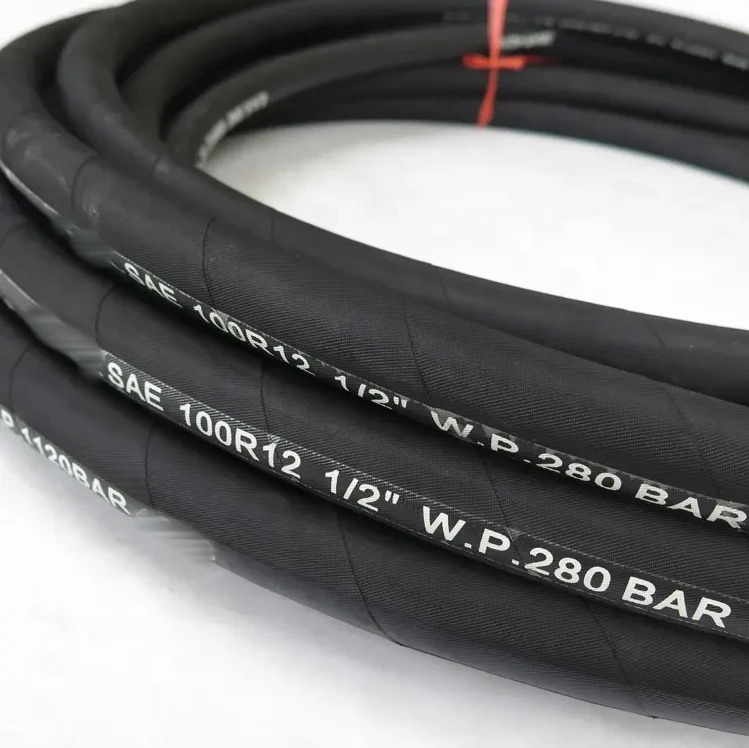
The performance of an LPG flexible hose is governed by several critical engineering parameters. Burst Pressure: This is the maximum pressure the hose can withstand before rupturing. It’s determined by the reinforcement layer's strength and the rubber compound's tensile properties. Testing is conducted according to international standards. Working Pressure: This is the maximum pressure at which the hose can be safely operated continuously. It’s typically a fraction of the burst pressure, incorporating a safety factor. Tensile Strength: The ability of the hose to resist stretching and breaking under load. Important for handling and installation. Elongation at Break: The amount of stretch a hose exhibits before breaking. Higher elongation indicates greater flexibility. Permeation Rate: A critical parameter. LPG permeation through the hose wall can lead to fuel loss and potential safety hazards. Lower permeation rates are achieved through specialized rubber formulations and tighter manufacturing tolerances. Flexibility (Bend Radius): The minimum radius to which the hose can be bent without kinking or damaging the reinforcement. Temperature Resistance: The hose must maintain its properties within a specified temperature range, typically -40°C to +80°C, depending on the application. Chemical Resistance: Resistance to degradation from contact with LPG, oils, and other chemicals commonly encountered in the operating environment. Force analysis focuses on hoop stress in the hose wall under pressure, and longitudinal stress during bending. Finite Element Analysis (FEA) is used to optimize hose design and predict performance under various loading conditions. Compliance requirements necessitate adherence to standards like EN 1763 for LPG hoses used in Europe.
Technical Specifications
| Parameter | Unit | Typical Value | Testing Standard |
|---|---|---|---|
| Working Pressure | bar | 16 | EN 1763 |
| Burst Pressure | bar | 48 | EN 1763 |
| Tensile Strength | MPa | 15 | ISO 37 |
| Elongation at Break | % | 300 | ISO 37 |
| Permeation Rate (LPG) | cm³/m²/day | <5 | ISO 14801 |
| Minimum Bend Radius | mm | 150 | Manufacturer Specification |
Failure Mode & Maintenance
LPG flexible hoses are susceptible to several failure modes. Fatigue Cracking: Repeated bending and flexing can cause cracks to initiate and propagate in the rubber compound, particularly near the fittings. This is exacerbated by ozone exposure and temperature fluctuations. Permeation-Induced Degradation: Prolonged exposure to LPG can cause the rubber to swell and lose its elasticity, increasing permeation rates and weakening the hose. Abrasion & Cutting: Physical damage from contact with sharp objects or abrasive surfaces can compromise the hose's integrity. Fitting Failure: Corrosion, improper crimping, or material incompatibility between the fitting and hose can lead to leaks. Aging & Weathering: UV exposure, ozone, and temperature extremes can cause the rubber to harden, crack, and lose its flexibility. Kinking: Sharp bends that exceed the minimum bend radius can damage the reinforcement and restrict flow.
Maintenance recommendations include: Regular Visual Inspection: Check for cracks, abrasions, swelling, and signs of degradation. Pressure Testing: Periodic pressure testing to verify the hose's integrity. Fitting Inspection: Inspect fittings for corrosion, leaks, and proper crimping. Avoid Kinking: Ensure the hose is routed and supported to prevent sharp bends. Temperature Management: Avoid exposing the hose to extreme temperatures. Storage: Store hoses in a cool, dry, and dark place when not in use. Replacement: Replace hoses at recommended intervals (typically 5-10 years) or if any signs of damage or degradation are detected. Detailed records of inspections and replacements should be maintained.
Industry FAQ
Q: What is the primary difference between NBR and CR rubber in LPG hose construction?
A: NBR excels in resistance to LPG and fuels, providing the primary barrier against permeation. CR (Neoprene) adds crucial resistance to ozone, weathering, and abrasion, enhancing the hose's lifespan and performance in outdoor environments. The blend ratio is optimized to balance these properties.
Q: How does the reinforcement layer contribute to hose safety?
A: The reinforcement layer, typically made of high-tensile synthetic fibers, prevents the hose from bursting under pressure. It absorbs the hoop stress generated by the internal LPG pressure, providing structural integrity. The fiber count and braid angle directly impact the burst pressure rating.
Q: What is the significance of the permeation rate specification?
A: The permeation rate determines how much LPG can pass through the hose wall over time. Lower permeation rates are essential for safety, preventing fuel loss and minimizing the risk of flammable vapor accumulation. Regulatory standards impose strict limits on permissible permeation rates.
Q: What are the common causes of fitting failure in LPG hoses?
A: Common causes include corrosion of the fitting material, improper crimping during assembly (leading to a loose connection), and galvanic corrosion if dissimilar metals are used in the fitting and hose connection. Regular inspection of fittings is critical.
Q: What is the recommended service life for an LPG flexible hose?
A: While dependent on operating conditions, a typical recommended service life is 5-10 years. Regular inspection is vital. Hoses exposed to harsh environments (extreme temperatures, UV radiation, ozone) or subjected to frequent bending should be replaced more frequently.
Conclusion
The selection and application of OEM LPG flexible gas hoses require a thorough understanding of material science, manufacturing processes, and performance parameters. Achieving optimal safety and reliability demands adherence to stringent quality control measures throughout the entire production cycle, from raw material selection to final product testing. The continuous drive towards lower permeation rates, enhanced durability, and improved resistance to environmental factors remains a key focus for manufacturers.
Future developments are likely to focus on advanced rubber formulations incorporating nanotechnology to further reduce permeation, self-healing polymers to address micro-cracking, and intelligent hose designs incorporating sensors to monitor pressure, temperature, and leakage. Maintaining compliance with evolving international standards and implementing robust maintenance programs are crucial for ensuring the long-term integrity and safe operation of LPG gas hose systems.