
Apr . 01, 2024 17:55 Back to list
oem lpg flexible gas hose factories Performance Analysis
Introduction
LPG (Liquefied Petroleum Gas) flexible hoses are critical components in gas distribution systems, serving as a safe and reliable means of connecting gas sources to appliances. OEM LPG flexible gas hose factories specialize in the design, manufacture, and testing of these hoses to meet stringent industry standards. Their position in the supply chain bridges raw material suppliers (rubber, steel wire, brass fittings) and end-users, including residential, commercial, and industrial sectors. Core performance characteristics revolve around pressure resistance, leak-proof operation, resistance to LPG permeation, and compliance with regional safety regulations. These hoses are not simply conduits; they are engineered safety devices requiring meticulous quality control due to the inherent hazards associated with flammable gas handling. The industry faces ongoing challenges including material cost fluctuations, increasingly demanding regulatory landscapes, and the need for continuous innovation in materials and construction techniques to enhance longevity and safety. Understanding the interplay of material science, manufacturing processes, and rigorous testing is paramount for ensuring product reliability and consumer safety.
Material Science & Manufacturing
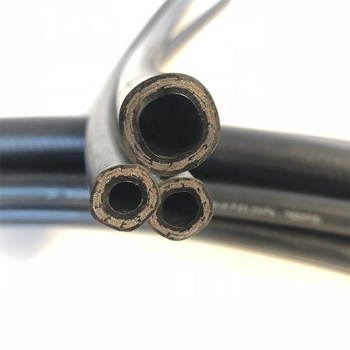
The core material in LPG flexible hoses is typically a synthetic rubber compound, most commonly a blend of nitrile rubber (NBR) and polychloroprene rubber (CR), often with the addition of other polymers to achieve specific performance properties. NBR provides excellent resistance to LPG and oils, while CR offers enhanced resistance to weathering, ozone, and heat. The rubber formulation includes reinforcing fillers like carbon black to improve tensile strength and abrasion resistance, and plasticizers to maintain flexibility across a wide temperature range. Steel wire braiding, often high-tensile steel, provides burst pressure resistance and structural integrity. Fittings are generally made of brass, chosen for its corrosion resistance and compatibility with LPG.
Manufacturing involves several key processes. First, the rubber compound is mixed and extruded into a continuous hose profile. This extrusion process is carefully controlled for dimensions and homogeneity. Subsequently, the steel wire braiding is applied, typically using a specialized braiding machine that precisely interlocks the wires around the rubber core. The brass fittings are then crimped onto the hose ends using a hydraulic press. The crimping process is critical; insufficient crimping can lead to leaks, while excessive crimping can damage the hose. Post-assembly, each hose undergoes rigorous testing, including pressure testing (hydrostatic and pneumatic), leak testing (using soap solution or helium detection), and dimensional verification. Parameter control during extrusion includes temperature, screw speed, and die pressure. Braiding tension and angle are also vital parameters. Quality control checks are performed at each stage of the process to ensure adherence to specifications.

Performance & Engineering
The performance of LPG flexible hoses is dictated by several engineering considerations. Burst pressure, determined by the steel wire braiding and rubber compound strength, is a primary safety parameter. Hoses must withstand pressures significantly exceeding the maximum operating pressure of the LPG system, typically with a 4:1 safety factor. Tensile strength and elongation at break of the rubber compound are critical for resisting tearing and maintaining flexibility. Permeation resistance, the ability of the rubber compound to prevent LPG molecules from diffusing through the hose wall, is crucial for minimizing gas loss and maintaining safe operating conditions. Environmental resistance, encompassing UV exposure, ozone degradation, and temperature extremes, is also paramount.
Force analysis involves evaluating hoop stress within the hose wall under pressure, and the axial load capacity of the fittings. Finite Element Analysis (FEA) is frequently employed to model stress distribution and optimize hose design. Compliance requirements vary by region, with key standards (detailed in the footer) dictating testing procedures, material specifications, and labeling requirements. Functional implementation demands consideration of hose length, bend radius, and compatibility with connection types (e.g., quick-connect fittings). Fatigue resistance, the ability to withstand repeated pressure cycles without failure, is also critical. Understanding the creep behavior of the rubber compound under sustained pressure is essential for predicting long-term performance. Selection of the correct hose for a specific application requires careful consideration of operating pressure, temperature, gas type, and environmental conditions.
Technical Specifications
| Parameter | Unit | Typical Value (Standard Duty Hose) | Typical Value (High-Pressure Hose) |
|---|---|---|---|
| Working Pressure | Bar | 15 | 30 |
| Burst Pressure | Bar | 60 | 120 |
| Tensile Strength (Rubber) | MPa | 18 | 22 |
| Elongation at Break (Rubber) | % | 400 | 450 |
| LPG Permeation Rate | cm³/m²/day | <5 | <2 |
| Temperature Range | °C | -20 to +60 | -30 to +80 |
Failure Mode & Maintenance
Common failure modes in LPG flexible hoses include fatigue cracking, particularly at the connection points, due to repeated flexing and pressure cycling. Rubber degradation from exposure to UV radiation, ozone, and extreme temperatures can lead to loss of flexibility and cracking. Permeation can cause swelling and weakening of the rubber compound over time. Corrosion of the brass fittings can compromise the integrity of the connection. Improper installation (e.g., excessive bending, kinking) can also induce premature failure. Delamination between the rubber compound and the steel wire braiding is another potential failure mechanism. Oxidation of the rubber compound leads to embrittlement.
Maintenance should include regular visual inspections for cracks, abrasions, and leaks. Hoses should be replaced if any damage is detected. Avoid exposure to direct sunlight and extreme temperatures. Do not use abrasive cleaners or solvents on the hose. Ensure proper installation with the correct bend radius and fitting connections. Periodically check for gas leaks using a soap solution. Following the manufacturer's recommended replacement schedule is crucial. If the hose is exposed to harsh chemicals, it should be replaced more frequently. Records of inspections and replacements should be maintained for traceability and safety auditing.
Industry FAQ
Q: What is the impact of different rubber compounds on LPG permeation?
A: The permeation rate of LPG through the hose wall is directly related to the polymer structure and density of the rubber compound. NBR generally exhibits lower permeation rates compared to EPDM, but blends optimized with specific additives can significantly reduce permeation across various polymers. Higher cross-linking density and the incorporation of barrier layers within the rubber compound can further minimize gas leakage.
Q: How does steel wire braiding affect burst pressure and flexibility?
A: Increasing the number of steel wires and the braiding angle enhances the burst pressure of the hose, providing greater resistance to failure under high pressure. However, a higher wire count can reduce the hose’s flexibility, making it more difficult to maneuver and install. OEM’s must balance these two factors to achieve optimal performance.
Q: What are the critical parameters for ensuring a leak-proof crimp connection?
A: The crimping process must apply sufficient force to create a secure seal between the fitting and the hose without damaging the rubber. Critical parameters include the crimp diameter, crimp height, and the surface finish of the fitting. Proper calibration of the crimping machine and regular inspection of crimp tooling are essential.
Q: What are the consequences of using a hose with an incorrect temperature rating?
A: Using a hose outside its specified temperature range can lead to premature degradation of the rubber compound, resulting in loss of flexibility, cracking, and ultimately, failure. High temperatures can accelerate oxidation and reduce the hose's lifespan, while low temperatures can cause the rubber to become brittle and prone to cracking.
Q: What tests are typically performed to verify compliance with LPG hose standards?
A: Common tests include hydrostatic pressure testing (withstanding a specified pressure for a given duration), pneumatic pressure testing, leak testing (using soap solution or helium detection), tensile strength testing, elongation at break testing, permeation testing, and accelerated aging tests to assess long-term performance.
Conclusion
The selection and implementation of LPG flexible gas hoses require a thorough understanding of material science, manufacturing processes, and industry regulations. OEMs play a vital role in ensuring product safety and reliability through meticulous quality control and adherence to stringent standards. Optimizing hose design involves a careful balance of factors, including pressure resistance, flexibility, permeation resistance, and environmental durability.
Continuous innovation in rubber compound formulations, braiding techniques, and fitting designs will be crucial for addressing evolving industry needs and enhancing the performance and longevity of LPG flexible hoses. Furthermore, ongoing collaboration between OEMs, regulatory bodies, and end-users is essential for promoting best practices and mitigating potential risks associated with LPG gas handling.