
Apr . 01, 2024 17:55 Back to list
oem hydraulic industrial hose suppliers Performance Analysis

Introduction
OEM hydraulic industrial hose suppliers provide critical components for fluid power systems across diverse industries, including construction, agriculture, manufacturing, and transportation. These hoses are engineered to safely and efficiently transmit hydraulic fluid, enabling the operation of heavy machinery and critical industrial processes. The industry faces increasing demands for higher operating pressures, improved temperature resistance, and enhanced durability, alongside a need for customization to meet specific application requirements. This guide details the material science, manufacturing processes, performance characteristics, failure modes, and maintenance practices associated with OEM hydraulic industrial hoses, providing a comprehensive overview for engineers, procurement managers, and maintenance personnel. The selection criteria for a hose are governed by the working pressure, fluid compatibility, temperature range, and the required bend radius. Proper hose selection and maintenance are paramount to prevent catastrophic failures and ensure operational safety and efficiency.
Material Science & Manufacturing
Hydraulic hoses are typically constructed from multiple layers, each serving a specific purpose. The inner tube, which comes into direct contact with the hydraulic fluid, is commonly made from synthetic rubbers such as nitrile (NBR), ethylene propylene diene monomer (EPDM), or fluorocarbon (FKM/Viton). NBR offers good resistance to petroleum-based fluids, EPDM excels in phosphate ester fluid compatibility and high-temperature applications, while FKM provides superior resistance to aggressive chemicals and extreme temperatures. The reinforcement layer provides strength and pressure resistance. Materials used include braided steel wire (high-pressure applications), spiral steel wire (extremely high-pressure applications), and textile braiding (lower-pressure applications). The outer cover provides abrasion, weather, and chemical resistance, typically utilizing synthetic rubbers like chloroprene (CR) or polyurethane (PU). Manufacturing processes vary depending on hose type. Braided hoses involve precisely winding steel wire around an inner tube, followed by vulcanization. Spiral hoses utilize a continuously wound steel wire helix, providing exceptional pressure capacity. Injection molding is utilized for end fittings, ensuring a secure and leak-proof connection. Parameter control during vulcanization (temperature, time, pressure) is crucial for achieving optimal rubber properties – tensile strength, elongation at break, and hardness – directly impacting hose performance and lifespan. Improper curing can lead to brittleness or reduced flexibility.
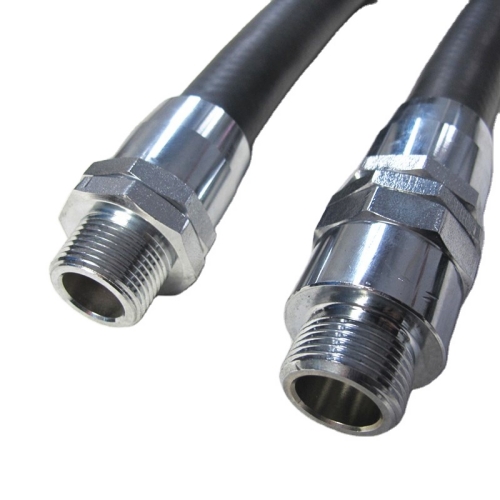
Performance & Engineering
Hydraulic hose performance is dictated by several engineering principles. Burst pressure, working pressure, and safety factor are critical parameters. Burst pressure is the pressure at which the hose fails catastrophically, while working pressure is the maximum pressure for continuous operation, typically determined as a fraction (e.g., 1/4) of the burst pressure. The safety factor accounts for pressure spikes and operational uncertainties. Hose bend radius is also crucial; exceeding the minimum bend radius causes kinking, reducing flow and potentially leading to premature failure. Finite element analysis (FEA) is frequently used during the design phase to optimize hose geometry and reinforcement structure for specific pressure and temperature conditions. Environmental resistance is another vital consideration. Hydraulic hoses are often exposed to harsh environments, including UV radiation, ozone, and corrosive chemicals. Materials selection and outer cover formulations must mitigate these effects. Compliance requirements, such as those mandated by SAE International (SAE J517, SAE J1926) and EN standards (EN 853, EN 857), specify minimum performance criteria and testing procedures. Hose assemblies must withstand rigorous pressure testing, impulse testing (simulating pressure pulsations), and bend testing to ensure reliability.
Technical Specifications
| Hose Type | Working Pressure (PSI) | Burst Pressure (PSI) | Temperature Range (°F) |
|---|---|---|---|
| Braided Rubber (NBR) | 2000 | 8000 | -40 to 212 |
| Spiral Wire (Steel) | 4000 | 16000 | -40 to 250 |
| Thermoplastic (Polyester) | 3000 | 12000 | -65 to 250 |
| Ultra High Pressure (UHPH) | 6000 | 24000 | -40 to 350 |
| EPDM Rubber | 1500 | 6000 | -50 to 275 |
| FKM (Viton) Rubber | 2500 | 10000 | -20 to 400 |
Failure Mode & Maintenance
Hydraulic hose failure can occur due to various mechanisms. Pinholes in the inner tube can result from fluid erosion or chemical attack. Reinforcement wire breakage is often caused by fatigue from repeated pressure cycling and bending. Cover abrasion can expose the reinforcement layer to corrosion, initiating failure. Kinking drastically reduces hose lifespan due to localized stress concentration. External damage, such as cuts or impacts, can compromise hose integrity. Oxidation of rubber components over time leads to brittleness and cracking. Proper maintenance is critical to prevent these failures. Regular visual inspections should be conducted to identify signs of wear, abrasion, or leaks. Hose assemblies should be replaced based on manufacturer recommendations or after a predetermined service life. Correct hose routing and support are essential to prevent kinking and abrasion. Maintaining clean hydraulic fluid reduces erosion and chemical attack. When replacing hoses, ensure compatibility with the hydraulic fluid and operating conditions. Avoid twisting the hose during installation, as this can induce stress and premature failure. Utilizing hose guards and sleeves offers additional protection against abrasion and environmental damage.
Industry FAQ
Q: What are the key differences between braided and spiral hydraulic hoses?
A: Braided hoses utilize multiple layers of steel wire woven around the inner tube, providing good flexibility and moderate pressure resistance. Spiral hoses employ a single continuously wound steel wire helix, offering superior pressure capacity and burst strength, but with reduced flexibility. The choice depends on the application's pressure requirements and bend radius constraints.
Q: How does temperature affect hydraulic hose performance?
A: Extreme temperatures can significantly impact hose materials. High temperatures can cause rubber to degrade and lose elasticity, reducing its ability to withstand pressure. Low temperatures can make rubber brittle and prone to cracking. Selecting a hose with a temperature range that matches the operating conditions is crucial.
Q: What is the importance of hose end fitting selection?
A: Incorrect end fitting selection can lead to leaks, hose blowouts, and safety hazards. Fittings must be compatible with the hose material, pressure rating, and fluid type. Proper crimping is essential to ensure a secure and leak-proof connection. Using the wrong fitting or improper crimping techniques severely compromises the integrity of the hose assembly.
Q: How often should hydraulic hoses be inspected and replaced?
A: Inspection frequency depends on the application and operating conditions. A visual inspection should be performed at least monthly, looking for signs of wear, abrasion, leaks, or damage. Hose replacement should occur based on manufacturer recommendations (typically every 5-7 years) or when any signs of deterioration are observed. Critical applications may require more frequent inspections and replacements.
Q: What are the consequences of using incompatible hydraulic fluid with a hose?
A: Using an incompatible fluid can cause the inner tube to swell, soften, or degrade, leading to leaks and failure. Certain fluids can also attack the reinforcement layer, weakening the hose. Always verify that the hose material is compatible with the hydraulic fluid being used.
Conclusion
The selection and maintenance of OEM hydraulic industrial hoses are critical for ensuring the safe and reliable operation of hydraulic systems. Understanding the material science, manufacturing processes, and performance characteristics of these components is paramount for engineers and procurement professionals. Careful consideration of operating pressure, temperature range, fluid compatibility, and environmental factors is essential for choosing the appropriate hose for a given application.
Adhering to established industry standards and implementing a proactive maintenance program, including regular inspections and timely replacements, will minimize the risk of catastrophic failures and maximize the lifespan of hydraulic hose assemblies. Continuous advancements in hose materials and manufacturing technologies are leading to improved performance, durability, and safety in this critical component of industrial fluid power systems.