
Apr . 01, 2024 17:55 Back to list
oem hydraulic industrial hose factories Performance Analysis
Introduction
OEM hydraulic industrial hoses are engineered conduits designed to safely and efficiently transfer hydraulic fluid, critical for powering heavy machinery and industrial systems. Positioned as vital components within the broader fluid power industry, their performance directly influences system reliability, efficiency, and safety. This guide provides an in-depth examination of these hoses, covering materials, manufacturing, performance characteristics, failure modes, and relevant industry standards. Core performance metrics include burst pressure, working pressure, temperature resistance, and fluid compatibility. A key industry pain point revolves around consistent quality control in OEM supply chains, alongside the need for specialized hose assemblies tailored to increasingly complex hydraulic systems. The demand for lightweight, high-strength, and chemically resistant hoses is also driving innovation within the sector, necessitating advanced material science and manufacturing techniques.
Material Science & Manufacturing
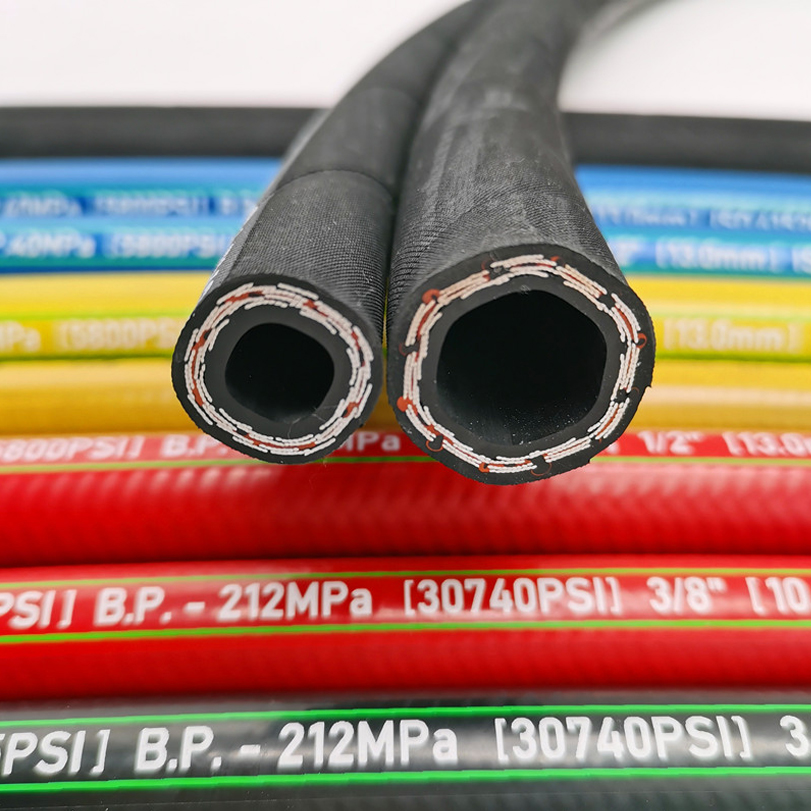
Hydraulic hoses are typically constructed from a combination of materials, each contributing specific properties. The inner tube, in direct contact with the fluid, is commonly made of synthetic rubbers like nitrile (NBR), ethylene propylene diene monomer (EPDM), or fluorocarbon (FKM/Viton), chosen for their resistance to specific hydraulic fluids and temperature ranges. NBR provides good resistance to petroleum-based fluids, while EPDM excels in phosphate ester fluid compatibility. FKM offers superior performance in extreme temperatures and aggressive chemicals. Reinforcement layers, providing strength and pressure resistance, generally consist of multiple braids or spirals of high-tensile steel wire. The number and configuration of these layers directly influence the hose’s working and burst pressures. An outer cover, typically made of abrasion and weather-resistant materials like polyurethane or a synthetic rubber blend, protects the reinforcement and provides environmental shielding.
Manufacturing processes begin with the extrusion of the inner tube, followed by the application of reinforcement layers via winding or braiding machines. Precise tension control during reinforcement application is critical to ensure uniform pressure ratings. The outer cover is then extruded over the reinforcement. Quality control measures at each stage include dimensional checks, pressure testing (hydrostatic and impulse testing), and material composition analysis. Specialized manufacturing techniques, like spiral wrapping, are employed for higher-pressure applications. Critical parameters controlled during production include rubber compound formulation (to achieve specific fluid compatibility), braid angle (influencing burst strength), and cure temperature and time (ensuring proper vulcanization and material properties). Post-production, hoses undergo rigorous leak testing and dimensional inspection to meet industry standards.
Performance & Engineering
The performance of hydraulic hoses is governed by a complex interplay of material properties and engineering considerations. Burst pressure, the maximum pressure the hose can withstand before failure, is a critical safety parameter, typically 4:1 of the working pressure. Working pressure is the maximum continuous operating pressure specified by the manufacturer. Fatigue life, the number of pressure cycles the hose can endure before failure, is influenced by factors like pressure amplitude, temperature, and fluid type. Hose assemblies, including fittings, are subjected to rigorous impulse testing to simulate dynamic pressure fluctuations in hydraulic systems.
Environmental resistance is a key performance factor. Exposure to ozone, UV radiation, and extreme temperatures can degrade the rubber compounds, reducing hose life. Hose selection must consider the operating environment. Fluid compatibility is also paramount; incompatible fluids can cause swelling, softening, or cracking of the inner tube, leading to leaks and system failure. Force analysis within the hose assembly considers bending radius, axial load, and torsional stress. Excessive bending or twisting can damage the reinforcement layers and compromise the hose’s integrity. Compliance requirements, such as those mandated by SAE, EN, and DIN standards, dictate testing procedures and performance criteria. For instance, SAE J517 specifies pressure ratings and performance characteristics for hydraulic hoses.
Technical Specifications
| Parameter | Unit | Standard Specification (SAE J517 R1AT) | Typical OEM Variation |
|---|---|---|---|
| Working Pressure | psi | 1000 | 800-2500 |
| Burst Pressure | psi | 4000 | 3200-10000 |
| Temperature Range | °F | -40 to +212 | -40 to +250 (depending on compound) |
| Inner Tube Material | - | NBR | NBR, EPDM, FKM |
| Reinforcement | Layers | 1 or 2 Wire Braid | 1-6 Wire Braid, Spiral |
| Outer Cover Material | - | Synthetic Rubber | Polyurethane, Synthetic Rubber |
Failure Mode & Maintenance
Hydraulic hose failures commonly stem from several mechanisms. Fatigue cracking, initiated by repeated pressure cycles and bending, is a prevalent failure mode, often originating at the reinforcement layer. Abrasion damage, caused by contact with abrasive surfaces, degrades the outer cover, exposing the reinforcement to corrosion. Chemical degradation occurs when the inner tube is exposed to incompatible fluids, leading to swelling, softening, and eventual cracking. Improper installation, such as excessive bending or twisting, can induce stress concentrations and accelerate failure. Pinholes and leaks can develop due to material defects or damage from foreign objects. Oxidation of rubber compounds, especially at elevated temperatures, reduces their elasticity and strength.
Preventive maintenance is crucial for extending hose life and preventing catastrophic failures. Regular visual inspections should identify signs of abrasion, cracking, swelling, or leaks. Hose assemblies should be replaced according to manufacturer’s recommendations or when damage is detected. Proper routing and support are essential to minimize bending stress and abrasion. Fluid compatibility should be verified before use. When replacing hoses, ensure correct fittings are used and torqued to the specified values. Proper storage in a cool, dry, and dark environment protects hoses from UV degradation and ozone cracking. Failure analysis, involving microscopic examination of the fracture surface, can help identify the root cause of failure and prevent recurrence.
Industry FAQ
Q: What is the significance of impulse testing, and how does it relate to real-world application?
A: Impulse testing simulates the pressure pulsations inherent in many hydraulic systems, caused by pump operation or valve switching. This testing assesses the hose’s ability to withstand repeated pressure spikes without fatigue failure. It's critical because real-world applications often involve dynamic pressure loads far exceeding the static working pressure, and a hose that fails impulse testing is highly likely to fail prematurely in service.
Q: How do different reinforcement materials impact hose performance, specifically in high-pressure applications?
A: Steel wire reinforcement is the most common for high-pressure hoses. The number of braids or spirals directly correlates with pressure capacity. Spiral reinforcement generally offers higher pressure ratings and improved kink resistance compared to braided reinforcement. Synthetic fiber reinforcement, while lighter, is typically used for lower-pressure applications. The steel alloy used also influences strength and corrosion resistance.
Q: What are the primary challenges in ensuring consistent quality across multiple OEM suppliers of hydraulic hoses?
A: The main challenges include variations in raw material sourcing, manufacturing process control, and quality assurance procedures. Establishing clear and stringent specifications, conducting regular supplier audits, implementing robust inspection protocols, and utilizing statistical process control (SPC) are essential for mitigating these risks. Component traceability is also vital.
Q: Beyond pressure and temperature, what other factors should be considered when selecting a hydraulic hose for a specific application?
A: Fluid compatibility is crucial – the hose material must resist degradation from the hydraulic fluid. Abrasion resistance is important in environments with potential contact with abrasive surfaces. Kink resistance is vital in applications with tight bends. Weight and flexibility can be considerations for ease of installation and operation. Environmental factors like UV exposure and ozone levels also influence material selection.
Q: What are the latest advancements in hydraulic hose technology focused on improving performance and longevity?
A: Current advancements include the development of new rubber compounds with enhanced chemical resistance and temperature stability, the use of non-metallic reinforcement materials (such as aramid fibers) for weight reduction and improved flexibility, and the implementation of intelligent hose monitoring systems that can detect leaks or impending failures. Nanomaterial additives are also being explored to improve material properties.
Conclusion
OEM hydraulic industrial hoses are sophisticated engineered components that play a critical role in the reliable operation of hydraulic systems. Understanding the material science, manufacturing processes, performance characteristics, and potential failure modes is paramount for ensuring safe and efficient operation. The selection of the appropriate hose for a given application necessitates careful consideration of pressure requirements, temperature extremes, fluid compatibility, environmental conditions, and industry standards.
The future of hydraulic hose technology is focused on developing lighter, stronger, and more durable hoses with improved resistance to chemical degradation and environmental factors. Advancements in materials science, coupled with sophisticated monitoring systems, will contribute to increased system reliability and reduced maintenance costs. Continuous quality control and rigorous testing protocols are essential to meet the demanding requirements of modern industrial applications.