
Apr . 01, 2024 17:55 Back to list
oem hydraulic hose and fittings supplier Performance Analysis
Introduction
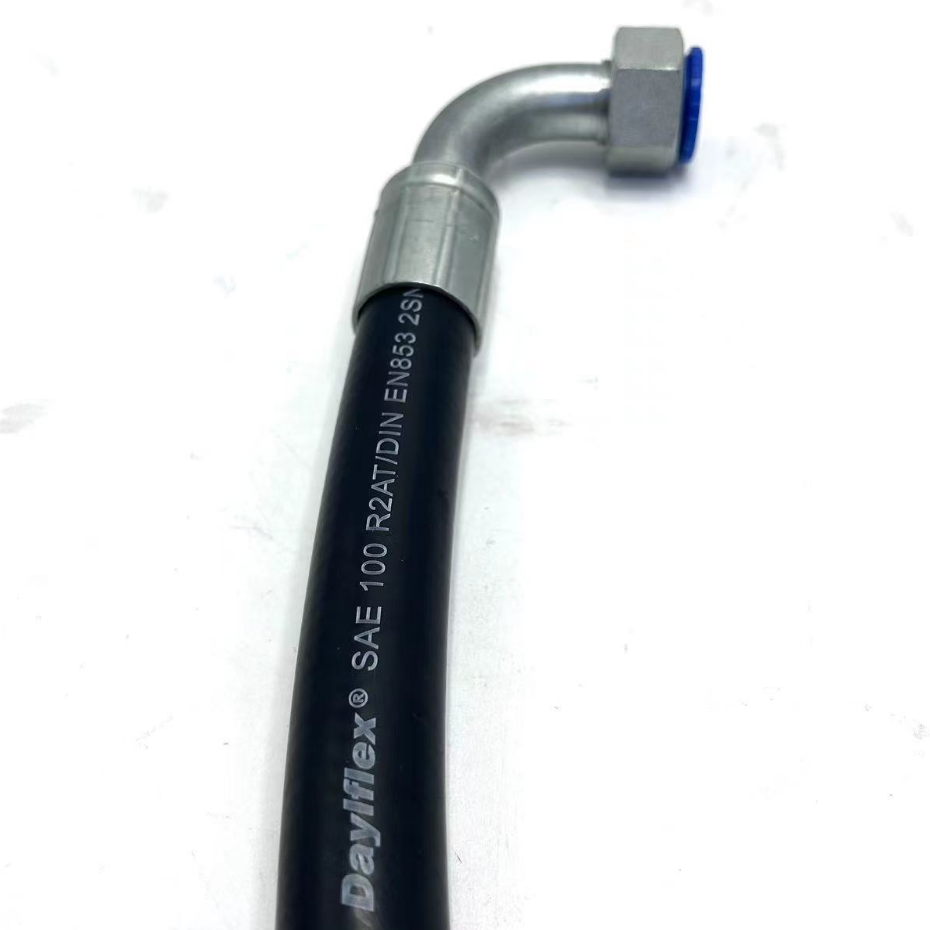
OEM hydraulic hose and fittings represent a critical component in fluid power systems across diverse industries, including construction, agriculture, manufacturing, and aerospace. These assemblies are not merely conduits for pressurized fluids; they are engineered systems designed to withstand extreme pressures, temperatures, and chemical exposure while maintaining leak-free performance and ensuring operational safety. The OEM (Original Equipment Manufacturer) designation signifies a product tailored to specific application requirements, often integrating custom materials, dimensions, and performance characteristics dictated by the end-user’s machinery or equipment. Core performance metrics center around burst pressure, working pressure, temperature range, and fluid compatibility. The industry faces ongoing challenges related to minimizing weight, enhancing durability, reducing environmental impact, and adhering to increasingly stringent safety regulations, particularly regarding hose assembly integrity and field maintenance practices. This guide provides an in-depth technical overview of OEM hydraulic hose and fittings, encompassing material science, manufacturing processes, performance engineering, failure modes, and relevant industry standards.
Material Science & Manufacturing
Hydraulic hoses are typically constructed from a layered architecture. The innermost layer, the tube, is usually made of synthetic rubber compounds such as nitrile (NBR), chloroprene (CR, Neoprene), or fluorocarbon (FKM, Viton) depending on the fluid conveyed. NBR offers excellent resistance to petroleum-based oils, while CR provides better weathering and ozone resistance. FKM is chosen for its exceptional chemical resistance and high-temperature performance. The reinforcement layer, critical for pressure containment, commonly utilizes multiple plies of high-tensile steel wire, often spiraled or braided. Aramid fiber reinforcement is increasingly used for lighter weight applications and improved flexibility. The cover layer, providing abrasion and environmental protection, is typically composed of synthetic rubber compounds like CR or polyurethane. Fittings are commonly manufactured from carbon steel, alloy steel, or stainless steel, chosen based on corrosion resistance requirements and working pressure. Manufacturing processes include extrusion for the tube and cover, calendaring for reinforcement plies, and precision machining for fittings. Key parameter control during manufacturing involves precise temperature regulation during extrusion to ensure consistent rubber compound properties, accurate wire winding tension for reinforcement strength, and stringent dimensional control for fitting thread accuracy. Quality control measures include burst pressure testing, impulse testing, and leak testing to verify performance integrity. Pre-treatment of steel components before rubber bonding is also crucial to promote adhesion and prevent separation.
Performance & Engineering
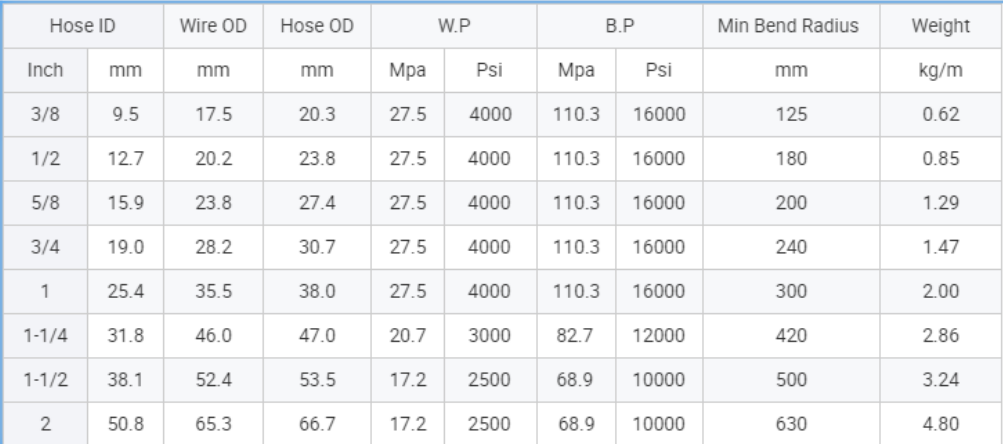
Hydraulic hose performance is governed by several engineering principles. Hose burst pressure is determined by the tensile strength of the reinforcement layer and the tube material. Working pressure is typically specified as a fraction of the burst pressure, often with a 4:1 safety factor. Hose bending radius is critical to prevent kinking and fatigue failure. Excessive bending can induce stress concentrations in the reinforcement layer, leading to premature failure. Environmental resistance, including exposure to UV radiation, ozone, and chemical fluids, is crucial for long-term durability. Hose assemblies must also withstand fluid impulse pressures, which are rapid pressure fluctuations that can cause fatigue damage. Fitting design plays a vital role in ensuring a leak-free seal. Fitting threads must be manufactured to precise tolerances and properly tightened to the specified torque to prevent loosening or stripping. Force analysis considers the tensile, shear, and torsional forces acting on the hose assembly during operation. Finite element analysis (FEA) is often employed to optimize hose and fitting designs for specific application requirements. Compliance requirements are dictated by industry standards and regulatory bodies. For example, SAE J518 specifies performance requirements for hydraulic hoses, while ISO 3766 covers hose assembly crimping procedures.
Technical Specifications
| Parameter | SAE J518 Type A | SAE J518 Type B | DIN EN 853 1SN |
|---|---|---|---|
| Working Pressure (PSI) | 1000 | 2000 | 1500 |
| Burst Pressure (PSI) | 3000 | 6000 | 4500 |
| Temperature Range (°F) | -40 to 212 | -40 to 212 | -40 to 212 |
| Reinforcement | Single Wire Braid | Two Wire Braids | Single Wire Spiral |
| Tube Material | NBR | NBR | NBR |
| Cover Material | CR | CR | CR |
Failure Mode & Maintenance
Common failure modes in hydraulic hoses and fittings include fatigue cracking, caused by repeated pressure cycles; abrasion, resulting from external contact with abrasive surfaces; chemical degradation, due to incompatible fluids; and thermal degradation, from excessive temperatures. Fitting failures often stem from improper crimping, thread damage, or corrosion. Fatigue cracking typically initiates at stress concentrations, such as near fittings or bends. Delamination, separation of reinforcement layers, can occur due to poor bonding or excessive pressure. Oxidation of rubber compounds leads to hardening and cracking. Regular inspection is crucial for preventative maintenance. Inspections should focus on identifying signs of cracking, abrasion, blistering, or leakage. Hose assemblies should be replaced if any of these defects are observed. Crimping integrity should be verified periodically using specialized tools. Proper hose routing and support are essential to prevent abrasion and excessive bending. Fluid compatibility should be confirmed before use. Storing hoses in a cool, dry, and dark environment can extend their lifespan. Avoid kinking or twisting hoses during installation or operation. Following manufacturer’s recommendations for torque specifications is vital for fitting integrity.
Industry FAQ
Q: What is the impact of fluid velocity on hydraulic hose life?
A: Higher fluid velocities can exacerbate erosion within the hose, especially with abrasive particles present in the fluid. Increased velocity also creates greater pressure drop and can contribute to cavitation, which can damage the hose liner. Selecting a hose with a larger inner diameter can mitigate these effects, reducing fluid velocity for a given flow rate.
Q: How does temperature affect the performance of hydraulic hoses?
A: Extreme temperatures, both high and low, can significantly impact hose performance. High temperatures accelerate rubber degradation, reducing its elasticity and tensile strength. Low temperatures can cause rubber to become brittle and prone to cracking. Selecting a hose material with an appropriate temperature range is crucial. Consider using hoses with specialized high-temperature or low-temperature formulations for demanding applications.
Q: What is the proper crimping procedure for hydraulic hose assemblies?
A: Proper crimping is paramount for ensuring a leak-free and reliable connection. The crimping process must be performed using a calibrated crimping machine and dies specifically designed for the hose and fitting combination. Incorrect crimping can lead to premature failure, either through looseness or over-compression. Always follow the manufacturer’s recommended crimping specifications.
Q: What are the advantages of using stainless steel fittings over carbon steel fittings?
A: Stainless steel fittings offer superior corrosion resistance compared to carbon steel fittings, making them ideal for applications involving exposure to corrosive fluids or harsh environments. While more expensive, stainless steel fittings provide a longer service life and reduced maintenance costs in these scenarios.
Q: How important is hose routing to prevent premature failure?
A: Proper hose routing is critical. Hoses should be routed to avoid sharp bends, abrasion against other components, and exposure to direct heat sources. Support should be provided to prevent sagging and excessive stress. Ensuring sufficient clearance between the hose and moving parts is essential to prevent damage.
Conclusion
OEM hydraulic hose and fitting systems are complex engineered components demanding careful consideration of material science, manufacturing processes, and performance parameters. Selecting the appropriate hose and fitting combination is essential for ensuring the reliability, safety, and longevity of fluid power systems. Understanding potential failure modes and implementing proactive maintenance strategies are crucial for minimizing downtime and maximizing operational efficiency.
The continuous development of new materials and manufacturing techniques promises further advancements in hydraulic hose technology, focusing on reduced weight, enhanced durability, and improved environmental compatibility. Adherence to international standards and best practices remains paramount for ensuring product quality and safety in this critical industry sector.