
Apr . 01, 2024 17:55 Back to list
oem high pressure washer hose factory Performance Analysis
Introduction
OEM high pressure washer hoses are critical components in fluid transfer systems designed for high-pressure cleaning applications. Positioned within the industrial equipment supply chain, these hoses serve as the intermediary between the pressure washer unit and the cleaning nozzle. Core performance characteristics center around burst pressure, working pressure, temperature resistance, and chemical compatibility. The increasing demand for efficient and durable cleaning solutions across industries like automotive, construction, and manufacturing drives the need for consistently reliable and high-performance hoses. A key industry pain point lies in premature hose failure due to material degradation or improper specification for the intended application. Understanding the intricacies of material selection, manufacturing processes, and failure modes is paramount to ensuring optimal operational lifespan and safety.
Material Science & Manufacturing
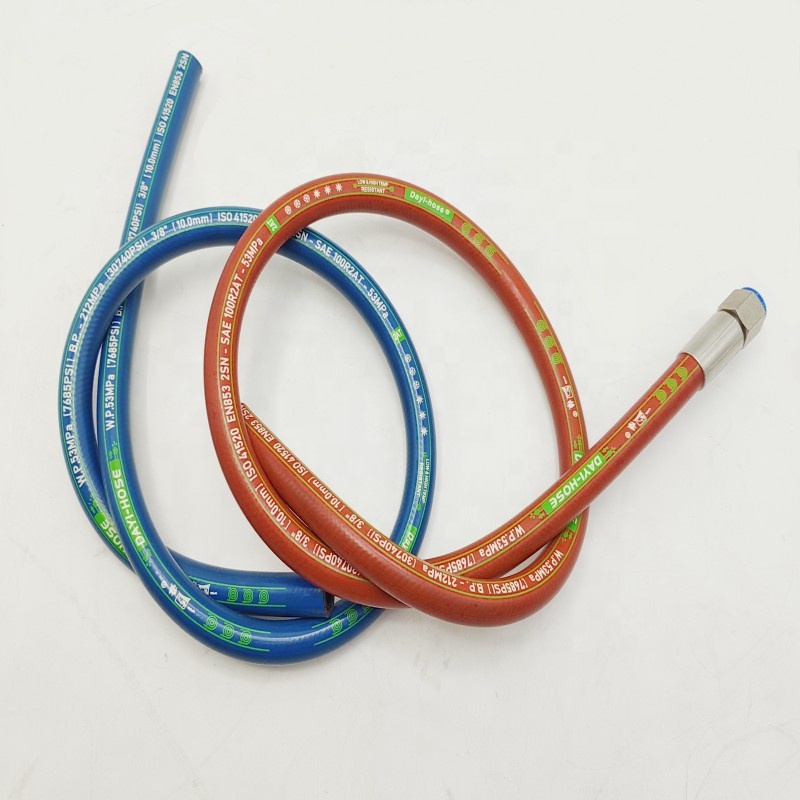
High pressure washer hoses are typically constructed from multiple layers, each contributing to the overall performance. The inner tube, in direct contact with the fluid, is commonly composed of a synthetic rubber compound such as nitrile rubber (NBR), ethylene propylene diene monomer (EPDM), or chloroprene rubber (CR), selected based on the fluid compatibility requirements. NBR offers excellent resistance to oil and petroleum-based products, EPDM provides superior resistance to water, ozone, and weathering, and CR exhibits good abrasion resistance. The reinforcement layer, crucial for withstanding high pressure, often utilizes high-tensile steel wire, aramid fiber braiding (e.g., Kevlar), or a combination of both. Steel wire provides the highest pressure rating but adds significant weight and potential for corrosion. Aramid fiber is lighter and corrosion-resistant but generally offers a lower maximum pressure capacity. The outer cover is usually made of a synthetic rubber compound (e.g., SBR, PVC) providing abrasion resistance, UV protection, and overall durability.
Manufacturing processes involve extrusion of the inner tube and outer cover, followed by the application of the reinforcement layer via braiding or winding. Precise control of extrusion parameters (temperature, pressure, screw speed) is essential to ensure consistent wall thickness and material homogeneity. Braiding requires meticulous tension control to achieve uniform fiber distribution and prevent localized weak points. Following reinforcement, the hose undergoes curing – a vulcanization process – to crosslink the rubber compounds, enhancing their mechanical properties and chemical resistance. Critical parameters during curing include temperature, time, and pressure. Post-curing, hoses are subjected to rigorous quality control tests, including burst pressure testing, impulse testing, and dimensional verification. Incorrect curing times, uneven temperature distribution, or inadequate reinforcement tension can lead to premature failure.
Performance & Engineering
The performance of a high-pressure washer hose is dictated by several engineering factors. Burst pressure, measured in PSI or MPa, represents the maximum pressure the hose can withstand before rupture. Working pressure is a fraction of the burst pressure (typically a 4:1 safety factor) and defines the recommended operating pressure. Impulse pressure, or pressure pulsations, significantly contribute to fatigue failure; hoses must be able to withstand repeated pressure surges without degradation. Temperature resistance is also critical, as both high and low temperatures can affect the rubber compounds' flexibility and strength. Chemical compatibility determines the hose's suitability for different cleaning agents, including detergents, solvents, and corrosive chemicals.
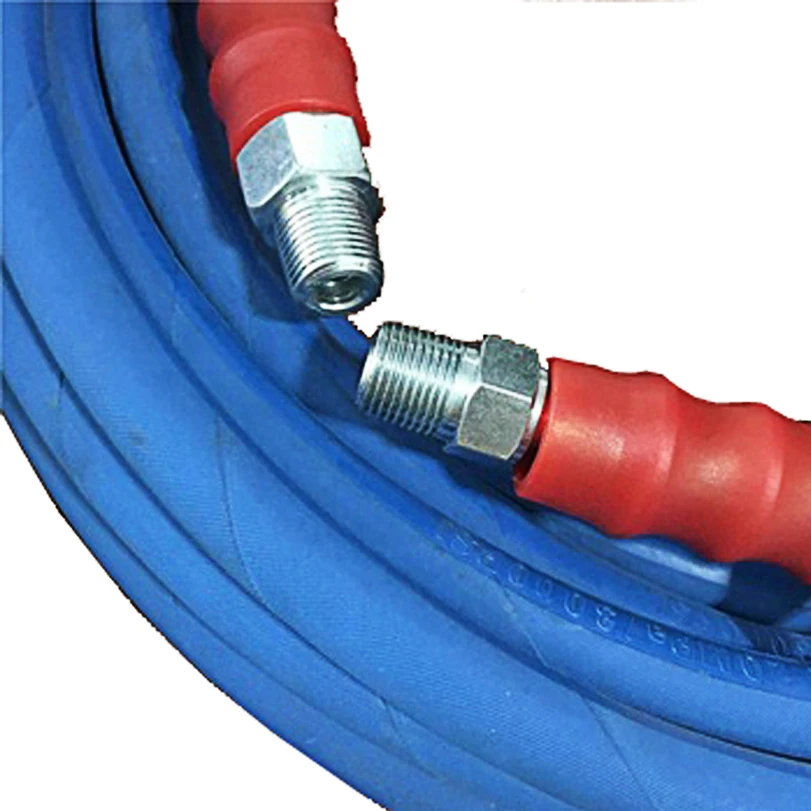
Force analysis focuses on hoop stress within the hose wall due to internal pressure. The reinforcement layer is designed to counteract this stress, preventing expansion and maintaining structural integrity. Finite Element Analysis (FEA) is often employed during the design phase to optimize reinforcement configuration and predict stress distribution under various loading conditions. Environmental resistance considers the hose's ability to withstand UV exposure, ozone degradation, and abrasion. Compliance requirements vary by region and industry, often necessitating adherence to safety standards like those defined by the Society of Automotive Engineers (SAE) or European standards (EN). Proper hose assembly, including the correct crimping of fittings, is vital for maintaining performance and preventing leaks.
Technical Specifications
| Parameter | Unit | Typical Value (NBR Liner, Steel Wire Reinforcement) | Typical Value (EPDM Liner, Aramid Braiding) |
|---|---|---|---|
| Working Pressure | PSI | 4000 | 3000 |
| Burst Pressure | PSI | 16000 | 12000 |
| Inner Diameter | inches | 0.25 | 0.25 |
| Outer Diameter | inches | 0.50 | 0.45 |
| Temperature Range | °F | -40 to 212 | -40 to 250 |
| Material (Inner Tube) | - | Nitrile Rubber (NBR) | Ethylene Propylene Diene Monomer (EPDM) |
| Material (Reinforcement) | - | High-Tensile Steel Wire | Aramid Fiber Braiding |
Failure Mode & Maintenance
Common failure modes for high-pressure washer hoses include burst failure due to exceeding the working pressure, fatigue cracking from repeated impulse pressure, abrasion of the outer cover, and chemical degradation of the inner tube. Burst failure is often catastrophic and results from material yielding or reinforcement rupture. Fatigue cracking typically initiates at points of stress concentration, such as around fittings or damaged areas. Abrasion occurs due to contact with abrasive surfaces, compromising the outer cover and potentially exposing the reinforcement layer to corrosion. Chemical degradation can lead to swelling, softening, and loss of elasticity in the inner tube, reducing its pressure-holding capacity. Oxidation of the rubber compounds can also lead to embrittlement and cracking.
Preventative maintenance includes regular visual inspection for signs of wear, damage, or chemical attack. Hoses should be replaced if they exhibit cuts, abrasions, swelling, or cracking. Proper storage is crucial; hoses should be stored in a cool, dry place away from direct sunlight and ozone sources. Avoid kinking or bending hoses sharply, as this can cause localized stress and premature failure. Ensure fittings are properly secured and tightened to prevent leaks. After each use, hoses should be thoroughly flushed with clean water to remove any residual cleaning agents. Implementing a hose replacement schedule based on usage frequency and operating conditions is recommended. Regular pressure testing can also help identify potential weaknesses before a catastrophic failure occurs.
Industry FAQ
Q: What is the impact of using an incompatible cleaning agent with the hose's inner tube material?
A: Using an incompatible cleaning agent can lead to chemical degradation of the inner tube, causing it to swell, soften, or crack. This reduces the hose's pressure-holding capacity and increases the risk of burst failure. It's crucial to verify the chemical compatibility of the hose material (NBR, EPDM, CR) with the intended cleaning agent before use. Refer to chemical resistance charts provided by hose manufacturers.
Q: How does temperature affect the performance and lifespan of a high-pressure washer hose?
A: Both high and low temperatures can negatively impact hose performance. High temperatures can cause the rubber compounds to soften and lose elasticity, reducing their strength and pressure resistance. Low temperatures can make the rubber brittle and prone to cracking. Exceeding the specified temperature range for the hose will significantly shorten its lifespan.
Q: What is the difference between steel wire reinforcement and aramid fiber braiding, and which is better?
A: Steel wire reinforcement offers higher burst pressure capabilities and is more resistant to stretching. However, it’s heavier and susceptible to corrosion. Aramid fiber braiding is lighter, corrosion-resistant, and offers good flexibility, but generally has a lower maximum pressure rating. The ‘better’ option depends on the specific application requirements. For extremely high-pressure applications, steel wire is preferred. For applications where weight and corrosion resistance are critical, aramid fiber is a better choice.
Q: What are the key indicators that a high-pressure washer hose needs to be replaced?
A: Key indicators include visible cracks, abrasions, swelling, or softening of the hose material. Also, observe any leaks around the fittings or a noticeable reduction in water pressure. If the hose exhibits any of these signs, it should be replaced immediately to prevent a potential safety hazard.
Q: How important is proper hose assembly and fitting crimping?
A: Proper hose assembly and fitting crimping are absolutely critical. Incorrectly crimped fittings can lead to leaks, reduced pressure capacity, and premature hose failure. Fittings must be securely attached to the hose and properly sealed to withstand the high pressure. It's recommended to use calibrated crimping tools and follow the manufacturer's specifications for crimp dimensions.
Conclusion
OEM high pressure washer hoses represent a complex interplay of material science, manufacturing precision, and engineering design. Selecting the appropriate hose for a given application necessitates a thorough understanding of operating pressures, fluid compatibility, temperature ranges, and environmental conditions. Failure to account for these factors can result in premature failure, downtime, and potential safety risks. Consistent adherence to industry standards and robust quality control procedures are essential for ensuring the long-term reliability and performance of these critical components.
Looking forward, advancements in material science, such as the development of novel rubber compounds and reinforced polymers, will continue to drive improvements in hose performance and durability. Increased focus on sustainability and environmentally friendly materials will also influence future hose designs. Implementing predictive maintenance strategies, leveraging sensor technology to monitor hose condition in real-time, will further enhance operational efficiency and minimize unplanned downtime.