
Apr . 01, 2024 17:55 Back to list
oem high pressure thermoplastic hose manufacturers Performance Analysis
Introduction
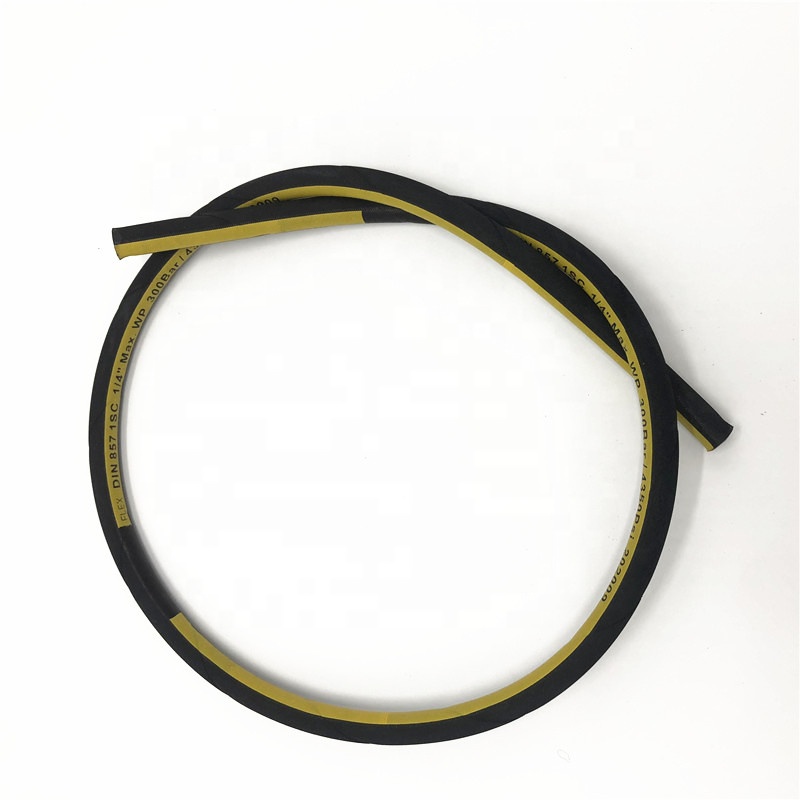
High-pressure thermoplastic hoses represent a critical component in numerous industrial applications, including hydraulic systems, fluid transfer, and chemical processing. OEM (Original Equipment Manufacturer) high-pressure thermoplastic hose manufacturers specialize in the design and production of these hoses to meet exacting specifications. These hoses differ significantly from traditional rubber hoses in their construction, offering superior resistance to temperature, pressure, and chemical attack. They typically consist of a thermoplastic inner tube, reinforced with high-tensile fibers (aramid, rayon, or steel wire), and covered with a protective outer jacket, often polyurethane. Their position within the industrial chain is primarily as a sub-assembly within larger systems, demanding adherence to strict quality control and dimensional precision. Core performance characteristics are defined by working pressure, burst pressure, temperature range, fluid compatibility, and hose bend radius. The primary challenge for OEMs is balancing these parameters with cost-effectiveness and manufacturability, while complying with stringent safety regulations.
Material Science & Manufacturing
The core material for the inner tube is typically a thermoplastic polymer such as Polyamide (Nylon 6, Nylon 12), Polypropylene (PP), or Polyethylene (PE). Nylon 12 offers excellent chemical resistance and low moisture absorption, making it suitable for applications involving fuels and oils. The reinforcement layer is crucial for pressure containment. Aramid fibers (e.g., Kevlar) provide high tensile strength and are relatively lightweight, but can be susceptible to degradation from prolonged UV exposure. Rayon reinforcement is cost-effective but offers lower strength than aramid. Steel wire reinforcement is used in the highest-pressure applications, offering superior burst strength but adding significant weight and reducing flexibility. The outer jacket is commonly polyurethane (PU) due to its abrasion resistance, oil resistance, and flexibility. Manufacturing processes vary depending on hose construction. The inner tube is typically extruded. Reinforcement layers are spirally wound or braided onto the tube. A spiral winding process uses a continuous filament, while braiding involves interlacing multiple strands. The outer jacket is then extruded over the reinforced tube. Critical parameters during extrusion include temperature control, die design, and cooling rates, all impacting the tube’s dimensional accuracy and crystallinity. Braiding tension and angle are crucial for achieving the desired pressure rating and burst strength. Post-production testing involves pressure testing, impulse testing, and dimensional inspection to ensure compliance with specifications.

Performance & Engineering
Performance analysis of high-pressure thermoplastic hoses requires a thorough understanding of force analysis and environmental resistance. Hose failure is typically initiated by either exceeding the working pressure or experiencing cyclic fatigue. Hoop stress analysis, based on Barlow’s formula (σ = PD/2t, where σ is hoop stress, P is pressure, D is diameter, and t is wall thickness), is fundamental in determining the required wall thickness for a given pressure rating. Finite Element Analysis (FEA) is often employed to model complex stress distributions, particularly at fittings and bends. Environmental resistance is assessed through exposure testing to various fluids (oils, chemicals, fuels) and temperatures. Polymer degradation mechanisms, such as oxidation and hydrolysis, must be considered. Hose flexibility is characterized by bend radius, which impacts its ability to conform to complex routing. A tight bend radius increases stress concentration and can lead to premature failure. Compliance requirements depend on the application. Hydraulic systems often require adherence to SAE J517 standards, specifying pressure ratings, temperature ranges, and fluid compatibility. Chemical transfer applications may necessitate compliance with specific regulatory standards related to the transported fluid. Functional implementation also includes consideration of fitting compatibility. Proper fitting selection and installation are crucial for ensuring a leak-free and reliable connection.
Technical Specifications
| Parameter | Nylon 12 Reinforced with Aramid | Nylon 6 Reinforced with Steel Wire | Polypropylene Reinforced with Rayon | Polyurethane Outer Jacket (All Types) |
|---|---|---|---|---|
| Working Pressure (PSI) | 4,000 | 6,000 | 2,500 | N/A - Material Property |
| Burst Pressure (PSI) | 12,000 | 18,000 | 7,500 | N/A - Material Property |
| Temperature Range (°F) | -40 to +212 | -40 to +250 | -20 to +176 | -40 to +176 |
| Fluid Compatibility | Excellent with fuels, oils, and many chemicals | Excellent with hydraulic fluids, limited chemical resistance | Good with water and some oils, limited chemical resistance | Good resistance to abrasion and oils |
| Minimum Bend Radius (inches) | 6 | 8 | 4 | N/A - Material Property |
| Reinforcement Material | Aramid Fiber | Steel Wire | Rayon Fiber | N/A - Material Property |
Failure Mode & Maintenance
Common failure modes in high-pressure thermoplastic hoses include fatigue cracking, delamination, and polymer degradation. Fatigue cracking is initiated by repeated pressure cycling, leading to micro-cracks in the reinforcement layer or the polymer matrix. Delamination occurs when the bond between the reinforcement and the inner tube weakens, allowing separation under pressure. Polymer degradation can be caused by exposure to high temperatures, UV radiation, or aggressive chemicals, leading to embrittlement and loss of flexibility. Oxidation of the polymer chain is a key degradation mechanism. Failure analysis techniques include visual inspection (for cracks and delamination), microscopic examination (to identify failure initiation sites), and chemical analysis (to assess polymer degradation). Preventative maintenance involves regular visual inspections for signs of wear and tear, such as cracking, abrasion, or swelling. Hoses should be replaced if any damage is detected. Proper storage is also crucial. Hoses should be stored in a cool, dry, and dark place to minimize degradation. Avoid sharp bends and kinks during storage. Periodic pressure testing can verify hose integrity, but should be conducted by qualified personnel. For steel wire reinforced hoses, corrosion protection is vital, and any signs of rust should be addressed immediately. The use of compatible fittings and proper installation techniques significantly prolong hose lifespan and prevent premature failure.
Industry FAQ
Q: What are the key differences between Nylon 12 and Nylon 6 in high-pressure hose applications?
A: Nylon 12 offers superior chemical resistance, particularly to fuels and oils, and lower moisture absorption compared to Nylon 6. This translates to improved long-term performance in harsh environments. However, Nylon 6 typically has a higher tensile strength and is more cost-effective, making it suitable for less demanding applications.
Q: How does steel wire reinforcement affect the hose's flexibility and weight?
A: Steel wire reinforcement significantly increases the hose's burst pressure and resistance to kinking, but it also makes the hose considerably heavier and less flexible compared to aramid or rayon reinforced hoses. This limits its use in applications where maneuverability is critical.
Q: What impact does UV exposure have on aramid reinforced hoses?
A: Prolonged UV exposure can degrade aramid fibers, reducing their tensile strength and leading to premature hose failure. An effective outer jacket that blocks UV radiation is essential for protecting aramid reinforcement.
Q: What is the best way to ensure a leak-proof connection with thermoplastic hoses?
A: Proper fitting selection (compatible material and pressure rating) and correct installation are critical. Ensure the fitting barbs fully engage the hose inner tube. Using appropriate crimping or clamping techniques is essential to create a secure connection. Always follow the fitting manufacturer's instructions.
Q: What are the common causes of delamination in thermoplastic hoses?
A: Delamination can be caused by several factors, including inadequate adhesion between the reinforcement and the inner tube during manufacturing, exposure to aggressive chemicals that weaken the bond, and excessive stress concentration due to tight bends or improper installation.
Conclusion
OEM high-pressure thermoplastic hoses represent a sophisticated engineering solution for fluid conveyance in demanding applications. Their performance characteristics are dictated by a complex interplay of material selection, manufacturing processes, and environmental factors. Understanding the nuances of polymer chemistry, reinforcement materials, and failure modes is paramount for selecting the appropriate hose for a specific application and ensuring long-term reliability.
The future of thermoplastic hose technology will likely focus on the development of new polymer materials with enhanced chemical resistance and temperature stability, as well as advancements in reinforcement technologies to further improve strength-to-weight ratios. Continued research into predictive maintenance techniques and non-destructive testing methods will also play a vital role in optimizing hose lifespan and minimizing downtime.