
Apr . 01, 2024 17:55 Back to list
oem high pressure rubber hose factory Performance Analysis
Introduction
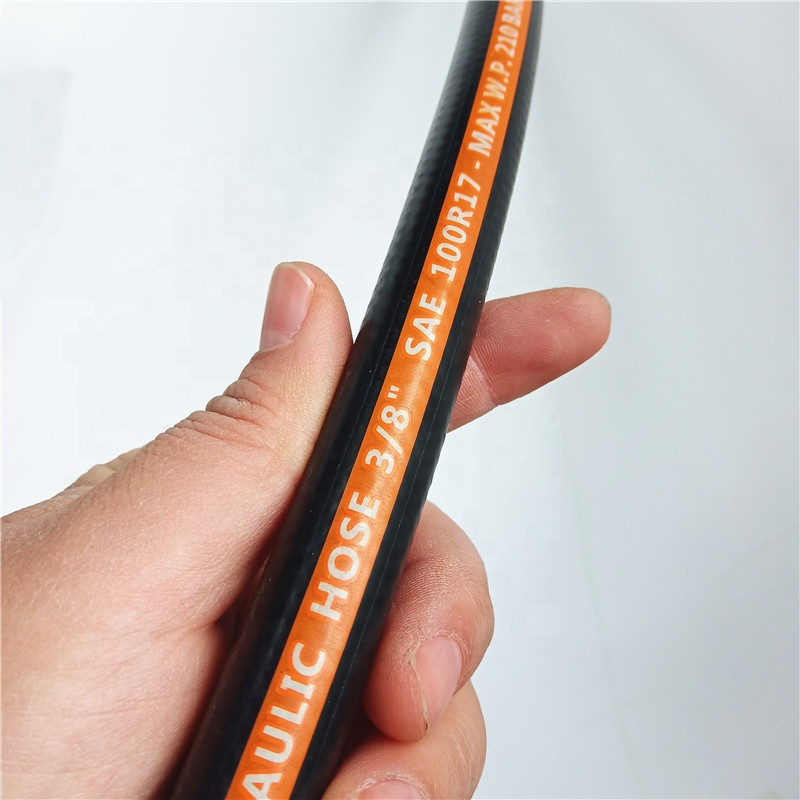
High pressure rubber hose serves as a critical fluid transfer component across a multitude of industrial applications, including hydraulic systems, pneumatic tools, automotive engineering, and chemical processing. This technical guide focuses on the intricacies of OEM (Original Equipment Manufacturer) high pressure rubber hose production, delving into material science, manufacturing processes, performance characteristics, failure modes, and relevant industry standards. The demand for reliable, durable, and application-specific hoses drives the need for meticulous design, rigorous testing, and adherence to international quality control protocols. OEM hoses distinguish themselves through customization, often manufactured to precise specifications dictated by the end-user’s equipment or system requirements. Core performance indicators include burst pressure, working pressure, temperature resistance, chemical compatibility, and service life, all directly influencing system safety and operational efficiency. Failure of a high-pressure hose can lead to catastrophic system downtime, environmental hazards, and potential personnel injury, making robust design and quality control paramount.
Material Science & Manufacturing
The construction of high-pressure rubber hose typically involves four key layers: the inner tube, reinforcement layers, outer cover, and often, adhesive layers to ensure bonding between components. The inner tube, in direct contact with the conveyed fluid, is commonly composed of synthetic rubbers such as Nitrile (NBR) for oil-based fluids, Ethylene Propylene Diene Monomer (EPDM) for water-based fluids and steam, and Fluorocarbon (FKM/Viton) for aggressive chemicals and high temperatures. These elastomers are selected based on their chemical compatibility, temperature resistance, and abrasion resistance. Reinforcement layers provide the tensile strength necessary to withstand high pressures. Materials commonly employed include high-tensile steel wire (single or multi-spiral ply), aramid fiber (Kevlar), and textile braids (polyester, nylon). The number and configuration of reinforcement layers directly correlate to the hose’s working pressure and burst pressure ratings. The outer cover, providing environmental protection and abrasion resistance, is typically composed of Chloroprene (CR/Neoprene) or Polyurethane (PU). Manufacturing processes vary depending on hose type and complexity. Braiding machines are used to precisely interweave reinforcement fibers. Extrusion processes are utilized for both the inner tube and outer cover. Vulcanization, a critical chemical process involving crosslinking of the rubber polymers with sulfur or peroxides, imparts elasticity, strength, and temperature resistance. Parameter control during vulcanization – temperature, pressure, and time – are critical to achieving optimal material properties. Quality control measures include regular testing of rubber compounds for hardness, tensile strength, elongation at break, and aging characteristics. Post-processing steps include trimming, fitting with end connections (crimped, swaged, or threaded), and pressure testing to verify integrity.

Performance & Engineering
The performance of a high-pressure rubber hose is governed by a complex interplay of material properties and geometric design. Force analysis is crucial, calculating hoop stress within the hose wall under internal pressure. This stress is directly related to the hose’s inner diameter, wall thickness, and working pressure. Reinforcement layers must provide sufficient tensile strength to counteract this hoop stress, preventing hose rupture. Environmental resistance is a key consideration; prolonged exposure to ultraviolet radiation, ozone, extreme temperatures, and corrosive chemicals can degrade the rubber compounds, reducing their flexibility and strength. Compliance requirements vary by industry and region. For hydraulic applications, standards such as SAE J517 and DIN EN 853 dictate performance criteria and testing procedures. Automotive hoses must meet FMVSS standards. Chemical processing applications require compatibility certification with the conveyed media. Functional implementation often involves specialized end fittings, selected to ensure leak-proof connections. Fitting materials must be compatible with both the hose and the fluid, and the crimping or swaging process must be precisely controlled to achieve a secure, durable bond. Bend radius is another critical engineering parameter; exceeding the minimum bend radius can induce stress concentrations, leading to premature failure. Impulse pressures (pressure fluctuations) also place significant stress on the hose, requiring consideration of fatigue resistance in the design process.
Technical Specifications
| Parameter | Unit | Typical Value (NBR, Steel Wire Reinforcement) | Typical Value (EPDM, Aramid Reinforcement) |
|---|---|---|---|
| Working Pressure | MPa | 20 | 15 |
| Burst Pressure | MPa | 80 | 60 |
| Temperature Range | °C | -40 to +100 | -50 to +120 |
| Inner Diameter | mm | 19 | 12 |
| Outer Diameter | mm | 32 | 25 |
| Tensile Strength (Reinforcement) | MPa | 1770 | 3000 |
Failure Mode & Maintenance
High-pressure rubber hoses are susceptible to several failure modes. Fatigue cracking, resulting from repeated pressure cycles, is a common failure mechanism, particularly in applications with significant impulse pressures. Delamination, the separation of layers within the hose wall, can occur due to inadequate bonding between the rubber and reinforcement materials. Chemical degradation, caused by exposure to incompatible fluids, can lead to swelling, softening, and loss of mechanical properties. Oxidation, induced by exposure to oxygen and ozone, causes hardening and cracking of the rubber compounds. Abrasion, resulting from external contact with abrasive surfaces, can wear away the outer cover, exposing the reinforcement layers. Pinholes and cracks can develop due to localized stress concentrations or material defects. Regular visual inspection is crucial for identifying signs of damage, such as cracks, bulges, abrasions, and leaks. Preventative maintenance includes proper hose routing to avoid sharp bends and abrasion, ensuring compatibility with the conveyed fluid, and adhering to recommended working pressure limits. Hose should be replaced if any signs of damage are observed. Storage conditions also play a role; hoses should be stored in a cool, dry, and dark environment, away from ozone sources. Periodic pressure testing can help identify hidden defects before they lead to catastrophic failure. Detailed failure analysis, involving microscopic examination of the fractured surface, can reveal the root cause of the failure and inform design improvements.
Industry FAQ
Q: What is the impact of fluid velocity on hose life?
A: Increased fluid velocity can exacerbate erosion and fatigue failure. Higher velocities create greater shear stress on the inner tube, accelerating wear. It also increases the frequency of pressure surges, contributing to fatigue cracking. Proper hose sizing and flow control are essential to maintain fluid velocity within acceptable limits.
Q: How do I determine the correct hose reinforcement type for my application?
A: The appropriate reinforcement type depends on the working pressure, temperature, fluid compatibility, and potential for impulse pressures. Steel wire reinforcement provides high tensile strength and is suitable for high-pressure hydraulic systems. Aramid fiber offers excellent strength-to-weight ratio and is often used in applications where weight is a concern. Textile braids provide moderate reinforcement and are cost-effective for lower-pressure applications.
Q: What are the common causes of hose leakage at the fittings?
A: Leakage at fittings can result from improper crimping or swaging, incompatible fitting materials, damaged threads, or deterioration of the sealing surfaces. Ensuring a secure, leak-proof connection requires using the correct fitting size and type, applying the appropriate crimping or swaging pressure, and regularly inspecting the fittings for damage.
Q: How does temperature affect hose performance?
A: Temperature significantly impacts rubber elasticity and strength. Elevated temperatures can cause rubber to soften and lose its mechanical properties, while low temperatures can cause it to harden and become brittle. Selecting a hose material with a suitable temperature range for the application is critical. Thermal expansion and contraction can also induce stress on the hose and fittings.
Q: What are the benefits of using a multi-spiral reinforcement hose?
A: Multi-spiral reinforcement hoses offer superior flexibility and resistance to kinking compared to single-spiral hoses. The multiple layers distribute stress more evenly, enhancing durability and reducing the risk of fatigue failure. They are particularly well-suited for applications with tight bend radii or frequent movement.
Conclusion
The selection, implementation, and maintenance of OEM high-pressure rubber hose demand a thorough understanding of material science, engineering principles, and industry standards. Optimizing hose performance and ensuring long-term reliability hinges on accurate specification of material compatibility, reinforcement configuration, and fitting selection, tailored to the unique demands of the application. Ignoring these critical factors can lead to premature failure, resulting in costly downtime and potential safety hazards.
Continued advancements in rubber technology and manufacturing processes are driving the development of high-performance hoses with enhanced durability, chemical resistance, and temperature capabilities. Proactive preventative maintenance programs, combined with regular inspections and adherence to recommended operating parameters, are essential for maximizing hose service life and maintaining system integrity. Future trends are likely to focus on smart hoses incorporating sensors for real-time monitoring of pressure, temperature, and structural health.