
Apr . 01, 2024 17:55 Back to list
oem high pressure hydraulic rubber hose factory Performance Analysis
Introduction
High-pressure hydraulic rubber hoses are critical components in fluid power systems, facilitating the transmission of hydraulic fluid to actuators and other components. OEM (Original Equipment Manufacturer) production focuses on supplying these hoses to equipment manufacturers across diverse sectors, including construction, agriculture, mining, and manufacturing. These hoses are distinguished by their ability to withstand extreme pressures, temperatures, and harsh operating environments. Their performance is directly linked to system reliability, efficiency, and safety. This technical guide details the material science, manufacturing processes, performance characteristics, failure modes, and maintenance requirements for OEM high-pressure hydraulic rubber hoses, adhering to relevant international standards. A core industry pain point centers on achieving consistent high-burst pressures while maintaining flexibility and resisting degradation from prolonged exposure to hydraulic fluids, heat, and abrasion. Meeting increasingly stringent environmental regulations regarding fluid containment and material composition also presents a significant challenge.
Material Science & Manufacturing
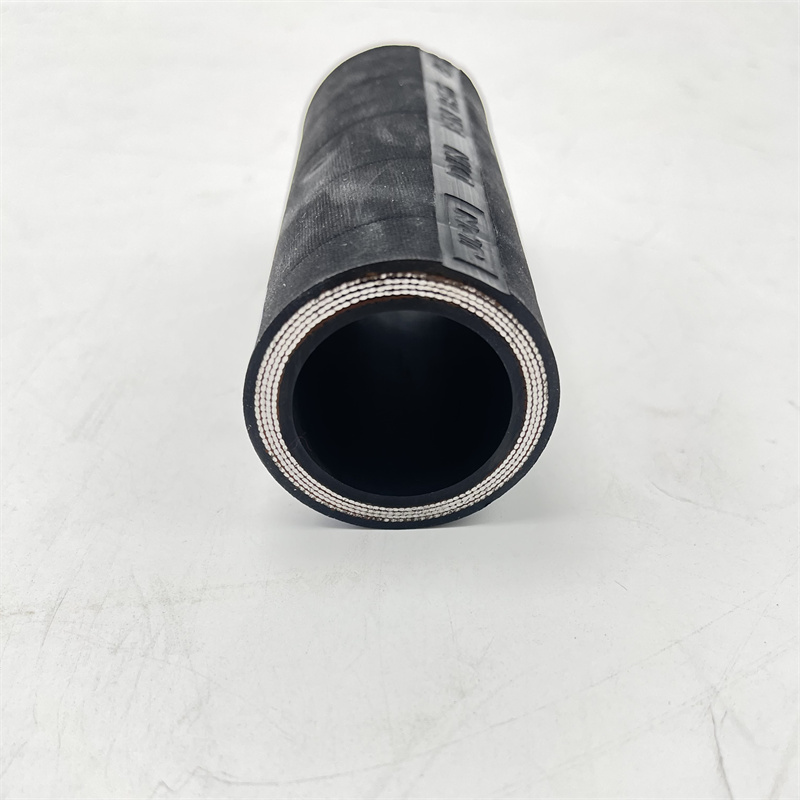
The core construction of a high-pressure hydraulic hose involves multiple layers, each contributing to its overall performance. The inner tube, typically made of synthetic rubber compounds like nitrile (NBR), ethylene propylene diene monomer (EPDM), or fluorocarbon (FKM – Viton), provides fluid resistance. NBR offers good resistance to petroleum-based oils, while EPDM excels in phosphate ester fluids and high-temperature applications. FKM provides superior resistance to a broad range of chemicals but is more expensive. The reinforcement layer, crucial for pressure containment, is commonly comprised of multiple layers of high-tensile steel wire, spirally wound or braided. The number of layers and wire diameter directly correlate with the hose's working and burst pressures. Between the reinforcement and the outer cover, a stabilizer layer, often a synthetic fiber braid, maintains hose shape and prevents kinking. The outer cover, typically a synthetic rubber like chloroprene (CR) or polyurethane (PU), provides abrasion, ozone, and weather resistance.
Manufacturing typically begins with extrusion of the inner tube using a continuous extrusion process, carefully controlling temperature and pressure to ensure dimensional accuracy and uniformity. The reinforcement layer is then applied via winding or braiding machines, maintaining precise tension and layer count. These processes are critical; variations can lead to localized weaknesses and premature failure. The stabilizer layer is applied, followed by the outer cover, also through extrusion. Post-extrusion, the hose undergoes curing (vulcanization), a critical step that crosslinks the rubber polymers, enhancing their strength, elasticity, and resistance to degradation. Parameter control during curing – temperature, time, and pressure – is paramount. Finally, hoses are subjected to rigorous testing, including burst pressure testing, impulse testing, and leak testing, to ensure they meet specified performance criteria. Quality control is maintained via Statistical Process Control (SPC) methods throughout the entire manufacturing process.

Performance & Engineering
The performance of a hydraulic hose is determined by several key engineering parameters. Burst pressure, the maximum pressure the hose can withstand before rupture, is a primary specification, often expressed in PSI or MPa. Working pressure, typically 50-75% of the burst pressure, represents the safe operating limit. Impulse pressure, which refers to pressure spikes and fluctuations in the hydraulic system, is another critical consideration. Hoses must withstand repeated impulse pressures without failure. Flexibility, or bend radius, is crucial for ease of installation and operation. A tighter bend radius increases stress on the hose and reduces its lifespan. Temperature resistance is vital, as hydraulic fluids can operate at elevated temperatures. The hose material must maintain its integrity and flexibility over the specified temperature range.
Force analysis during hose operation involves consideration of internal pressure, tensile stress due to bending, and external loads. Finite Element Analysis (FEA) is often employed during the design phase to optimize hose construction and predict stress distribution under various loading conditions. Environmental resistance is assessed through exposure testing to ozone, UV radiation, and various fluids. Compliance requirements, dictated by industry standards like SAE J517 and EN 853, mandate specific performance criteria and testing procedures. Functional implementation necessitates careful hose routing to minimize bending and abrasion, and the use of appropriate fittings to ensure a leak-free and secure connection.
Technical Specifications
| Parameter | Unit | Typical Value (NBR Inner/Steel Wire Reinforcement/CR Cover) | Typical Value (FKM Inner/Steel Wire Reinforcement/PU Cover) |
|---|---|---|---|
| Working Pressure | PSI | 3000 | 5000 |
| Burst Pressure | PSI | 9000 | 15000 |
| Temperature Range | °F | -40 to 212 | -20 to 275 |
| Minimum Bend Radius | inches | 6 | 8 |
| Reinforcement Layers | Number | 4 | 6 |
| Fluid Compatibility | Petroleum-based oils, water | Wide range of chemicals, fuels, oils |
Failure Mode & Maintenance
Common failure modes in high-pressure hydraulic hoses include burst failure due to exceeding the working pressure, fatigue cracking from repeated flexing, abrasion of the outer cover, and fluid degradation of the inner tube. Fatigue cracking often initiates at points of high stress concentration, such as near fittings or at bends. Delamination, the separation of layers, can occur due to poor bonding during manufacturing or prolonged exposure to heat and fluids. Oxidation of the rubber compounds can lead to hardening and cracking, reducing flexibility and pressure resistance. Swelling or shrinking of the inner tube due to incompatible fluids can also cause failure.
Preventative maintenance is crucial for maximizing hose lifespan and ensuring system safety. Regular visual inspections should be conducted to check for signs of abrasion, cracking, bulging, or leaking. Hoses should be replaced if any damage is observed. Proper hose routing is essential to minimize bending and abrasion. The use of hose guards can provide additional protection in high-wear areas. Ensure compatibility of the hose material with the hydraulic fluid being used. Avoid excessive bending and kinking. Regularly check and tighten fittings to prevent leaks. When replacing hoses, always use fittings that are compatible with the hose and the hydraulic system. Store hoses in a cool, dry place away from direct sunlight and ozone sources.
Industry FAQ
Q: What is the impact of impulse pressure on hose life?
A: Impulse pressure, or pressure pulsations, introduce cyclical stress on the hose reinforcement. Repeated stress cycles lead to fatigue failure over time. Higher impulse pressures and frequencies significantly reduce hose lifespan. Hoses specifically designed for high-impulse applications incorporate specialized reinforcement constructions to mitigate these effects.
Q: How does the choice of inner tube material affect fluid compatibility?
A: The inner tube material dictates the hose's resistance to degradation from contact with hydraulic fluids. NBR is suitable for petroleum-based oils, while EPDM is better for phosphate ester fluids and high temperatures. FKM offers the broadest chemical resistance but at a higher cost. Using an incompatible fluid will cause swelling, shrinking, or softening of the inner tube, leading to leaks and failure.
Q: What are the considerations for selecting the appropriate hose reinforcement?
A: The reinforcement layer determines the hose's pressure rating and flexibility. Multiple layers of high-tensile steel wire provide higher burst pressures. The wire diameter and braiding angle also influence performance. Spiral-wound reinforcement generally offers higher pressure ratings than braided reinforcement. The reinforcement must be compatible with the hose's intended application and fluid type.
Q: How important is proper hose fitting selection?
A: Proper fitting selection is critical for ensuring a leak-free and secure connection. Fittings must be compatible with the hose material, reinforcement type, and fluid being used. Incorrectly sized or incompatible fittings can lead to leaks, hose blow-off, and potential injury. Crimping the fitting onto the hose must be performed correctly to achieve a reliable seal.
Q: What are the recommended storage conditions for hydraulic hoses?
A: Hydraulic hoses should be stored in a cool, dry, and well-ventilated area away from direct sunlight, ozone sources, and extreme temperatures. Hoses should be stored coiled loosely to prevent kinking. Avoid storing hoses in contact with sharp objects or abrasive surfaces. Protect hoses from damage during handling and transportation.
Conclusion
OEM high-pressure hydraulic rubber hoses represent a critical link in the functionality and safety of numerous industrial applications. Their design and manufacturing involve a complex interplay of material science, engineering principles, and stringent quality control measures. Understanding the key performance parameters, potential failure modes, and appropriate maintenance practices is paramount for ensuring reliable operation and maximizing service life. The continuous pursuit of improved materials, manufacturing techniques, and testing methodologies is essential for meeting the evolving demands of the hydraulic industry.
Future development trends include the exploration of alternative reinforcement materials, such as aramid fibers, to enhance strength-to-weight ratios and improve flexibility. The implementation of smart hose technologies, incorporating sensors to monitor pressure, temperature, and hose condition in real-time, will enable predictive maintenance and enhance system safety. Furthermore, ongoing efforts to develop environmentally friendly hose materials and manufacturing processes will address growing sustainability concerns.