
Apr . 01, 2024 17:55 Back to list
oem high pressure hydraulic rubber hose factories Performance Engineering

Introduction
OEM high pressure hydraulic rubber hose factories represent a critical tier in the fluid power industry supply chain, specializing in the manufacturing of flexible conduits designed to transmit hydraulic fluid under extreme pressure. These hoses are integral components in a vast array of applications, spanning construction equipment, agricultural machinery, material handling systems, oil and gas exploration, and manufacturing processes. The technical position of these factories lies between raw material suppliers (rubber compounds, steel wire, fittings) and equipment manufacturers who integrate the hoses into complete systems. Core performance characteristics center on burst pressure, working pressure, temperature range, fluid compatibility, and dimensional accuracy. The industry faces increasing demand for higher pressure ratings, improved durability in harsh environments, and specialized hoses for novel hydraulic fluids, driving innovation in material science and manufacturing processes. Failure in these systems can lead to catastrophic equipment damage, operational downtime, and potential safety hazards, making quality control and adherence to industry standards paramount.
Material Science & Manufacturing
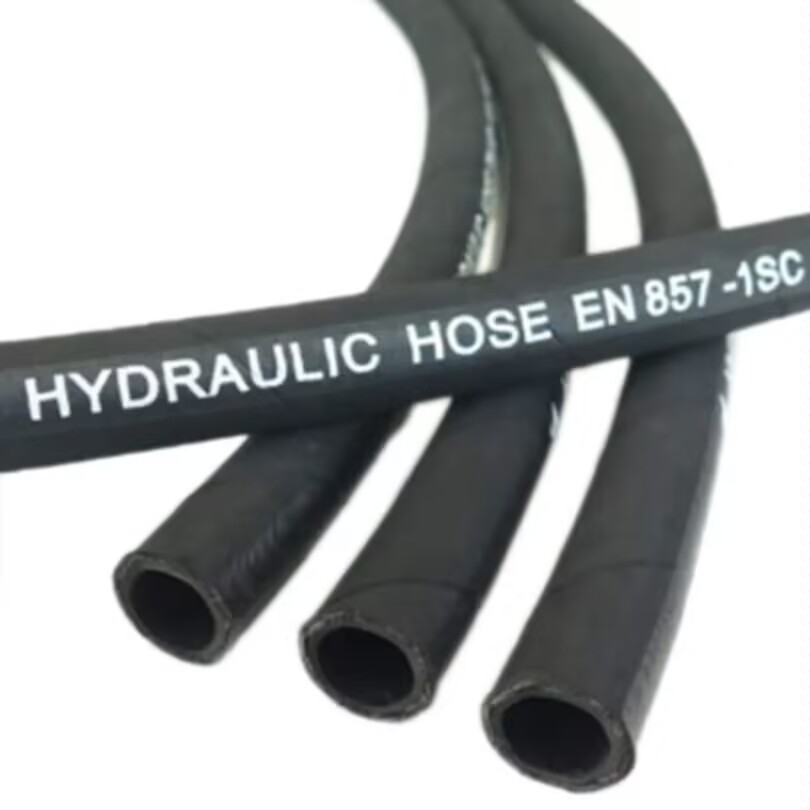
The production of high-pressure hydraulic hoses involves a complex interplay of material science and manufacturing techniques. The core construction typically comprises an inner tube (providing fluid resistance), multiple layers of reinforcement (providing pressure containment), and an outer cover (providing environmental protection). Inner tubes are commonly formulated from synthetic rubbers like Nitrile (NBR) for oil resistance, Ethylene Propylene Diene Monomer (EPDM) for water and phosphate ester fluid compatibility, and Chlorinated Polyethylene (CPE) for enhanced ozone and weather resistance. Reinforcement layers traditionally utilize high-tensile steel wire, spirally wound to impart pressure strength. More advanced constructions incorporate textile braids (aramid or polyester) in conjunction with steel wire for improved flexibility and reduced weight. Outer covers are typically composed of Chloroprene rubber (CR) offering abrasion resistance and weather protection. Manufacturing begins with rubber compound mixing and extrusion to form the inner tube. Steel wire is then spirally wound onto the tube. Subsequent layers of rubber are extruded over the wire, followed by the application of the outer cover. Vulcanization, a process involving heat and pressure, crosslinks the rubber polymers, enhancing strength, elasticity, and chemical resistance. Critical parameters include rubber compound formulation (precise ratios of polymers, fillers, plasticizers, and curing agents), wire diameter and pitch, layer adhesion strength (verified through peel tests), and vulcanization temperature and duration. Maintaining consistent material properties and precise control over manufacturing processes are crucial to ensure hose integrity.
Performance & Engineering
High-pressure hydraulic hoses are subjected to significant internal pressure, external stresses, and environmental factors during operation. Performance engineering centers around ensuring the hose can withstand these conditions without failure. Burst pressure, defined as the pressure at which the hose ruptures, is a primary performance metric. Working pressure is typically specified as a fraction (e.g., 1/4) of the burst pressure, providing a safety factor. Finite Element Analysis (FEA) is employed to model stress distribution within the hose under various loading conditions, optimizing reinforcement layer configuration and material selection. Tensile strength, elongation at break, and tear resistance of the rubber compounds are critical material properties affecting hose durability. Environmental resistance is assessed through exposure to temperature extremes, hydraulic fluids, ozone, UV radiation, and abrasion. Hose bend radius is a critical engineering parameter; exceeding the minimum bend radius induces excessive stress, leading to fatigue failure. Compliance requirements, such as those stipulated by SAE (Society of Automotive Engineers) standards, mandate specific performance tests, including pressure testing, impulse testing (cyclic pressure loading), and temperature cycling. Furthermore, fitting compatibility is paramount, as improper fitting selection or installation can create leak paths and compromise hose integrity. Consideration must also be given to fluid compatibility; incompatible fluids can cause swelling, degradation, or permeation of the rubber, leading to premature failure.
Technical Specifications
| Parameter | Unit | Typical Value (DN20, 2-Wire Spiral) | Test Standard |
|---|---|---|---|
| Working Pressure | MPa | 25 | SAE J517 |
| Burst Pressure | MPa | 100 | SAE J517 |
| Temperature Range | °C | -40 to +100 | SAE J517 |
| Inner Tube Material | - | NBR | SAE J517 |
| Reinforcement | - | 2 Steel Wire Spiral | SAE J517 |
| Outer Cover Material | - | CR | SAE J517 |
Failure Mode & Maintenance
High-pressure hydraulic hose failures commonly manifest as burst failures, leakages, and gradual degradation. Burst failures typically originate from fatigue cracking in the reinforcement layers, exacerbated by exceeding working pressure or excessive bending. Leakages can occur at fittings due to improper installation, thread damage, or seal degradation. Gradual degradation arises from several factors: oil permeation leading to rubber swelling and softening; oxidation causing hardening and cracking of the rubber; abrasion from external contact; and chemical attack from incompatible fluids. Failure analysis often involves microscopic examination of fracture surfaces to identify crack initiation sites and determine the root cause. Preventive maintenance is crucial. Regular visual inspections should identify signs of abrasion, cracking, swelling, or leakage. Hose should be replaced if any damage is detected. Proper fitting installation, using appropriate torque specifications, is essential. Avoid exceeding the hose’s minimum bend radius. Implement a hose management program to track hose age and usage. For hoses exposed to extreme temperatures, ensure the rubber compound is rated for the operating range. Regularly check fluid compatibility to prevent degradation. Consider protective sleeves or guards to shield hoses from abrasion and environmental exposure. Finally, proper storage in a cool, dry, and dark location will prolong hose service life.
Industry FAQ
Q: What is the primary difference between a single-wire and a two-wire spiral hydraulic hose?
A: A single-wire spiral hose generally provides higher flexibility and is suitable for applications with tighter bend radii. However, a two-wire spiral hose offers significantly higher pressure ratings and improved resistance to kinking under pressure, making it ideal for demanding applications with high flow rates and elevated pressures.
Q: How does temperature affect the performance of a hydraulic hose?
A: Extreme temperatures can significantly degrade hose performance. High temperatures accelerate rubber oxidation and softening, reducing pressure capacity and increasing the risk of leakage. Low temperatures can cause rubber to become brittle and susceptible to cracking. Therefore, selecting a hose with a rubber compound rated for the specific operating temperature range is crucial.
Q: What are the common causes of hose kinking, and how can it be prevented?
A: Hose kinking is typically caused by exceeding the minimum bend radius, internal pressure imbalance, or obstruction within the hose. Prevention strategies include selecting a hose with an appropriate bend radius for the application, ensuring proper installation and routing, and avoiding sharp bends. Using a kink-resistant hose construction can also mitigate this issue.
Q: What is the significance of the SAE J517 standard for hydraulic hoses?
A: SAE J517 is a critical industry standard defining performance requirements, testing procedures, and marking specifications for hydraulic hoses. Adherence to this standard ensures hose quality, reliability, and interchangeability. It dictates parameters like burst pressure, working pressure, temperature range, and fluid compatibility, providing a benchmark for manufacturers and users.
Q: What is the best way to determine the appropriate hose size for a specific hydraulic system?
A: The appropriate hose size depends on the system’s flow rate, working pressure, and fluid velocity. Using a hose that is too small will result in excessive pressure drop and heat generation. A hose that is too large will increase cost and potentially reduce system responsiveness. Consulting hydraulic system design guides and utilizing appropriate sizing charts are recommended. Considerations also include fitting selection and available space.
Conclusion
The manufacturing and application of high-pressure hydraulic rubber hoses require a comprehensive understanding of material science, engineering principles, and industry standards. OEM factories specializing in these hoses must prioritize precise process control, rigorous quality assurance, and continuous innovation to meet the evolving demands of the fluid power industry. The selection of appropriate materials, reinforcement configurations, and manufacturing techniques directly impact hose performance, durability, and safety.
Future trends in this field include the development of lighter-weight hose constructions utilizing advanced materials like thermoplastic composites, the integration of smart sensors for real-time condition monitoring, and the formulation of environmentally friendly rubber compounds. Adherence to stringent industry regulations (SAE, ISO) remains paramount to ensure product reliability and mitigate potential hazards. Ultimately, the success of OEM high-pressure hydraulic rubber hose factories hinges on their ability to deliver consistently high-quality products that meet the specific needs of their customers.