
Apr . 01, 2024 17:55 Back to list
oem high pressure hydraulic hose manufacturer Performance Analysis
Introduction
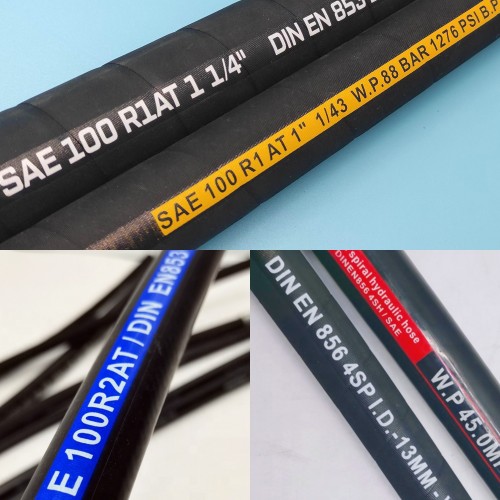
OEM high-pressure hydraulic hose manufacturing represents a critical component within the fluid power industry, serving applications across construction, agriculture, manufacturing, and aerospace. These hoses are engineered to safely and reliably transmit hydraulic fluid under substantial pressure, enabling the operation of heavy machinery and critical industrial processes. The technical position in the supply chain places OEM manufacturers as direct suppliers to equipment producers, requiring adherence to stringent quality control measures and customization capabilities. Core performance characteristics include pressure rating, burst pressure, temperature resistance, and fluid compatibility, all dictated by specific application demands and international safety standards. A key industry pain point revolves around maintaining consistent dimensional accuracy and achieving reliable long-term performance in harsh operational environments, coupled with the need for rapid prototyping and scalability for diverse OEM requirements.
Material Science & Manufacturing
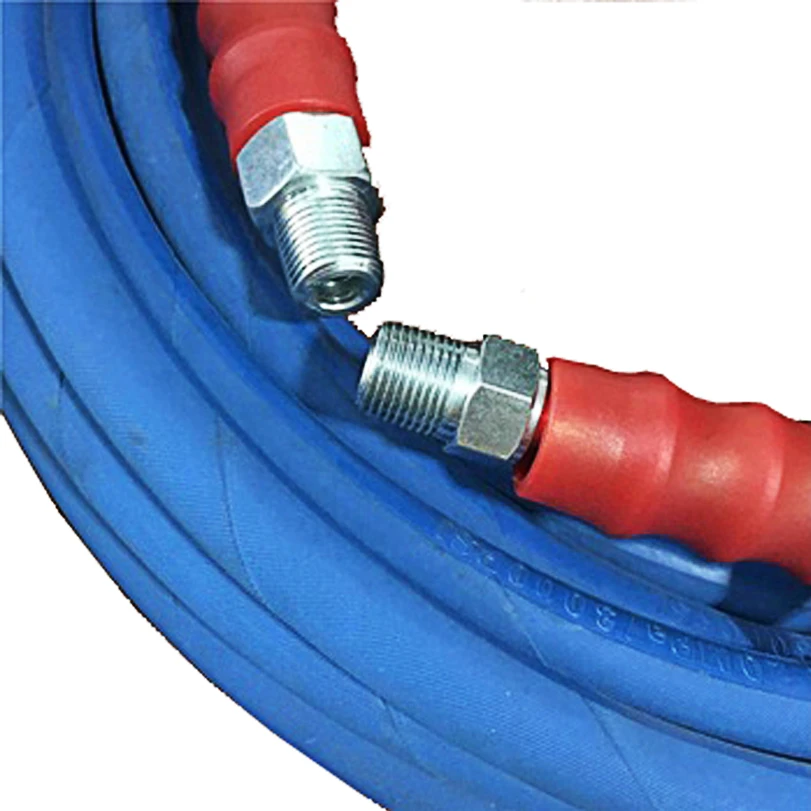
High-pressure hydraulic hoses are typically constructed from several layers of specialized materials. The inner tube, in direct contact with the fluid, is commonly made from nitrile rubber (NBR) for oil-based fluids, or fluoropolymers like PTFE or FKM for aggressive chemicals or high temperatures. Reinforcement layers dictate the hose's pressure capacity and flexibility. These typically consist of multiple plies of high-tensile steel wire, spirally wound or braided, although synthetic fiber reinforcements (aramid, rayon) are used for lighter-duty applications. The outer cover provides environmental protection and abrasion resistance, commonly utilizing a blend of synthetic rubbers like SBR or polyurethane. Manufacturing processes vary based on hose type. Braided hoses involve helical winding of steel wire over a mandrel, followed by vulcanization. Spiraled hoses employ continuous winding of pre-formed steel wire around a central core. Key parameter control includes wire tension uniformity, rubber compound mixing ratios, and precise temperature and pressure control during vulcanization. Incorrect mixing ratios can lead to compromised chemical resistance, while insufficient vulcanization results in reduced tensile strength. Post-processing includes dimensional inspection, pressure testing, and coupling attachment, crucial for ensuring leak-free operation.
Performance & Engineering
The performance of a high-pressure hydraulic hose is governed by complex force analysis. Internal fluid pressure exerts hoop stress on the inner tube, which is resisted by the reinforcement layers. External bending loads introduce tensile and compressive stresses, potentially leading to fatigue failure. Engineers utilize finite element analysis (FEA) to model stress distribution and optimize reinforcement configurations for specific pressure and bend radius requirements. Environmental resistance is paramount; hoses must withstand temperature extremes, UV exposure, ozone cracking, and chemical attack. Temperature cycling causes expansion and contraction, inducing stress on connections and the hose body. Fluid compatibility is critical to prevent swelling, degradation, or permeation. Compliance requirements such as SAE J517 (hydraulic hose specifications) and ISO 6899 (hydraulic hose assemblies) dictate minimum performance criteria for burst pressure, impulse pressure, and temperature range. Functional implementation necessitates careful consideration of hose routing, minimizing sharp bends and avoiding contact with abrasive surfaces. Proper hose guard protection is essential to prevent damage from external impacts and chafing.
Technical Specifications
| Parameter | Unit | Typical Value (Steel Wire Braided) | Typical Value (Spiral Wire Reinforced) |
|---|---|---|---|
| Working Pressure | PSI | 4,000 – 6,000 | 6,000 – 8,000 |
| Burst Pressure | PSI | 12,000 – 18,000 | 18,000 – 24,000 |
| Temperature Range | °F | -40 to +212 | -40 to +250 |
| Inner Tube Material | - | NBR (Nitrile Rubber) | PTFE (Polytetrafluoroethylene) |
| Reinforcement Material | - | Steel Wire Braid (2-6 layers) | Steel Wire Spiral (4-8 spirals) |
| Outer Cover Material | - | Synthetic Rubber (SBR) | Polyurethane |
Failure Mode & Maintenance
High-pressure hydraulic hoses are susceptible to several failure modes. Fatigue cracking, resulting from repeated bending and pressure cycling, is a common issue, often initiating at the connection points. Delamination of reinforcement layers can occur due to improper vulcanization or exposure to extreme temperatures. Degradation of the inner tube material can result from chemical incompatibility or prolonged exposure to high temperatures, leading to swelling, softening, or cracking. Oxidation of the outer cover can cause embrittlement and loss of flexibility. Failure analysis often reveals that pinholes or micro-cracks develop over time, leading to fluid leakage and eventual catastrophic failure. Preventative maintenance is crucial. Regular visual inspection for signs of cracking, abrasion, or bulging is essential. Hoses should be replaced if any damage is detected. Proper hose routing and guarding are critical to prevent external damage. Fluid analysis can identify contaminants that may accelerate degradation. Connections should be regularly checked for tightness and corrosion. The use of certified hose assemblies and qualified installation personnel is paramount to ensuring long-term reliability and safe operation.
Industry FAQ
Q: What is the impact of fluid velocity on hydraulic hose life?
A: Increased fluid velocity exacerbates erosion of the inner tube, particularly with fluids containing abrasive particles. It also increases pressure drop and heat generation. Optimizing hose diameter to maintain appropriate fluid velocity (typically 15-25 ft/s) is crucial for maximizing hose life.
Q: How does temperature affect the performance of hydraulic hoses?
A: High temperatures accelerate the degradation of rubber compounds, reducing their tensile strength and flexibility. Low temperatures can cause the rubber to become brittle and prone to cracking. Exceeding the specified temperature range can significantly shorten hose life and lead to catastrophic failure.
Q: What is the difference between impulse pressure and working pressure?
A: Working pressure is the continuous operating pressure the hose is designed to withstand. Impulse pressure, also known as surge pressure, refers to short-duration pressure spikes caused by pump pulsations or sudden valve closures. Hydraulic hoses must be capable of withstanding both working and impulse pressures.
Q: How important is proper hose coupling selection and installation?
A: Improper coupling selection or installation is a major cause of hose failures. The coupling must be compatible with the hose material and pressure rating. Correct crimping procedures are essential to ensure a secure and leak-free connection. Using the wrong coupling or improper crimping can lead to premature failure.
Q: What are the best practices for storing hydraulic hoses?
A: Hydraulic hoses should be stored in a cool, dry, and dark environment, away from direct sunlight, ozone sources, and extreme temperatures. Hoses should be coiled loosely and supported to prevent kinking or damage. Avoid storing hoses in contact with incompatible materials.
Conclusion
OEM high-pressure hydraulic hose manufacturing is a highly specialized field demanding precise material selection, rigorous quality control, and a deep understanding of fluid power principles. The long-term reliability and safety of hydraulic systems depend critically on the performance of these hoses, which are subject to demanding operational conditions and stringent industry standards. Achieving optimal performance requires a holistic approach encompassing careful engineering design, robust manufacturing processes, and diligent preventative maintenance.
Future trends in this industry point toward the development of lighter-weight, more durable hoses utilizing advanced materials and manufacturing techniques. Increased adoption of smart hose technology, incorporating sensors for pressure monitoring and leak detection, will further enhance system reliability and reduce downtime. Continued focus on sustainability and environmentally friendly materials will also shape the future landscape of OEM high-pressure hydraulic hose manufacturing.