
Apr . 01, 2024 17:55 Back to list
oem gasoline hose manufacturer Performance Analysis
Introduction
Gasoline hoses, specifically those manufactured to OEM specifications, are critical components in fuel delivery systems for automotive, industrial, and marine applications. They represent a specialized subset of flexible hoses engineered to safely and reliably convey gasoline and gasoline-ethanol blends. Their technical position within the automotive supply chain is high-impact; a failure can lead to fuel leakage, fire hazard, and vehicle malfunction. Core performance characteristics center around fuel impermeability, resistance to degradation from hydrocarbon exposure, and the ability to withstand both high pressures encountered during fuel pump operation and sub-zero temperatures without embrittlement. OEM gasoline hose manufacturing differs significantly from aftermarket hoses, requiring adherence to stringent automotive manufacturer specifications and rigorous quality control protocols. The industry faces increasing challenges related to evolving fuel compositions (e.g., higher ethanol content) and tightening emissions regulations, driving demand for advanced hose materials and construction techniques.
Material Science & Manufacturing
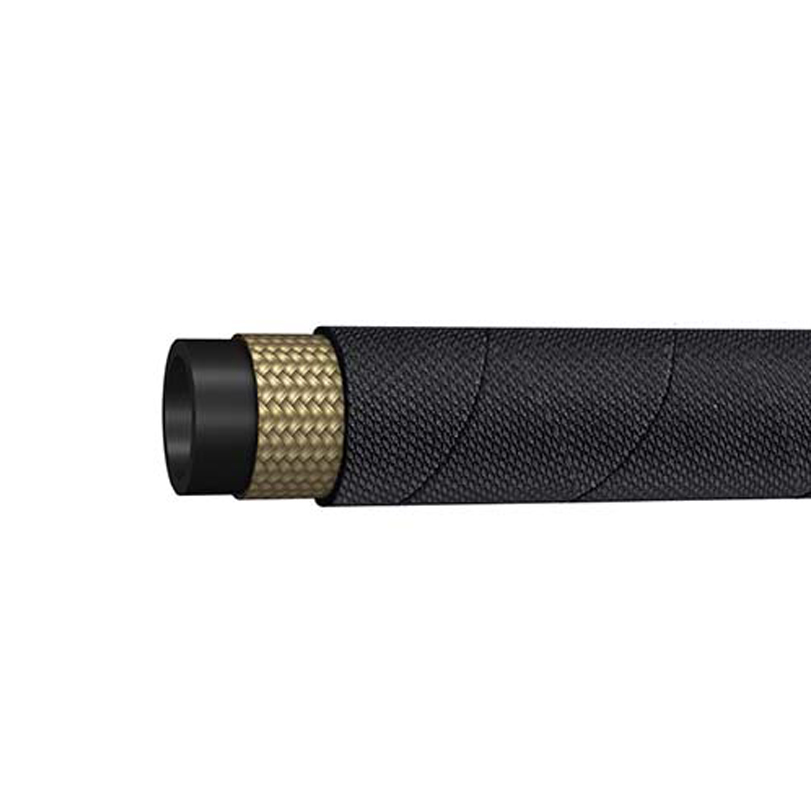
The core material for gasoline hoses is typically a synthetic rubber compound, most commonly a blend of nitrile rubber (NBR) and polychloroprene rubber (CR, commonly known as Neoprene). NBR provides excellent resistance to aliphatic hydrocarbons (gasoline), while CR contributes resistance to ozone, weathering, and abrasion. The specific formulation is a proprietary blend, optimized to balance fuel resistance, flexibility, and cost. Other components include reinforcing layers – traditionally textile braids (typically polyester or nylon) – embedded within the rubber matrix to provide pressure resistance and prevent kinking. Modern hoses are increasingly utilizing aramid fiber reinforcement for higher strength-to-weight ratios and improved dimensional stability. The manufacturing process generally involves several stages: compound mixing (where raw rubber, curing agents, plasticizers, and reinforcing fillers are blended), extrusion (where the rubber compound is formed into a hose shape), braiding (applying the reinforcement layer), and vulcanization (curing the rubber using heat and pressure). Critical parameters during extrusion include die temperature, extrusion speed, and material homogeneity. Vulcanization parameters – temperature, pressure, and cure time – are meticulously controlled to achieve optimal crosslinking density, affecting the hose's mechanical properties and fuel resistance. Post-vulcanization, hoses undergo dimensional inspection, pressure testing, and leak testing to ensure compliance with specifications. The inner tube material must exhibit low swell in gasoline and ethanol blends. The outer cover typically uses a more weather-resistant rubber compound, often EPDM (ethylene propylene diene monomer) for UV and ozone protection.
Performance & Engineering
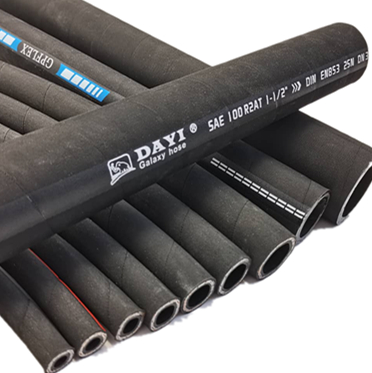
Gasoline hose performance is governed by several key engineering principles. Firstly, burst pressure resistance is paramount, dictated by the reinforcement layer’s strength and the rubber compound’s tensile strength. This is evaluated through hydrostatic testing, typically to pressures significantly exceeding normal operating conditions. Secondly, fuel permeability is a critical factor, as fuel loss contributes to evaporative emissions and potential environmental hazards. Permeability is measured using standardized test methods (detailed in the Technical Specifications section). Thirdly, fatigue resistance is essential, as hoses are subjected to repeated flexing and pressure cycling during vehicle operation. Fatigue life is assessed through accelerated aging and cyclic pressure testing. Environmental resistance is equally important, including resistance to degradation from UV exposure, ozone cracking, and extreme temperatures. The hose’s construction must prevent the leaching of plasticizers or other components into the fuel stream, which could contaminate the fuel system. Furthermore, the hose must be electrically conductive to dissipate static electricity buildup during fueling, minimizing the risk of sparks. This is achieved by incorporating conductive carbon black into the rubber compound. Compliance with automotive industry standards (SAE J30R9, for example) is non-negotiable. Force analysis during hose bending and flexing is crucial to prevent localized stress concentrations that can lead to failure. Finite element analysis (FEA) is often used to model hose behavior under various loading conditions.
Technical Specifications
| Parameter | Unit | Typical Value (NBR/CR Blend) | Test Standard |
|---|---|---|---|
| Burst Pressure | PSI | 600-1200 | SAE J30R9 |
| Working Pressure | PSI | 150-400 | SAE J30R9 |
| Fuel Permeability (Gasoline) | g/m²/day | < 2 | ASTM D530 |
| Tensile Strength | MPa | 15-25 | ASTM D412 |
| Elongation at Break | % | 300-500 | ASTM D412 |
| Hardness (Shore A) | - | 55-65 | ASTM D2240 |
| Temperature Range | °C | -40 to +120 | SAE J30R9 |
Failure Mode & Maintenance
Gasoline hose failure can manifest in several ways. The most common failure mode is cracking due to ozone exposure and weathering, especially on the outer cover. Another frequent issue is permeation-induced swelling, leading to hose softening and eventual rupture. Fatigue cracking can occur at the hose ends or at points of significant bending, resulting from repeated stress cycles. Delamination, the separation of reinforcement layers from the rubber matrix, can also occur due to poor bonding during manufacturing or aggressive chemical exposure. Internal degradation of the rubber compound, caused by chemical attack from fuel additives or contaminants, can lead to reduced flexibility and increased permeability. In colder climates, embrittlement due to low temperatures can cause cracking during bending. Maintenance typically involves visual inspection for cracks, swelling, or delamination. Regular pressure testing is recommended for critical applications. Avoid sharp bends and kinking, as these concentrate stress. Proper storage is crucial; hoses should be stored in a cool, dry, and dark place, away from ozone sources. Do not use damaged hoses. Replacement is recommended at regular intervals (typically every 5 years, or sooner if signs of degradation are observed) or as specified by the vehicle manufacturer. When replacing a hose, ensure the new hose meets or exceeds the original OEM specifications.
Industry FAQ
Q: What is the impact of increasing ethanol content in gasoline on hose performance?
A: Higher ethanol concentrations significantly increase fuel polarity, which can accelerate the swelling and degradation of rubber compounds not specifically formulated for ethanol resistance. Traditional NBR compounds exhibit limited ethanol resistance, leading to reduced mechanical properties and increased permeability. Specialty blends, incorporating materials like fluorocarbon rubber (FKM), are required to maintain performance with E85 and other high-ethanol fuels.
Q: How do you ensure the electrical conductivity of a gasoline hose?
A: Electrical conductivity is achieved by incorporating conductive carbon black into the inner liner rubber compound. The carbon black forms a continuous network throughout the rubber, providing a low-resistance pathway for static electricity to dissipate. Conductivity is tested using standardized methods that measure the hose's resistance to ground.
Q: What is the difference between a J30R9 and a J30R7 gasoline hose?
A: SAE J30R9 specifies a hose designed for low pressure applications (typically under 50 PSI) and is commonly used for fuel transfer lines. J30R7 is designed for higher pressure applications (up to 1000 PSI or more) and is typically used for fuel injection systems. The construction, reinforcement, and testing requirements differ significantly between the two standards.
Q: What quality control measures are in place during the manufacturing process?
A: Quality control begins with raw material inspection to verify compliance with specifications. In-process controls include dimensional checks, visual inspection for defects, and monitoring of vulcanization parameters. Final product testing includes burst pressure testing, leak testing, permeability testing, and tensile strength testing. Statistical process control (SPC) is used to monitor process variability and ensure consistent quality.
Q: How does temperature affect the performance of a gasoline hose?
A: Extreme temperatures can significantly impact hose performance. Low temperatures can cause the rubber to become brittle and prone to cracking. High temperatures can lead to softening, swelling, and reduced pressure resistance. The hose material must be formulated to maintain its flexibility and mechanical properties within the specified temperature range.
Conclusion
OEM gasoline hose manufacturing is a highly specialized field demanding meticulous material selection, precise process control, and adherence to rigorous industry standards. The core challenge lies in balancing fuel resistance, mechanical strength, environmental durability, and cost-effectiveness. The industry is continually evolving in response to changing fuel compositions and increasing demands for safety and emissions reduction. The careful consideration of parameters like burst pressure, fuel permeability, and fatigue life is fundamental to ensuring reliable and long-lasting performance.
Future developments in gasoline hose technology are likely to focus on advanced materials – such as fluoropolymers and specialized elastomer blends – to enhance ethanol resistance and reduce fuel permeation. Furthermore, the integration of sensors and monitoring systems within the hose structure could enable predictive maintenance and early detection of potential failures. Understanding these technical nuances is critical for automotive engineers, procurement professionals, and anyone involved in the fuel delivery system supply chain.