
Apr . 01, 2024 17:55 Back to list
oem gasoline hose factory Performance Analysis
Introduction
Gasoline hose, manufactured by OEM facilities, represents a critical component within fuel delivery systems across automotive, industrial, and marine applications. Positioned within the downstream petroleum product distribution chain, its primary function is the safe and efficient transfer of gasoline, requiring strict adherence to performance and safety standards. Core performance characteristics revolve around fuel permeation resistance, burst pressure capability, temperature stability, and resistance to degradation from hydrocarbon exposure. The industry faces significant challenges related to increasingly stringent environmental regulations regarding volatile organic compound (VOC) emissions, demanding advanced hose materials and construction techniques. OEM gasoline hose factories specialize in providing tailored solutions, often requiring rapid prototyping and volume production capabilities to meet diverse client specifications and evolving industry demands.
Material Science & Manufacturing
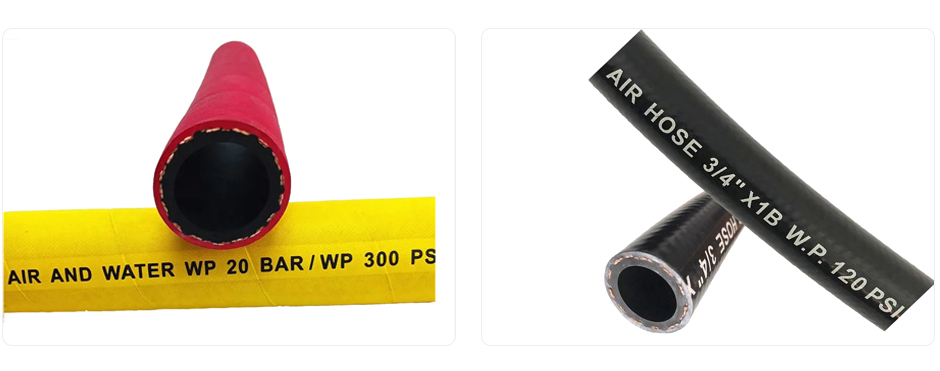
The core material for gasoline hose is typically a multi-layer construction. The inner tube, in direct contact with gasoline, is commonly composed of Chlorinated Polyethylene (CPE), or in some cases, Fluoroelastomers (FKM) for enhanced chemical resistance. CPE provides a good balance of cost-effectiveness, fuel resistance, and temperature performance. The intermediate layer(s) are usually a reinforcement structure consisting of multiple plies of synthetic textile (typically polyester or nylon) embedded within a rubber matrix (NBR – Nitrile Butadiene Rubber). This reinforcement provides tensile strength and dimensional stability. The outer cover is generally constructed from Chloroprene Rubber (CR), commonly known as Neoprene, which offers excellent resistance to weathering, abrasion, and oil. Manufacturing processes involve extrusion for the inner tube and outer cover, calendaring for the reinforcement plies, and subsequent assembly through a braiding or spiraling process to create the reinforced structure. Key parameter control during extrusion includes maintaining precise temperature profiles to ensure proper polymer melt viscosity and dimensional accuracy. Braiding tension and angle are critical for ensuring consistent burst pressure ratings. Curing (vulcanization) is a crucial step, where the rubber compounds are cross-linked using sulfur or peroxide systems to achieve desired mechanical properties. Post-curing inspection includes dimensional checks, pressure testing, and permeation testing.

Performance & Engineering
Gasoline hose performance is dictated by a complex interplay of mechanical and chemical factors. Burst pressure, a critical safety parameter, is determined by the tensile strength of the reinforcement layers and the adhesion between layers. Finite Element Analysis (FEA) is commonly employed to optimize reinforcement geometry and predict burst pressure under varying load conditions. Fuel permeation is a significant concern due to environmental regulations; the rate of gasoline diffusion through the hose wall is a function of the polymer’s permeability coefficient and the hose wall thickness. Environmental resistance encompasses exposure to ozone, UV radiation, and extreme temperatures. CR (Neoprene) in the outer cover provides UV and ozone protection, while the polymer selection for the inner tube must maintain flexibility at low temperatures and resist degradation at high temperatures. Compliance requirements, such as SAE J30R9 (US standard) and EN 12115 (European standard), dictate specific performance criteria including burst pressure, tensile strength, elongation at break, and fuel permeation rates. The hose must also demonstrate resistance to fuel additives like ethanol, which can cause swelling and degradation of certain rubber compounds. Force analysis considerations include internal pressure forces, bending stresses during installation and operation, and external impact loads.
Technical Specifications
| Parameter | Unit | SAE J30R9 (Class A) | EN 12115 (Type A) |
|---|---|---|---|
| Burst Pressure | psi | 450 | 600 |
| Tensile Strength | MPa | 10.5 | 12 |
| Elongation at Break | % | 300 | 350 |
| Fuel Permeation (24hr) | g/m²/day | ≤ 2 | ≤ 0.8 |
| Operating Temperature Range | °C | -40 to +121 | -40 to +70 |
| Inner Tube Material | - | CPE | CPE or FKM |
Failure Mode & Maintenance
Gasoline hose failure modes typically fall into several categories. Fatigue cracking, induced by repeated flexing and pressure cycling, can initiate at stress concentrators such as fittings or defects in the reinforcement. Delamination, the separation of layers, is often caused by poor adhesion between the rubber and reinforcement or degradation of the adhesive. Chemical degradation, particularly from ethanol-blended fuels, can lead to swelling, softening, and cracking of the inner tube. Oxidation, caused by exposure to ozone and UV radiation, can result in hardening and cracking of the outer cover. Impact damage, from physical abrasion or accidental strikes, can cause localized thinning or rupture. Maintenance primarily consists of regular visual inspection for cracks, abrasions, and swelling. Replacing hoses at recommended intervals (typically every 5-7 years, or sooner if damage is observed) is crucial for preventing fuel leaks and ensuring safe operation. Proper storage, away from direct sunlight and extreme temperatures, can extend hose life. Avoid kinking or sharply bending the hose during installation, as this can create stress concentrations and accelerate fatigue failure. When replacing hoses, ensure compatibility with the fuel type and operating conditions.
Industry FAQ
Q: What are the key differences between CPE and FKM inner tubes for gasoline hose, and when would you recommend FKM?
A: CPE offers a good balance of cost and performance for general gasoline applications. However, FKM (Fluoroelastomer) provides superior resistance to aggressive fuels, including high ethanol content fuels (E85) and those containing other additives. FKM is recommended when prolonged exposure to such fuels is expected, or when operating temperatures exceed the limits of CPE. The increased cost of FKM is justified by its enhanced durability and reduced risk of chemical degradation.
Q: How does reinforcement ply orientation affect the burst pressure and kink resistance of the hose?
A: A spiraled reinforcement ply provides higher burst pressure capabilities due to the continuous wrapping of the reinforcement around the hose circumference. Braided reinforcement offers better kink resistance and flexibility. The angle of the braid/spiral also impacts performance; shallower angles increase flexibility but reduce burst pressure, while steeper angles enhance burst pressure but reduce flexibility.
Q: What testing methods are used to verify fuel permeation resistance, and what are acceptable failure criteria?
A: Fuel permeation is typically measured using a standardized test method, such as ASTM D292 or ISO 16803. The test involves immersing a hose sample in fuel and measuring the weight gain over a specified period. Acceptable failure criteria are defined by industry standards (SAE J30R9, EN 12115) and typically specify a maximum permissible permeation rate in grams per square meter per day (g/m²/day).
Q: What is the impact of ethanol blending on gasoline hose performance, and how are manufacturers addressing this challenge?
A: Ethanol can cause swelling and degradation of many conventional rubber compounds, leading to increased permeation and reduced hose life. Manufacturers are addressing this by utilizing more ethanol-resistant materials like FKM for the inner tube, employing specialized CPE formulations, and optimizing the rubber compounding process to minimize ethanol absorption. Increased permeation testing with ethanol blends is also standard practice.
Q: What are the implications of electrostatic discharge (ESD) when transferring gasoline through a hose, and what measures are taken to mitigate the risk?
A: Gasoline is a flammable liquid and can generate static electricity during flow. ESD can create a spark and ignite the fuel vapors. To mitigate this risk, hoses are typically constructed with electrically conductive materials (e.g., carbon black in the rubber compound) to dissipate static charge. Proper grounding of the hose and fuel tank during transfer is also critical.
Conclusion
The manufacture of OEM gasoline hose demands a sophisticated understanding of material science, manufacturing processes, and industry standards. Achieving optimal performance requires careful selection of polymers, precise control of reinforcement geometry, and rigorous testing to ensure compliance with safety and environmental regulations. The increasing prevalence of ethanol-blended fuels and the tightening of VOC emission standards present ongoing challenges, driving innovation in hose materials and construction techniques.
Looking forward, advancements in nanotechnology and the development of novel rubber compounds with enhanced fuel resistance and reduced permeation rates will play a crucial role in shaping the future of gasoline hose technology. Furthermore, increased focus on sustainable materials and manufacturing processes will be essential to address environmental concerns and meet the evolving demands of the automotive and petroleum industries.