
Apr . 01, 2024 17:55 Back to list
oem gasoline hose factories Performance Analysis
Introduction
Gasoline hose, manufactured by OEM facilities, represents a critical component in fuel delivery systems across automotive, industrial, and marine applications. Positioned within the broader petrochemical supply chain, these hoses facilitate the safe and efficient transfer of gasoline from storage to combustion engines. Their performance is dictated by strict regulatory compliance and is fundamentally linked to material properties, specifically resistance to fuel permeation, degradation, and mechanical stress. A core challenge for OEMs lies in balancing cost-effectiveness with meeting increasingly stringent environmental regulations regarding fuel emissions and material longevity. This guide provides a detailed technical overview of gasoline hose manufacturing, performance characteristics, failure analysis, and relevant industry standards.
Material Science & Manufacturing
The primary material for gasoline hose construction is a synthetic rubber compound, typically a blend of nitrile rubber (NBR) or chloroprene rubber (CR, Neoprene) offering varying degrees of fuel resistance and flexibility. NBR provides excellent resistance to aliphatic hydrocarbons, common in gasoline, while CR enhances resistance to ozone, weathering, and abrasion. These base polymers are compounded with reinforcing fillers, such as carbon black, to improve tensile strength and abrasion resistance. Plasticizers, like phthalates or phosphate esters, are added to impart flexibility and low-temperature performance. Antioxidants and antiozonants protect against oxidative degradation and ozone cracking. The internal layer is often a fluoropolymer (e.g., PTFE) to provide a nearly impermeable barrier against fuel permeation, addressing stringent environmental regulations.
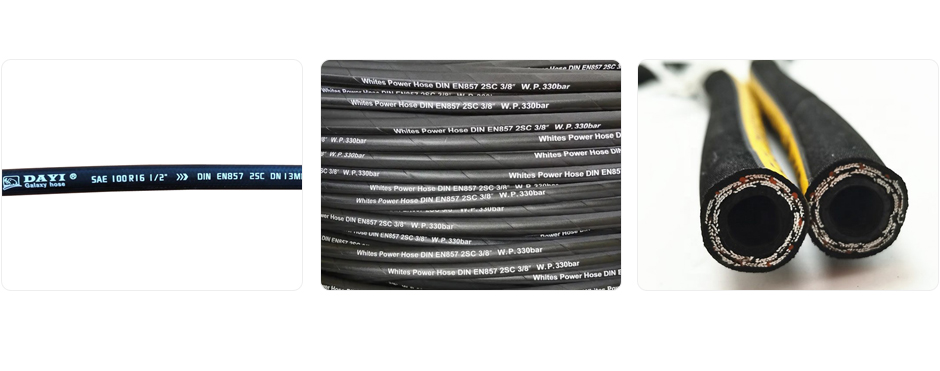
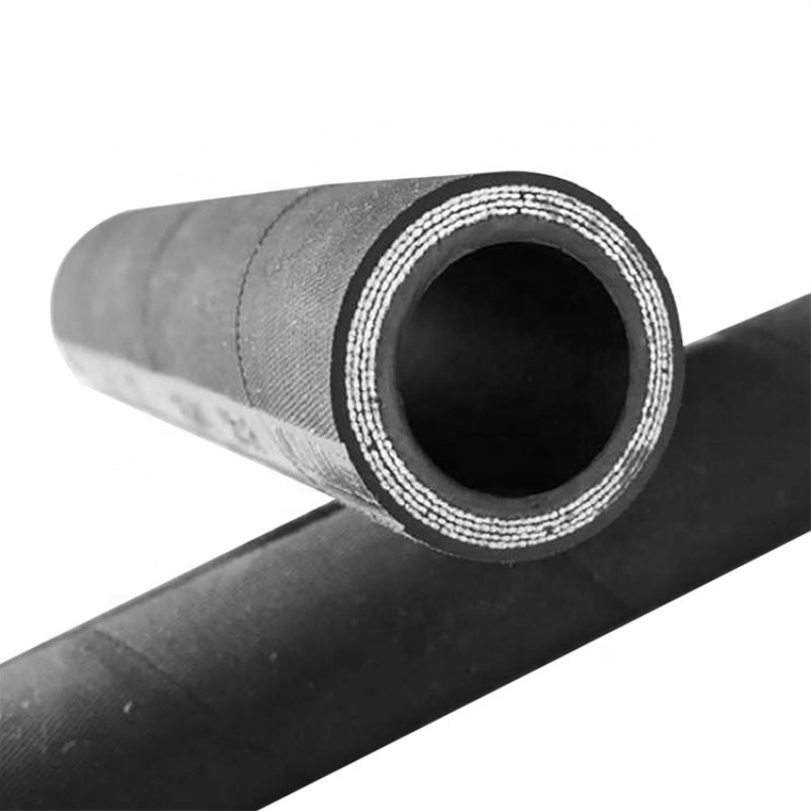
Manufacturing typically involves a multi-stage process. Firstly, the rubber compound is mixed using internal mixers (Banbury mixers) and refined on open mills to ensure homogenous dispersion of ingredients. This mixture undergoes extrusion to form a continuous tube. Reinforcement layers, typically constructed from multiple plies of high-tensile textile braiding (typically polyester or aramid fibers) or a spiraled steel wire helix, are applied to provide burst strength and prevent kinking. These layers are crucial for withstanding high internal pressures and maintaining dimensional stability. The reinforced tube is then vulcanized, a process involving heat and pressure, to crosslink the rubber molecules and achieve the desired physical properties. Post-vulcanization, the hose undergoes trimming, inspection, and testing for dimensional accuracy, pressure resistance, and leak tightness. Parameter control during extrusion—temperature, screw speed, die pressure—is critical for achieving consistent wall thickness and material uniformity. Vulcanization time and temperature are vital to optimize crosslink density without inducing scorch or degradation.
Performance & Engineering
Gasoline hose performance is governed by several key engineering parameters. Burst pressure, determined via hydrostatic testing, measures the hose’s ability to withstand extreme internal pressures without rupture. Tensile strength, assessed through standardized pull tests, indicates the resistance to elongation and breakage under load. Elongation at break defines the maximum strain the material can endure before failure, reflecting its ductility. Permeation resistance, measured according to SAE J30, quantifies the rate at which gasoline molecules diffuse through the hose wall, a critical factor for reducing evaporative emissions. Flexural fatigue resistance, evaluated through repeated bending cycles, assesses the hose’s durability under dynamic conditions.
Force analysis during operation considers internal pressure generated by fuel pumps, external pressures from surrounding components, and bending stresses induced by routing. Environmental resistance is vital; prolonged exposure to UV radiation, ozone, temperature extremes, and corrosive fluids can degrade the rubber matrix. Compliance requirements are substantial. In the United States, hoses must comply with SAE J30 and EPA fuel vapor recovery standards. European regulations, outlined in EN 12572, impose similar requirements. Furthermore, dimensional tolerances and material certifications must adhere to stringent OEM specifications. Failure to meet these standards can result in costly recalls and safety hazards. The selection of appropriate reinforcement materials and rubber compounds directly impacts these performance metrics. For example, aramid reinforcement provides higher burst strength compared to polyester, while CR rubber offers superior ozone resistance than NBR.
Technical Specifications
| Parameter | Typical Value (NBR/CR Blend) | Typical Value (Fluoropolymer Lined) | Test Standard |
|---|---|---|---|
| Working Pressure (PSI) | 150 | 200 | SAE J30 |
| Burst Pressure (PSI) | 600 | 800 | SAE J30 |
| Tensile Strength (MPa) | 15 | 20 | ASTM D412 |
| Elongation at Break (%) | 300 | 400 | ASTM D412 |
| Permeation Rate (g/m²/day) | 10 | <1 | SAE J30 |
| Temperature Range (°C) | -40 to +120 | -40 to +150 | OEM Specification |
Failure Mode & Maintenance
Common failure modes in gasoline hoses include fatigue cracking, permeation-induced swelling, and degradation due to chemical attack. Fatigue cracking typically originates at stress concentrations, such as fittings or bends, and propagates due to repeated flexing. Permeation of gasoline can cause the rubber matrix to swell, reducing mechanical strength and increasing permeability. Chemical attack, particularly from fuel additives like ethanol, can lead to polymer chain scission and embrittlement. Oxidation and ozone cracking, manifesting as surface cracks, are accelerated by exposure to UV radiation and atmospheric ozone. Delamination, the separation of reinforcement layers from the rubber matrix, reduces burst strength and can lead to catastrophic failure.
Preventative maintenance involves regular visual inspections for cracks, swelling, or discoloration. Hoses should be replaced at recommended intervals (typically 5 years) or immediately if damage is detected. Avoid exposing hoses to extreme temperatures or corrosive fluids. Proper routing and support prevent excessive bending and kinking. Avoid over-tightening fittings, which can induce stress concentrations. Cleaning with mild soap and water is permissible; however, aggressive solvents should be avoided as they can degrade the rubber compound. Proper storage in a cool, dry, and dark environment minimizes degradation during extended periods of inactivity.
Industry FAQ
Q: What is the impact of increasing ethanol content in gasoline on hose lifespan?
A: Increased ethanol content significantly reduces the service life of conventional NBR and CR hoses. Ethanol acts as a plasticizer, causing swelling and leaching of additives, leading to embrittlement and increased permeability. Fluoropolymer-lined hoses offer superior resistance to ethanol degradation, but are more expensive.
Q: How do different reinforcement materials affect hose performance?
A: Polyester braiding provides adequate reinforcement for standard applications, offering a balance of cost and performance. Aramid fibers offer higher tensile strength and resistance to stretching, ideal for high-pressure systems. Steel wire helix provides the highest burst strength but is less flexible and more susceptible to corrosion.
Q: What are the key differences between SAE J30 and EN 12572 standards?
A: Both standards address fuel hose performance and safety, but EN 12572 generally has more stringent requirements for permeation resistance and aging. SAE J30 is widely adopted in North America, while EN 12572 is prevalent in Europe.
Q: How is permeation testing conducted and what constitutes an acceptable permeation rate?
A: Permeation testing, per SAE J30, involves immersing a hose sample in gasoline and measuring the weight gain over a specified period. An acceptable permeation rate is dependent on regulatory requirements and OEM specifications, but generally, lower rates are preferred to minimize evaporative emissions. Fluoropolymer liners consistently achieve the lowest rates.
Q: What quality control measures are essential during hose manufacturing?
A: Rigorous quality control includes raw material inspection, process parameter monitoring during extrusion and vulcanization, hydrostatic testing for burst pressure, tensile testing, permeation testing, and visual inspection for defects. Statistical process control (SPC) is crucial for maintaining consistent quality.
Conclusion
OEM gasoline hose manufacturing requires a nuanced understanding of material science, manufacturing processes, and stringent regulatory compliance. The selection of appropriate rubber compounds, reinforcement materials, and manufacturing parameters is critical to achieving optimal performance characteristics—burst strength, permeation resistance, and durability. Addressing the challenges posed by evolving fuel compositions, particularly increasing ethanol content, necessitates the adoption of advanced materials like fluoropolymers.
Future trends in gasoline hose technology are likely to focus on developing sustainable materials, reducing weight, and enhancing fuel efficiency. Innovative manufacturing techniques, such as automated braiding and advanced vulcanization processes, will further improve product quality and reduce production costs. Ongoing research and development are essential to meet the ever-increasing demands of the automotive and fuel delivery industries.