
Apr . 01, 2024 17:55 Back to list
oem flexible ptfe hose manufacturers Performance Analysis
Introduction
OEM flexible PTFE (Polytetrafluoroethylene) hose represents a critical component in numerous industrial fluid transfer applications. Positioned within the broader hose and tubing manufacturing sector, these hoses serve as specialized conduits for corrosive chemicals, high-purity fluids, and extreme temperature environments where conventional materials fail. Their technical significance stems from PTFE’s inherent chemical inertness, broad temperature resistance (-200°C to +260°C), and exceptionally low coefficient of friction. Unlike rubber or metallic hoses, PTFE doesn’t require liners to prevent chemical attack. Core performance characteristics include pressure rating, flexibility (bend radius), chemical compatibility, and resistance to permeation, all of which are tailored through OEM customization to meet specific application demands. The increasing demand for high-reliability fluid handling systems across industries like chemical processing, pharmaceuticals, automotive, and aerospace drives ongoing innovation in PTFE hose design and manufacturing techniques. Understanding these characteristics and manufacturing processes is paramount for successful integration and long-term performance.
Material Science & Manufacturing
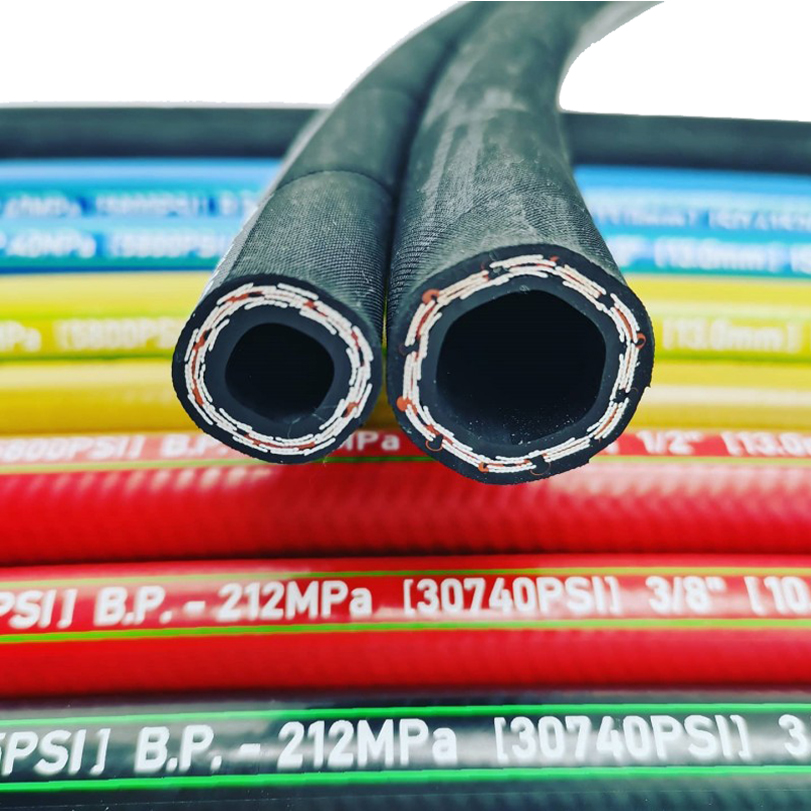
The foundation of flexible PTFE hose lies in the unique properties of PTFE resin. PTFE, (C2F4)n, is a synthetic fluoropolymer known for its exceptional chemical resistance, dielectric strength, and low friction coefficient. Raw material selection is critical; virgin PTFE resin provides the highest purity and performance, while modified PTFE (filled PTFE) incorporates additives like glass fibers, carbon, or bronze to enhance mechanical strength, creep resistance, and dimensional stability. However, fillers can compromise chemical purity. Manufacturing typically involves three primary processes: tubular extrusion, spiral wrapping, and convoluting. Tubular extrusion forms a seamless PTFE tube. Spiral wrapping reinforces the tube with a stainless steel wire helix to enhance pressure resistance and flexibility. The helix pitch is a key parameter impacting bend radius and burst pressure. Convoluting creates a flexible hose by forming the reinforced tube into a series of concentric rings, further increasing flexibility. Sintering is a critical step; PTFE resin is heated to a temperature just below its melting point, causing the particles to fuse without fully melting. Precise temperature control during sintering dictates the final material density and mechanical properties. Post-processing includes end fitting attachment (crimping, swaging, or thread engagement) and rigorous quality control checks including pressure testing, dimensional inspection, and visual defect analysis. Contamination control is essential throughout the entire manufacturing process to maintain the chemical purity inherent to PTFE.
Performance & Engineering
Performance of PTFE hose is dictated by a complex interplay of material properties and engineering design. Force analysis focuses on hoop stress due to internal pressure and axial stress from bending. The stainless steel reinforcement helix bears the majority of the pressure load, while the PTFE tube provides a fluid barrier. Finite Element Analysis (FEA) is frequently employed to optimize hose geometry and reinforcement pitch for specific pressure and temperature conditions. Environmental resistance is exceptional; PTFE is unaffected by most chemicals, including strong acids, bases, and solvents. However, it can be attacked by molten alkali metals and fluorinated compounds at elevated temperatures. Permeation rates are extremely low, making PTFE hoses ideal for handling hazardous fluids. Compliance requirements vary by industry. For pharmaceutical applications, hoses must meet USP Class VI standards for biocompatibility and leachables. Food-grade hoses must comply with FDA regulations (21 CFR 177.1550). Automotive applications require compliance with SAE J2044 for fuel line hose. Burst pressure testing is a critical performance metric, conducted according to ASTM D2906. Bend radius is equally important; exceeding the minimum bend radius can cause kinking and reduce flow. Furthermore, electrostatic discharge (ESD) can be a concern when transferring flammable fluids; conductive PTFE hoses or grounding provisions may be required. Thermal expansion and contraction must also be considered in system design.
Technical Specifications
| Parameter | Unit | Standard Specification | Typical Value |
|---|---|---|---|
| Inner Diameter | mm | OEM Specification | 6 - 100 |
| Outer Diameter | mm | OEM Specification | 10 - 150 |
| Working Pressure | MPa | SAE J518 | Up to 20 |
| Burst Pressure | MPa | ASTM D2906 | 4x Working Pressure |
| Temperature Range | °C | OEM Specification | -200 to +260 |
| Minimum Bend Radius | mm | OEM Specification | 5x Outer Diameter |
Failure Mode & Maintenance
Despite its robustness, PTFE hose is susceptible to certain failure modes. Fatigue cracking can occur under repeated flexing or pressure cycling, particularly near end fittings. Delamination of the PTFE tube from the reinforcement helix can result from improper manufacturing or excessive temperature fluctuations. Creep, the gradual deformation under sustained load, is more pronounced at higher temperatures and can lead to dimensional changes and leakage. Chemical attack, while rare, can occur with specific aggressive chemicals at elevated temperatures. Oxidation can affect the stainless steel reinforcement, reducing its strength and corrosion resistance. Regular inspection is crucial. Visual checks should focus on cracks, bulges, discoloration, and leaks. Pressure testing should be performed periodically to verify integrity. End fittings should be inspected for corrosion or loosening. Cleaning is generally not required due to PTFE’s non-stick properties, but harsh abrasives should be avoided. If damage is detected, the hose should be replaced immediately. Avoid exceeding the maximum working pressure or temperature limits. Proper storage is also essential; hoses should be stored in a cool, dry place away from direct sunlight and ozone sources. Preventing kinking and sharp bends during installation extends service life. Record-keeping of inspection and maintenance activities is recommended for traceability and performance monitoring.
Industry FAQ
Q: What is the impact of PTFE filler materials on chemical compatibility?
A: While PTFE itself is universally chemically resistant, the addition of fillers (glass, carbon, bronze) can compromise this resistance. Fillers can introduce vulnerabilities to specific chemicals, reducing the hose’s suitability for harsh environments. Virgin PTFE offers the highest chemical purity, but may lack the mechanical strength required for high-pressure applications. Therefore, filler selection must be carefully matched to the intended application and chemical exposure.
Q: How does the stainless steel helix pitch affect hose flexibility and pressure rating?
A: A closer helix pitch (more turns per inch) increases the hose's pressure rating by providing greater reinforcement but reduces its flexibility, increasing the minimum bend radius. A wider pitch improves flexibility but lowers the pressure capacity. Optimizing the helix pitch is a trade-off that depends on the application requirements. FEA modeling is often used to determine the optimal pitch for a given pressure and bend radius.
Q: What testing is performed to ensure compliance with USP Class VI standards?
A: USP Class VI compliance requires a battery of tests including cytotoxicity, sensitization, irritation, systemic toxicity, and chemical identification. These tests assess the biocompatibility of the hose materials and ensure that no harmful leachables are released into the fluid being transferred, making them suitable for pharmaceutical and medical applications.
Q: How does temperature affect the working pressure of a PTFE hose?
A: Working pressure decreases as temperature increases. PTFE's mechanical properties degrade at higher temperatures, leading to reduced strength and creep resistance. Derating tables are provided by manufacturers, specifying the allowable working pressure at different temperatures. Exceeding these limits can lead to premature failure.
Q: What are the best practices for installing PTFE hose end fittings to prevent leakage?
A: Proper end fitting installation is critical. Crimping, swaging, or threading must be performed according to the manufacturer's specifications. Ensure the fitting material is compatible with both the PTFE hose and the fluid being transferred. Use calibrated tooling and verify the crimp or thread engagement meets the required standards. Leak testing after installation is essential to confirm a secure seal.
Conclusion
OEM flexible PTFE hose represents a highly engineered solution for critical fluid transfer applications demanding chemical resistance, temperature stability, and reliability. The material’s inherent properties, coupled with precise manufacturing processes like extrusion, wrapping, and sintering, dictate its performance characteristics. Successful implementation requires a thorough understanding of force analysis, compliance requirements, and potential failure modes.
Future advancements in PTFE hose technology will likely focus on enhanced filler materials for improved mechanical properties, innovative hose constructions for increased flexibility and reduced weight, and the development of smart hoses incorporating sensors for real-time monitoring of pressure, temperature, and fluid condition. Continuous innovation and adherence to stringent quality control are crucial for maintaining the performance and reliability of these essential industrial components.