
Apr . 01, 2024 17:55 Back to list
oem en857 2sc supplier Performance Analysis
Introduction
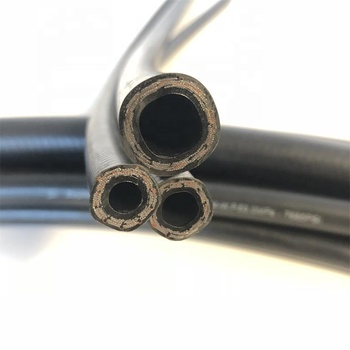
The EN857 2SC rubber hose represents a critical component in fluid transfer systems across diverse industrial applications. Classified under SAE J517 standard as a synthetic rubber hose with a steel wire reinforcement, it is specifically designed for conveying hydraulic fluids, encompassing mineral oils, synthetic fluids, and petroleum-based products. Its ‘2SC’ designation denotes its construction: two layers of synthetic rubber reinforced with multiple steel wire spirals. Positioned within the broader industrial supply chain, the hose acts as an intermediary between pumps, valves, actuators, and other hydraulic machinery. Core performance characteristics revolve around pressure rating (typically up to 250 bar), temperature resistance (-40°C to +100°C), and resistance to abrasion and chemical degradation. A key industry pain point addressed by this hose type is ensuring consistent and reliable fluid conveyance under high-pressure, dynamic conditions, preventing leaks, and maintaining system efficiency. OEM suppliers play a crucial role in providing customized hose assemblies and ensuring adherence to strict quality control protocols.
Material Science & Manufacturing
The EN857 2SC hose's performance is fundamentally rooted in its material composition and manufacturing processes. The inner tube typically utilizes a synthetic rubber compound based on Nitrile (NBR) or a NBR/PVC blend. NBR provides excellent resistance to petroleum-based oils, fuels, and hydraulic fluids, with a hardness ranging from 60-90 Shore A. The steel wire reinforcement, typically high-tensile steel conforming to ASTM A228 or equivalent standards, provides the pressure containment capability. The outer cover generally consists of Chloroprene (CR) rubber, offering superior resistance to abrasion, ozone, and weathering. Key physical properties include the tensile strength of the rubber compounds (typically >20 MPa), elongation at break (>300%), and the modulus of elasticity (ranging from 1.5 to 3 MPa).
Manufacturing commences with rubber compounding, where raw rubber polymers, reinforcing fillers (carbon black, silica), plasticizers, antioxidants, and curing agents are mixed via Banbury mixers. The mixed rubber is then extruded through a die to form the inner tube and outer cover. Steel wire is simultaneously spiraled around the inner tube during extrusion, embedding it within the rubber matrix. This process requires precise control of temperature, pressure, and wire tension. Following extrusion, the hose undergoes vulcanization, a curing process using heat and pressure, to crosslink the rubber polymers and achieve the desired mechanical properties. Post-vulcanization, the hose is inspected for dimensional accuracy, pressure testing (hydrostatic testing to 1.5 times working pressure), and surface defects. Parameter control during extrusion and vulcanization is critical – deviations in temperature or pressure can lead to inconsistent rubber properties, incomplete steel wire embedding, and ultimately, hose failure.
Performance & Engineering
The engineering performance of EN857 2SC hinges on its ability to withstand internal pressure, external damage, and environmental factors. Force analysis reveals that the steel wire spiral bears the primary tensile load under pressure, while the rubber matrix provides sealing and containment. The bending radius is a critical engineering parameter; exceeding the minimum bending radius can induce stress concentrations in the steel wire, leading to fatigue failure. Environmental resistance is paramount; prolonged exposure to extreme temperatures, UV radiation, and aggressive chemicals can degrade the rubber compounds, reducing their elasticity and strength. Compliance requirements are stringent, dictated by SAE J517, EN 857, and potentially industry-specific standards (e.g., for aerospace or offshore applications). Electrical conductivity is typically low, but specialized versions with anti-static additives can be produced. Functional implementation often involves crimping fittings onto the hose ends, creating a secure, leak-proof connection. The crimp strength and fitting compatibility are vital considerations to prevent blow-off failures. Fatigue life analysis, considering cyclic pressure loading and bending, is critical for applications involving continuous operation.
Technical Specifications
| Parameter | Unit | Specification (Typical) | Test Standard |
|---|---|---|---|
| Working Pressure | bar | 250 | SAE J517 |
| Burst Pressure | bar | 750 | SAE J517 |
| Temperature Range | °C | -40 to +100 | SAE J517 |
| Inner Tube Material | - | NBR/PVC Blend | ASTM D2000 |
| Reinforcement | - | Multiple Steel Wire Spiral | ASTM A228 |
| Outer Cover Material | - | Chloroprene (CR) | ASTM D2000 |
Failure Mode & Maintenance
Failure modes in EN857 2SC hoses commonly include burst failure due to exceeding the working pressure, fatigue cracking from repeated bending and pressure cycling, blow-off at the fitting interface due to inadequate crimping, and degradation of the rubber compounds from exposure to incompatible fluids or extreme temperatures. Internal abrasion can occur from particulate contamination in the fluid, eroding the inner tube. External damage, such as cuts or punctures, can compromise the hose's integrity. Failure analysis often reveals the root cause to be a combination of factors – exceeding operational limits, improper installation, or inadequate maintenance.
Preventative maintenance involves regular visual inspections for cracks, abrasions, and leaks. Hose assemblies should be replaced if any signs of damage are detected. Periodic pressure testing can verify the hose’s continued integrity. Fluid compatibility must be verified to prevent swelling, softening, or cracking of the rubber compounds. Proper storage is essential; hoses should be stored in a cool, dry place away from direct sunlight and ozone sources. Avoid sharp bending radii during installation and operation. Crimped fittings should be inspected for proper engagement and replaced if necessary. Implementing a hose management system, including tracking hose age and usage, can optimize maintenance schedules and prevent catastrophic failures.
Industry FAQ
Q: What is the significance of the steel wire spiral count in an EN857 2SC hose?
A: The steel wire spiral count directly correlates to the hose’s pressure rating and flexibility. A higher spiral count provides greater reinforcement and allows for higher pressure capabilities, but typically reduces the hose’s bend radius. Selecting the appropriate spiral count is crucial to balance pressure requirements and application constraints.
Q: How does temperature affect the performance of an EN857 2SC hose?
A: Both high and low temperatures can negatively impact performance. Elevated temperatures can cause rubber compounds to soften, reducing pressure resistance and increasing the risk of leaks. Low temperatures can decrease flexibility, increasing the risk of cracking during bending. The specified temperature range must be strictly adhered to.
Q: What fluid compatibility considerations are critical when selecting an EN857 2SC hose?
A: Ensuring fluid compatibility is paramount. Incompatible fluids can cause the rubber compounds to swell, degrade, or dissolve, leading to hose failure. Consult chemical compatibility charts to verify that the hose materials are resistant to the specific fluid being conveyed.
Q: What are the common causes of fitting blow-off in EN857 2SC hose assemblies?
A: Common causes include insufficient crimp strength, improper fitting selection, hose damage at the crimp location, and exceeding the hose's pressure rating. Regular inspection of crimp integrity and adherence to proper installation procedures are crucial to prevent blow-off.
Q: How does the bend radius affect the service life of an EN857 2SC hose?
A: Exceeding the minimum bend radius induces stress concentrations in the steel wire reinforcement, accelerating fatigue failure. Maintaining the specified bend radius throughout the hose’s lifecycle is critical to maximizing its service life.
Conclusion
The EN857 2SC hose remains a vital component in hydraulic systems, offering a reliable and robust solution for fluid conveyance. Its performance is inherently linked to the precise selection of materials, rigorous manufacturing controls, and adherence to industry standards. Understanding the potential failure modes and implementing proactive maintenance strategies are crucial for maximizing its service life and ensuring operational safety.
Looking ahead, advancements in rubber compounding, reinforcement materials, and manufacturing processes will continue to enhance the performance and durability of EN857 2SC hoses. Furthermore, the integration of smart sensors and condition monitoring systems will enable predictive maintenance, optimizing hose management and minimizing downtime.

