
Apr . 01, 2024 17:55 Back to list
oem en856 4sp supplier Performance Analysis
Introduction
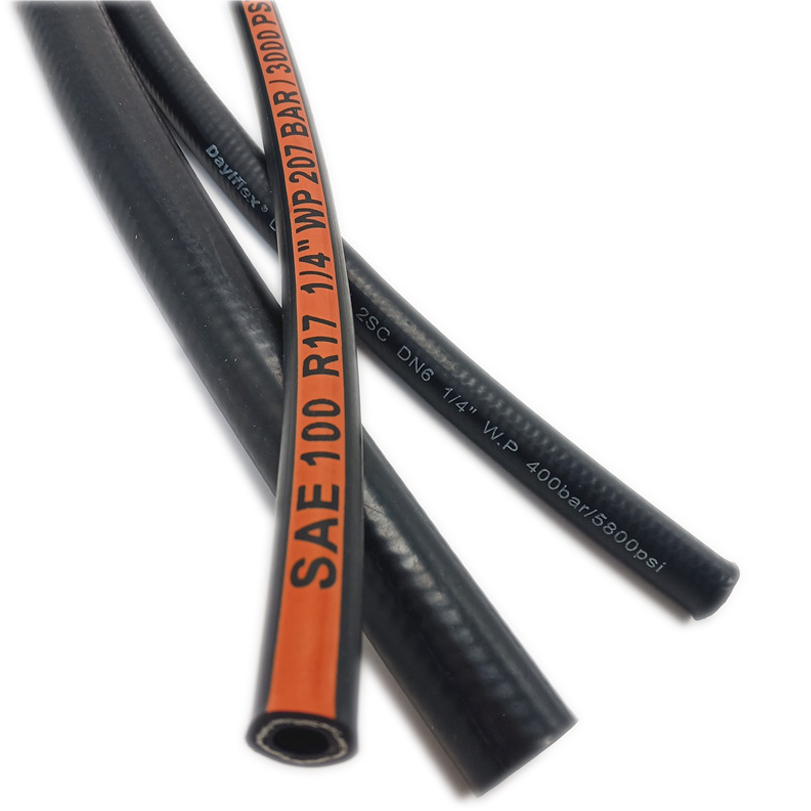
EN856 4SP hose, conforming to SAE J517 standard, represents a critical component in hydraulic systems across diverse industrial applications. Classified as a four-spiral, high-pressure hose, it is engineered for the reliable transmission of hydraulic fluid, primarily in mobile machinery, agricultural equipment, and construction vehicles. This guide provides an in-depth technical analysis of EN856 4SP hoses, encompassing material science, manufacturing processes, performance characteristics, potential failure modes, and relevant industry standards. The core performance characteristic differentiating EN856 4SP is its burst pressure capability, typically rated at 4,000 psi, making it suitable for demanding applications requiring robust fluid conveyance. A significant industry pain point is maintaining consistent quality control throughout the manufacturing process to ensure adherence to strict pressure and temperature specifications, ultimately impacting system reliability and safety. The selection of appropriate end fittings and proper installation are equally critical to prevent premature failure.
Material Science & Manufacturing
EN856 4SP hoses are typically constructed with an inner tube of oil-resistant synthetic rubber, commonly nitrile (NBR) or a specialized blend to enhance compatibility with various hydraulic fluids, including phosphate ester fluids. The reinforcement consists of four spirally wound layers of high-tensile steel wire, providing the necessary pressure resistance. The outer cover is usually composed of oil, abrasion, and weather-resistant synthetic rubber, often a Chloroprene (CR) compound. Raw material specifications are paramount; steel wire must meet stringent tensile strength and elongation requirements (typically exceeding 1400 MPa tensile strength). The manufacturing process begins with the extrusion of the inner tube. Precise control of extrusion temperature and die geometry is vital to ensure consistent wall thickness and smooth internal surface finish, minimizing flow restriction. The steel wire is then spirally wound onto the inner tube using specialized winding machines. Maintaining accurate helix angle and consistent tension is crucial for achieving the rated burst pressure. Finally, the outer cover is extruded over the reinforcement layer, followed by vulcanization, a process involving heating under pressure to crosslink the rubber compounds, enhancing their elasticity and durability. Critical parameters during vulcanization include temperature, time, and pressure, directly influencing the hose’s physical properties and resistance to degradation. Post-vulcanization testing, including hydrostatic testing and burst pressure testing, verifies the hose’s performance against SAE J517 specifications.
Performance & Engineering
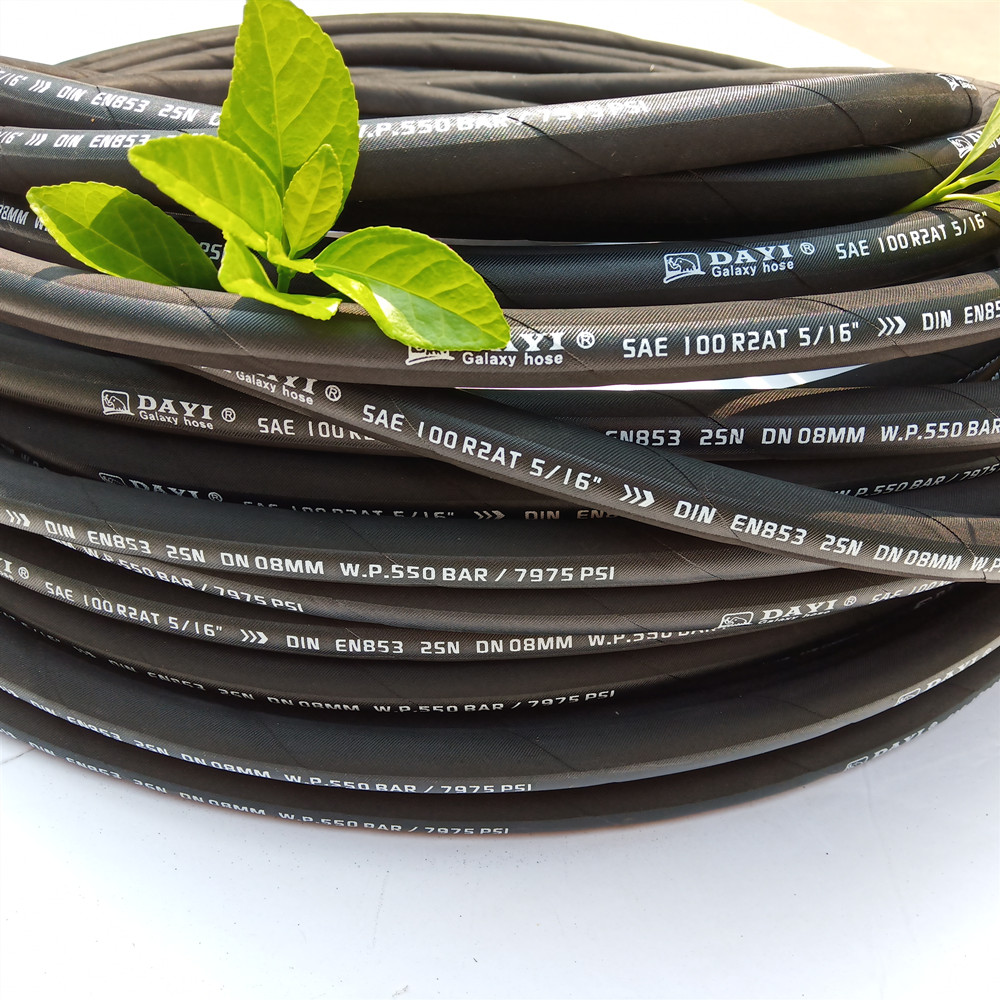
The performance of EN856 4SP hose is governed by several engineering principles. Force analysis considers the hoop stress generated by internal fluid pressure, which is directly proportional to the pressure and hose diameter, and inversely proportional to the hose wall thickness. The four-spiral steel wire reinforcement bears the majority of this stress. Fatigue life is a critical concern, as repeated pressure cycling can lead to wire fracture. Finite Element Analysis (FEA) is commonly employed to model stress distribution and optimize reinforcement layer configuration. Environmental resistance is also crucial. The hose must withstand exposure to varying temperatures, ranging from -40°C to +100°C, depending on the application. The synthetic rubber compounds are formulated to maintain flexibility and prevent hardening or cracking at these temperatures. Compliance with SAE J517 dictates specific performance requirements, including burst pressure, pressure drop, and elongation. Installation engineering is often overlooked, but critical. Improper bending radius (typically a minimum of 4D, where D is the hose diameter) can induce localized stress concentrations, leading to premature failure. The hose must also be adequately supported to prevent sagging and vibration, which can accelerate fatigue. Chemical compatibility is equally important; exposure to incompatible fluids can cause swelling or degradation of the inner tube, compromising its integrity.
Technical Specifications
| Parameter | Unit | Specification (Typical) | Test Standard |
|---|---|---|---|
| Working Pressure | psi | 2,000 | SAE J517 |
| Burst Pressure | psi | 8,000 | SAE J517 |
| Inner Tube Material | - | Nitrile Rubber (NBR) | ASTM D2000 |
| Reinforcement | Layers | 4 Spiral Steel Wire | SAE J517 |
| Outer Cover Material | - | Chloroprene Rubber (CR) | ASTM D2000 |
| Temperature Range | °C | -40 to +100 | SAE J517 |
Failure Mode & Maintenance
Common failure modes for EN856 4SP hoses include: Wire Fracture: Initiated by fatigue due to repeated pressure cycling or localized stress concentrations from improper bending. Failure analysis often reveals corrosion pits as initiation points. Tube Degradation: Caused by chemical incompatibility with the hydraulic fluid, leading to swelling, cracking, or loss of flexibility. Cover Abrasion: Results in exposure of the reinforcement layers, accelerating corrosion and increasing the risk of wire fracture. End Fitting Failure: Due to improper crimping, corrosion, or material fatigue. Blowout: Occurs when the hose’s internal pressure exceeds its working pressure, often triggered by a weakened tube or fitting. Preventative maintenance is crucial. Regular visual inspections should be performed to check for signs of abrasion, cracking, or leakage. Hose assemblies should be pressure tested periodically to verify their integrity. Proper storage is essential; hoses should be stored in a cool, dry place, away from direct sunlight and ozone sources. When replacing hoses, it’s vital to use compatible end fittings and follow the manufacturer’s recommended crimping procedures. A detailed failure analysis should be conducted after any hose failure to determine the root cause and prevent recurrence. Replacing hoses based on a preventative schedule, even before visible signs of damage, is recommended in critical applications.
Industry FAQ
Q: What is the impact of using non-compatible hydraulic fluid on the lifespan of an EN856 4SP hose?
A: Using a non-compatible hydraulic fluid can drastically reduce the hose's lifespan. The fluid may cause the inner tube to swell, soften, or degrade, leading to leaks and eventual failure. Specific fluids, like those containing aggressive chemicals, can attack the rubber compounds, accelerating the degradation process. Always verify fluid compatibility with the hose manufacturer’s specifications.
Q: How does hose bending radius affect its performance and longevity?
A: Bending the hose beyond the recommended minimum radius (typically 4D, where D is the hose diameter) creates significant stress concentrations in the reinforcement layers. This accelerates fatigue and increases the risk of wire fracture. Sharp bends also restrict fluid flow, increasing pressure drop and potentially leading to cavitation.
Q: What are the best practices for crimping end fittings onto an EN856 4SP hose?
A: Proper crimping is critical. Use only fittings and crimping dies specifically designed for EN856 4SP hoses. Follow the manufacturer’s crimping chart precisely, ensuring the correct crimp diameter and depth. Inspect the crimp for proper seating and absence of gaps or indentations. Incorrect crimping can lead to leaks or fitting blowout.
Q: What is the role of the outer cover in protecting the hose from environmental factors?
A: The outer cover provides essential protection against abrasion, weathering, ozone, and UV radiation. These factors can degrade the rubber compounds and expose the steel wire reinforcement to corrosion. A damaged or worn outer cover significantly reduces the hose’s lifespan and compromises its safety.
Q: How important is hydrostatic testing and how frequently should it be performed?
A: Hydrostatic testing is a crucial quality control measure and should be performed as part of the manufacturing process and periodically during service. It verifies the hose’s ability to withstand pressure without leaking or failing. Frequency depends on the application criticality, but annual testing is recommended for high-pressure, safety-critical systems.
Conclusion
EN856 4SP hoses are integral components in high-pressure hydraulic systems, demanding meticulous attention to material selection, manufacturing processes, and proper installation. The four-spiral steel wire reinforcement provides robust pressure resistance, but susceptibility to fatigue, chemical degradation, and environmental factors requires diligent preventative maintenance and regular inspection. Adherence to SAE J517 standards and best practices in installation and maintenance are paramount to ensuring long-term reliability and safety.
Future developments in hydraulic hose technology are focusing on advanced materials, such as thermoplastic composites, to reduce weight and enhance corrosion resistance. Furthermore, improved manufacturing techniques, including automated winding and non-destructive testing methods, are being implemented to enhance quality control and reduce defects. Continuous monitoring of hose condition through sensor integration and data analytics will likely become increasingly prevalent, enabling predictive maintenance and minimizing downtime.

