
Apr . 01, 2024 17:55 Back to list
oem en856 4sp manufacturers Performance Analysis
Introduction
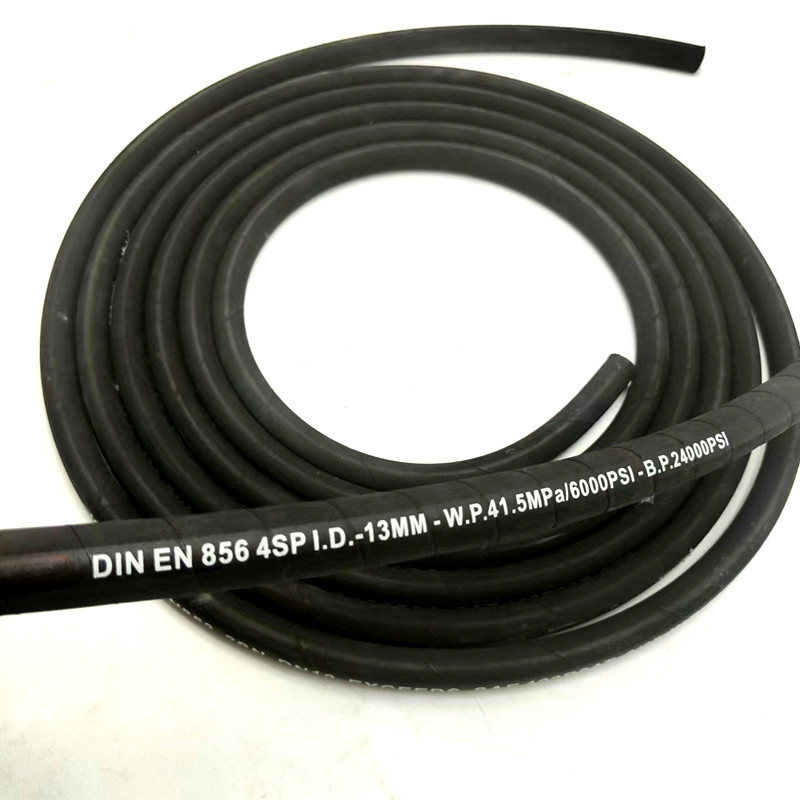
OEM EN856 4SP hoses are critical components in hydraulic systems, specifically designed for high-pressure fluid conveyance in demanding industrial applications. Positioned within the fluid power industry supply chain, these hoses bridge the gap between hydraulic power units (HPUs), pumps, valves, and actuators. Their primary function is to transmit hydraulic fluid – typically mineral oil-based, but increasingly including synthetic alternatives – at pressures up to 4SP (4 spiral ply reinforcement), corresponding to working pressures typically reaching 400 bar (5800 psi) and burst pressures exceeding 1600 bar (23200 psi). Core performance characteristics center around pressure containment, burst strength, impulse resistance, and fluid compatibility. A prevalent industry pain point is hose failure leading to downtime, safety hazards, and environmental contamination. Understanding the material science, manufacturing processes, and failure modes of EN856 4SP hoses is vital for selecting the appropriate hose for specific applications and ensuring long-term operational reliability.
Material Science & Manufacturing
EN856 4SP hoses are typically constructed with multiple layers, each serving a distinct purpose. The inner tube is generally made of oil-resistant synthetic rubber, commonly nitrile rubber (NBR) or chlorinated polyethylene (CM), chosen for their compatibility with hydraulic fluids and resistance to degradation. NBR offers excellent abrasion resistance but may exhibit limited compatibility with phosphate ester fluids. CM provides broader fluid compatibility but can be more expensive. The reinforcement layer, the defining characteristic of the 4SP designation, consists of four spirally wound layers of high-tensile steel wire. The wire gauge and winding angle are critical parameters controlling the hose’s pressure rating and flexibility. The outer cover is usually a synthetic rubber compound, such as polyurethane, providing protection against abrasion, ozone, weathering, and oil exposure. Manufacturing involves several key processes. Inner tube extrusion establishes the fluid pathway. Wire winding precisely applies the steel reinforcement layers, maintaining consistent pitch and tension. The outer cover is then extruded over the reinforcement. Post-extrusion curing (vulcanization) is crucial for cross-linking the rubber compounds, achieving the desired mechanical properties. Quality control necessitates rigorous testing of material properties (tensile strength, elongation, hardness) and dimensional accuracy throughout the process. Parameter control during curing – temperature, pressure, and time – is paramount to ensure complete vulcanization and optimal hose performance. Improper curing can lead to premature failure due to reduced strength and flexibility.
Performance & Engineering
The performance of EN856 4SP hoses is dictated by complex mechanical and fluid dynamic principles. Burst pressure is determined by the tensile strength of the steel wire and the integrity of the bonding between layers. Impulse resistance – the hose’s ability to withstand pressure surges – relies on the elasticity of the rubber compounds and the damping effect of the steel reinforcement. Fatigue life is affected by cyclic pressure loading, temperature variations, and fluid velocity. Finite Element Analysis (FEA) is commonly employed during the design phase to optimize hose geometry and material selection for specific operating conditions. Environmental resistance is crucial, particularly in outdoor applications. Exposure to UV radiation, ozone, and extreme temperatures can degrade the rubber compounds, leading to cracking and reduced flexibility. Compliance with industry standards (detailed in the footer) is essential. These standards specify requirements for pressure testing, impulse testing, temperature resistance, and fluid compatibility. Proper hose assembly, including the correct crimping of fittings, is critical for ensuring leak-free operation and maximizing hose life. Incorrect crimping can cause localized stress concentrations, leading to premature failure. Bend radius is another important engineering consideration; exceeding the minimum bend radius can induce kinking and damage the reinforcement layers. Force analysis under pressure considers hoop stress in the hose wall and axial stress in the reinforcement, vital for predicting failure points.
Technical Specifications
| Parameter | Unit | Typical Value (EN856 4SP) | Test Standard |
|---|---|---|---|
| Working Pressure | bar | 400 | EN856 |
| Burst Pressure | bar | 1600 | EN856 |
| Minimum Bend Radius | mm | 4D (D=Inner Diameter) | SAE J517 |
| Temperature Range | °C | -40 to +100 | EN856 |
| Inner Tube Material | - | NBR or CM | EN856 |
| Reinforcement | - | 4 Spiral Steel Wire | EN856 |
| Outer Cover Material | - | Polyurethane | EN856 |
Failure Mode & Maintenance
Common failure modes for EN856 4SP hoses include burst failure due to exceeding the pressure rating, impulse failure from repeated pressure surges, and fatigue cracking from cyclic loading. Pinholes in the inner tube can result from abrasion or chemical attack. Cover degradation caused by ozone, UV exposure, or oil contact leads to cracking and loss of protective properties. Fitting failures often stem from improper crimping or corrosion. Delamination, the separation of layers, occurs due to poor bonding or thermal stress. Oxidation of the steel wire reinforcement can reduce its tensile strength. Maintenance involves regular visual inspection for signs of wear, cracking, or swelling. Hose assemblies should be inspected before each use and after any significant impact. Pressure testing should be conducted periodically to verify the hose’s integrity. If damage is detected, the hose should be replaced immediately. Proper storage is crucial; hoses should be stored in a cool, dry place away from direct sunlight and ozone sources. Avoid sharp bends or kinks during storage. When replacing hoses, ensure compatibility with the hydraulic fluid and operating conditions. Periodic replacement based on service life (e.g., every 5 years) is recommended, even in the absence of visible damage, particularly in critical applications. Analysis of failed hoses can reveal the root cause of the failure, informing preventative maintenance strategies.
Industry FAQ
Q: What is the impact of using an incompatible hydraulic fluid with an EN856 4SP hose?
A: Using an incompatible hydraulic fluid can cause the inner tube material (NBR or CM) to swell, soften, or degrade, leading to leaks and eventual hose failure. Phosphate ester fluids, for example, are generally incompatible with NBR and require CM inner tubes. Chemical attack weakens the rubber, reducing its pressure containment capabilities and accelerating wear.
Q: How does temperature affect the performance and lifespan of an EN856 4SP hose?
A: Extreme temperatures can significantly impact hose performance. High temperatures accelerate the degradation of rubber compounds, reducing their elasticity and strength. Low temperatures can make the rubber brittle and prone to cracking. Exceeding the specified temperature range (-40°C to +100°C) shortens the hose’s lifespan and increases the risk of failure.
Q: What are the key considerations for selecting the correct fittings for an EN856 4SP hose?
A: Fittings must be compatible with the hose’s inner tube and reinforcement materials. Proper crimping is crucial to ensure a leak-free seal and prevent premature failure. The fitting’s pressure rating must match or exceed the hose’s working pressure. Material compatibility (e.g., steel fittings for steel-reinforced hoses) is also essential to prevent corrosion.
Q: How does the hose bend radius impact its performance and longevity?
A: Exceeding the minimum bend radius (typically 4D, where D is the inner diameter) can induce kinking and damage the reinforcement layers, leading to localized stress concentrations and potential failure. Maintaining the recommended bend radius ensures that the hose operates within its designed limits and maximizes its lifespan.
Q: What preventative maintenance steps can be taken to extend the life of EN856 4SP hoses?
A: Regular visual inspections for signs of wear, cracking, or swelling are crucial. Pressure testing should be conducted periodically. Proper storage in a cool, dry place away from direct sunlight and ozone sources is essential. Avoid sharp bends or kinks. Replace hoses proactively based on service life, even if no visible damage is present. Keep records of hose installations and maintenance activities.
Conclusion
EN856 4SP hoses represent a crucial component in many hydraulic systems, demanding careful consideration of material science, manufacturing quality, and operational parameters. The hose’s performance is a function of its construction—particularly the four-spiral steel wire reinforcement—and the quality control applied throughout the manufacturing process. Understanding the potential failure modes, including burst failure, impulse failure, and environmental degradation, is paramount for safe and reliable operation.
Selecting the appropriate hose for a specific application, adhering to industry standards, and implementing a robust preventative maintenance program are key to maximizing hose life and minimizing downtime. Ongoing advancements in material science and manufacturing techniques continue to improve the performance and durability of EN856 4SP hoses, but diligent attention to detail remains critical for ensuring optimal system reliability.