
Apr . 01, 2024 17:55 Back to list
oem en856 4sp factory Performance Analysis
Introduction
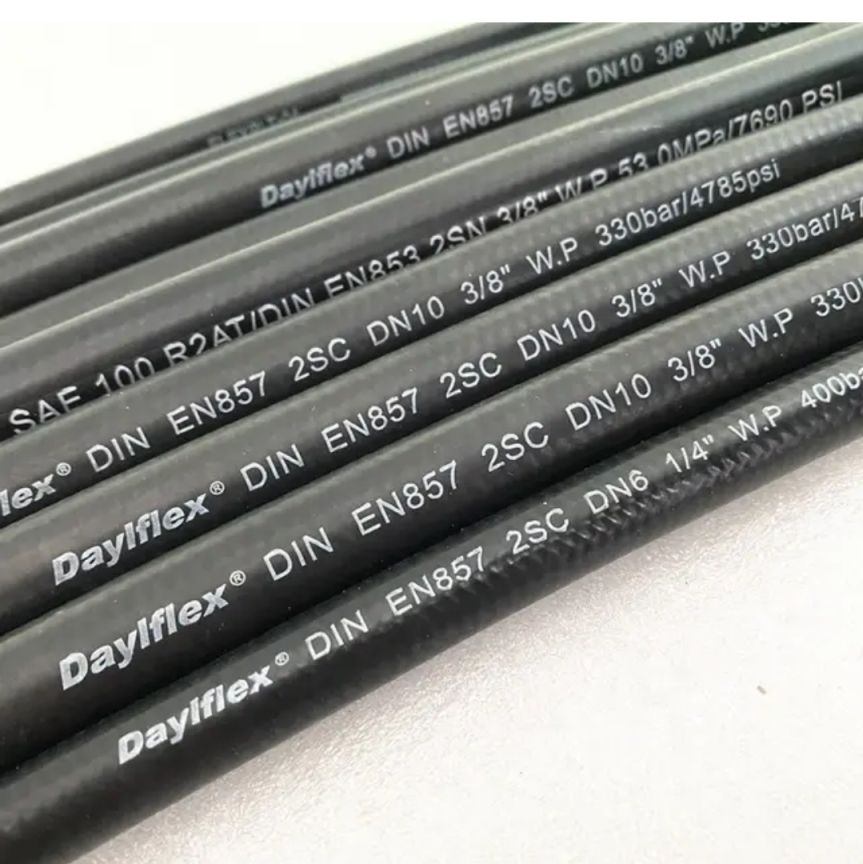
EN856 4SP hose, specified by the Society of Automotive Engineers (SAE) standard, represents a critical component in hydraulic fluid power systems. This guide details the technical aspects of OEM (Original Equipment Manufacturer) EN856 4SP hoses, focusing on their construction, performance characteristics, and suitability for demanding industrial applications. These hoses are characterized by their four spiral layers of high-tensile steel wire reinforcement embedded in a synthetic rubber matrix, offering exceptional pressure capability and durability. They are predominantly used in high-pressure hydraulic systems found in construction equipment, agricultural machinery, material handling vehicles, and various manufacturing processes. The OEM aspect signifies that these hoses are manufactured to exacting standards, often customized to specific equipment requirements and subjected to stringent quality control measures, differing significantly from aftermarket replacements in consistency and long-term reliability. The core performance characteristic is the ability to safely convey hydraulic fluid at pressures up to 4,000 psi, and withstand extreme operating temperatures, making them integral to the safe and efficient operation of heavy machinery. A key industry pain point is ensuring compatibility of hose materials with increasingly aggressive hydraulic fluids and maintaining consistent performance over extended operational lifecycles.
Material Science & Manufacturing
The EN856 4SP hose is constructed from several key materials. The inner tube typically comprises a nitrile rubber (NBR) compound, chosen for its excellent resistance to petroleum-based hydraulic fluids. NBR offers a balance between flexibility, abrasion resistance, and fluid compatibility. Alternatively, for phosphate ester-based fluids, a fluoroelastomer (FKM/Viton) inner tube is often specified. The reinforcement layer is the defining feature – four spirally wound layers of high-tensile steel wire conforming to SAE J517 specifications. The wire gauge and pitch are critical parameters directly influencing the hose’s burst pressure and flexibility. The outer cover is usually a Chloroprene rubber (CR) compound, providing resistance to abrasion, weathering, ozone, and oil. Manufacturing begins with extrusion of the inner tube to precise dimensional tolerances. The steel wire is then simultaneously spiraled onto the tube using a specialized winding machine, ensuring consistent layer spacing and pitch. The outer cover is applied through another extrusion process. Post-extrusion, the hose undergoes vulcanization – a heating process that chemically crosslinks the rubber compounds, enhancing their strength, elasticity, and resistance to degradation. Key parameter control includes maintaining consistent rubber compound viscosity during extrusion, precise wire tension during winding, and accurate temperature and time control during vulcanization. Variations in any of these parameters can lead to defects such as voids, inconsistent reinforcement, or under-cured rubber.

Performance & Engineering
The performance of EN856 4SP hoses is dictated by several engineering principles. The steel wire reinforcement is designed to withstand hoop stress generated by internal hydraulic pressure. Force analysis based on thin-walled cylinder theory determines the required wire gauge and pitch to achieve the specified burst pressure (typically 4:1 safety factor). The hose's flexibility is a function of the wire helix angle and the rubber compound’s modulus of elasticity. Engineers must balance flexibility with pressure capacity – increasing wire count improves pressure resistance but reduces flexibility. Environmental resistance is critical; the CR cover protects against ozone cracking, UV degradation, and abrasion. The hose’s operating temperature range is typically -40°C to +100°C, but this can vary depending on the rubber compound used. Compliance requirements include SAE J517 (hose construction standards), SAE J1926 (hose identification), and ISO 4413 (hydraulic systems safety). Proper hose assembly is vital; incorrect fitting installation can significantly reduce hose life and create safety hazards. Fitting selection must consider pressure rating, fluid compatibility, and hose end connection type (e.g., crimped, swaged, or threaded). Furthermore, dynamic stress (vibration and pulsation) in hydraulic systems necessitates the implementation of anti-vibration measures, such as proper hose routing and support, to prevent fatigue failure.
Technical Specifications
| Parameter | Unit | Specification (Typical) | Testing Standard |
|---|---|---|---|
| Working Pressure | psi | 3000 | SAE J517 |
| Burst Pressure | psi | 12000 | SAE J517 |
| Inner Tube Material | - | Nitrile Rubber (NBR) / Fluoroelastomer (FKM) | ASTM D2000 |
| Reinforcement | Layers | 4 Spiral Steel Wire | SAE J517 |
| Outer Cover Material | - | Chloroprene Rubber (CR) | ASTM D2000 |
| Temperature Range | °C | -40 to +100 | SAE J517 |
Failure Mode & Maintenance
EN856 4SP hoses are susceptible to several failure modes. Fatigue cracking, caused by repeated bending and pressure cycles, is common, particularly near fittings. Delamination – separation of the rubber layers from the steel wire reinforcement – can occur due to bond degradation caused by heat or fluid incompatibility. External abrasion can damage the cover, exposing the reinforcement to corrosion. Internal corrosion can occur if the hose is exposed to incompatible fluids or moisture. Oxidation of the rubber compounds leads to hardening and cracking over time. A critical failure mode is end fitting separation due to improper crimping or corrosion. Preventative maintenance is crucial. Regular visual inspections should identify cuts, abrasions, and leaks. Hose assemblies should be pressure tested periodically. Ensure compatibility of the hose material with the hydraulic fluid used. Proper hose routing and support can minimize bending stress. Regularly inspect and tighten fittings. If a hose shows signs of damage, it should be replaced immediately. Crimping procedures should adhere strictly to manufacturer's specifications to ensure a secure and durable connection. Avoid sharp bends and kinks that can induce localized stress concentrations. Proper storage (cool, dry, and away from direct sunlight) is essential to prevent premature degradation.
Industry FAQ
Q: What differentiates an OEM EN856 4SP hose from an aftermarket equivalent?
A: OEM hoses are manufactured to the precise specifications of the equipment manufacturer, often utilizing proprietary rubber compounds and undergoing more rigorous quality control. This results in superior consistency, durability, and compatibility with the specific hydraulic system. Aftermarket hoses may meet the SAE J517 standard but may exhibit variations in material quality and performance.
Q: What is the impact of using an incompatible hydraulic fluid with an EN856 4SP hose?
A: Using an incompatible fluid can cause the rubber compounds to swell, soften, or degrade, leading to leaks, reduced pressure capacity, and premature failure. Always consult the hose manufacturer’s compatibility chart to ensure the fluid is suitable for the inner tube material.
Q: How does temperature affect the performance and lifespan of an EN856 4SP hose?
A: Operating temperatures outside the specified range (-40°C to +100°C) can significantly reduce the hose's lifespan. High temperatures accelerate rubber degradation, while low temperatures can reduce flexibility and increase the risk of cracking.
Q: What are the key considerations when selecting fittings for an EN856 4SP hose?
A: Fittings must have a pressure rating equal to or greater than the hose’s working pressure. Material compatibility between the fitting and the hose is crucial to prevent corrosion. The connection type (crimped, swaged, or threaded) should be appropriate for the application and properly installed.
Q: How often should EN856 4SP hose assemblies be inspected and replaced?
A: Inspections should be conducted at least annually, or more frequently in demanding applications. Hoses should be replaced immediately if any signs of damage, such as cracks, abrasions, or leaks, are observed. Replacement intervals also depend on operating conditions and usage frequency.
Conclusion
The EN856 4SP hose represents a robust and reliable solution for high-pressure hydraulic fluid conveyance. Its construction, utilizing multiple layers of steel wire reinforcement and carefully selected rubber compounds, ensures exceptional pressure capability, durability, and resistance to environmental factors. Understanding the material science, manufacturing processes, and potential failure modes is paramount for ensuring safe and efficient operation of hydraulic systems. The selection of appropriate fittings, compatible fluids, and implementation of preventative maintenance practices are crucial for maximizing hose lifespan and minimizing downtime.
Continued advancements in rubber technology and manufacturing processes will likely focus on enhancing fluid compatibility, improving temperature resistance, and reducing weight without compromising performance. Furthermore, the integration of sensor technology for real-time hose condition monitoring could provide valuable insights for proactive maintenance and predictive failure analysis, improving overall system reliability and reducing operational costs.

