
Apr . 01, 2024 17:55 Back to list
oem en856 4sh supplier Performance Analysis
Introduction
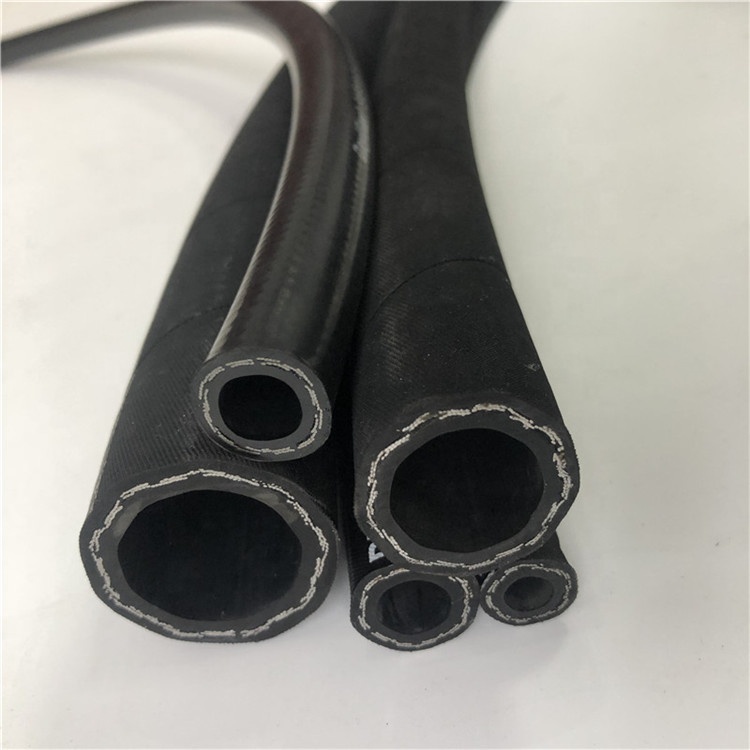
EN856 4SH rubber hose refers to a hydraulic hose conforming to the European standard EN 856, specifically the 4SH specification. This designation indicates a hose constructed with a synthetic rubber inner tube, multiple layers of high-strength steel wire reinforcement, and an oil-resistant synthetic rubber outer cover. It’s a critical component in hydraulic systems across diverse industrial applications, including construction machinery, agricultural equipment, mining operations, and manufacturing facilities. Its primary function is to transmit hydraulic fluid under high pressure, enabling the operation of actuators and motors. The ‘4SH’ designation signifies a hose capable of withstanding pressures up to 400 bar (approximately 5800 psi) and offering superior resistance to abrasion, ozone, and weathering. OEM (Original Equipment Manufacturer) suppliers provide these hoses directly to equipment manufacturers, demanding stringent quality control and adherence to the EN 856 standard. Key performance characteristics include burst pressure, impulse pressure resistance, temperature range, and fluid compatibility. The selection of an appropriate 4SH hose is paramount for system reliability and safety, dictated by the application's specific operating conditions and fluid types. A primary industry pain point revolves around ensuring consistent quality from various suppliers, as variations in reinforcement wire quality or rubber compounds can significantly impact hose lifespan and performance.
Material Science & Manufacturing
The manufacturing of EN856 4SH hoses begins with the selection of appropriate raw materials. The inner tube is typically composed of nitrile rubber (NBR), known for its excellent resistance to petroleum-based hydraulic fluids. Alternatives like chloroprene rubber (CR) may be used for applications requiring wider temperature ranges or resistance to specific fluids. The reinforcement layers consist of high-tensile steel wire, generally conforming to standards like SAE J517 or DIN 76323. Wire surface treatment is critical to ensure adhesion with the rubber compound and prevent corrosion. The outer cover utilizes a blend of synthetic rubbers such as SBR (styrene-butadiene rubber) or CR, providing abrasion resistance and protection against environmental factors. The manufacturing process is multi-stage. First, the inner tube is extruded continuously. Then, the steel wire is spirally wound around the inner tube in multiple layers, with precise tension control being vital for achieving the specified pressure rating. The outer cover is then extruded over the reinforced inner tube. Critical parameters during extrusion include temperature, screw speed, and die pressure, which affect the rubber compound’s viscosity and dimensional accuracy. Curing is performed in autoclaves or continuous vulcanization lines, ensuring complete crosslinking of the rubber compounds and achieving the desired mechanical properties. Post-curing inspection includes dimensional checks, pressure testing, and visual inspection for defects. Chemical compatibility tests, such as immersion testing in various hydraulic fluids, are also conducted to verify performance.
Performance & Engineering
The performance of EN856 4SH hoses is governed by several key engineering principles. Burst pressure is determined by the tensile strength of the steel wire reinforcement and the adhesion between the wire and rubber matrix. Impulse pressure resistance, crucial for hydraulic systems experiencing pressure fluctuations, relies on the hose’s ability to absorb energy without failure. This is affected by the number and construction of the reinforcement layers. Force analysis involves calculating hoop stress within the hose wall under pressure, ensuring it remains below the material’s yield strength. Environmental resistance considerations include temperature effects – hoses must maintain flexibility and pressure integrity across a defined operating temperature range (-40°C to +100°C typically). Ozone cracking, caused by atmospheric ozone, is mitigated by incorporating protective additives into the outer cover compound. Compliance requirements stem from the EN 856 standard itself, mandating specific test methods for pressure testing, impulse testing, and aging resistance. Functional implementation involves proper hose assembly with appropriate fittings, ensuring a leak-free and secure connection. Fitting selection must match the hose’s pressure rating and be compatible with the hydraulic fluid. Furthermore, consideration must be given to bend radius to prevent kinking and damage to the reinforcement layers. A frequent failure point relates to improper installation and exceeding the minimum bend radius specifications.
Technical Specifications
| Parameter | Specification | Test Method | Typical Value |
|---|---|---|---|
| Working Pressure (WP) | 400 bar (5800 psi) | EN 856 | 400 bar |
| Burst Pressure (BP) | 1200 bar (17400 psi) | EN 856 | 1200 bar |
| Impulse Pressure | Minimum 600,000 cycles | DIN 20024 | 800,000 cycles |
| Temperature Range | -40°C to +100°C (-40°F to +212°F) | EN 856 | -40°C to +100°C |
| Inner Tube Material | Nitrile Rubber (NBR) | ASTM D2000 | NBR |
| Outer Cover Material | Synthetic Rubber (SBR/CR Blend) | ASTM D2000 | CR |
Failure Mode & Maintenance
EN856 4SH hoses are susceptible to several failure modes. Fatigue cracking, arising from repeated pressure cycles and flexing, often initiates at the wire/rubber interface. Delamination, the separation of reinforcement layers, can occur due to inadequate bonding or exposure to aggressive fluids. Oxidation and degradation of the rubber compounds, accelerated by heat and ozone exposure, lead to loss of flexibility and eventual cracking. Pinholes in the inner tube can result from corrosion or damage from internal contaminants. External abrasion and impact damage can compromise the outer cover, exposing the reinforcement layers to corrosion. Proper maintenance is crucial for extending hose lifespan. Regular visual inspections should identify cracks, abrasions, or leaks. Hose should be replaced if any signs of damage are detected. Fluid compatibility should be verified to prevent chemical attack on the rubber compounds. Avoid exceeding the specified working pressure and minimum bend radius. Implement a preventative maintenance schedule based on operating hours and environmental conditions. When storing hoses, protect them from direct sunlight, ozone sources (electric motors), and extreme temperatures. Periodic pressure testing can identify potential weaknesses before catastrophic failure. The primary industry pain point is often reactive maintenance due to a lack of proactive inspection regimes.
Industry FAQ
Q: What is the significance of the ‘SH’ designation in EN856 4SH, and how does it relate to hydraulic shock resistance?
A: The ‘SH’ designation indicates ‘shock hose’ capability. It signifies the hose has been tested and certified to withstand a specific number of impulse cycles (pressure surges) without failure, as per DIN 20024. The multiple layers of steel wire reinforcement are engineered to absorb the energy from these pressure shocks, preventing catastrophic failure. A higher number of impulse cycles indicates greater shock resistance.
Q: What are the implications of using a hose with an incompatible hydraulic fluid?
A: Using an incompatible fluid can lead to swelling, softening, or degradation of the inner tube material. This can result in leaks, loss of pressure, and premature hose failure. Specific fluids like phosphate ester hydraulic fluids require hoses with specialized inner tube compounds (e.g., CR or FFKM) to ensure compatibility.
Q: How does temperature affect the performance and lifespan of EN856 4SH hoses?
A: High temperatures accelerate rubber degradation and reduce the hose’s flexibility. Low temperatures can cause the rubber to become brittle and more susceptible to cracking. Exceeding the specified temperature range compromises the hose’s pressure rating and shortens its lifespan. Maintaining fluid temperature within the specified range is also crucial.
Q: What is the recommended procedure for inspecting EN856 4SH hoses for potential failures?
A: A thorough visual inspection should be conducted regularly, checking for cracks, abrasions, swelling, leaks, or signs of corrosion. Pay particular attention to the hose ends and areas near fittings. The hose should also be checked for proper bend radius and secure connections. If any damage is detected, the hose should be replaced immediately.
Q: What are the key differences between EN 856 and SAE J517 hydraulic hose standards?
A: EN 856 is a European standard, while SAE J517 is an American standard. They differ in testing methodologies, performance requirements, and dimensional specifications. While both standards define hydraulic hose specifications, they are not directly interchangeable. Typically, EN 856 hoses are designed for higher working pressures and more demanding applications.
Conclusion
EN856 4SH hydraulic hoses represent a critical component in a wide range of industrial applications. Their robust construction, featuring multiple layers of steel wire reinforcement and durable rubber compounds, ensures reliable performance under high pressure and challenging environmental conditions. Understanding the material science, manufacturing processes, and performance characteristics is essential for selecting the appropriate hose for a specific application and maximizing its lifespan.
Proactive maintenance, including regular inspections and fluid compatibility verification, is paramount for preventing premature failures and ensuring system safety. Addressing the industry pain point of inconsistent quality requires diligent supplier qualification and rigorous quality control procedures. Adherence to relevant international standards, such as EN 856, DIN 20024, and ASTM D2000, guarantees performance and reliability.

