
Apr . 01, 2024 17:55 Back to list
oem en856 4sh manufacturer Performance Analysis
Introduction
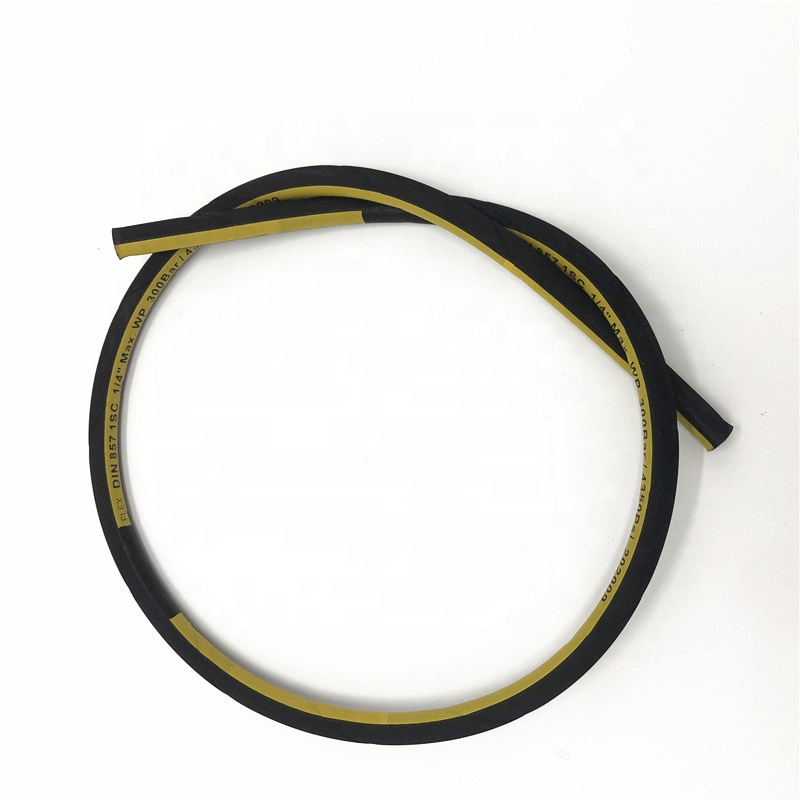
EN856 4SH hose is a high-pressure hydraulic hose conforming to SAE standard J517, specifically designed for conveying hydraulic fluid in demanding applications. Positioned within the fluid power industry as a critical component in hydraulic systems, its performance dictates the efficiency and reliability of machinery across diverse sectors, including construction, agriculture, mining, and manufacturing. The '4SH' designation denotes a spiral high-strength steel wire reinforcement layer within a synthetic rubber construction, providing exceptional pressure resistance and durability. Core performance characteristics center on burst pressure, working pressure, temperature range, and resistance to hydraulic fluid degradation. A primary industry pain point is maintaining consistent hose performance under cyclical high-pressure loading and harsh environmental conditions, leading to premature failure and costly downtime. OEM manufacturing focuses on precise dimensional control and adherence to rigorous quality control procedures to mitigate these risks. Understanding the nuances of EN856 4SH construction and its limitations is paramount for effective system design and preventative maintenance.
Material Science & Manufacturing
The core materials comprising EN856 4SH hose are synthetic rubber (typically SBR - Styrene-Butadiene Rubber, or NBR - Nitrile Butadiene Rubber for oil resistance), high-tensile strength steel wire, and textile braiding. SBR offers good abrasion resistance and general-purpose hydraulic fluid compatibility, while NBR provides superior resistance to petroleum-based fluids. Steel wire reinforcement, crucial for pressure containment, is manufactured from specialized high-carbon steel alloys selected for yield strength and fatigue resistance. The manufacturing process begins with the extrusion of the inner tube, utilizing a continuous vulcanization process to achieve desired hardness and elasticity. Multiple layers of spiral-wound, high-strength steel wire are then applied, followed by an external cover layer also extruded from synthetic rubber. Key parameter control during manufacturing includes maintaining precise steel wire pitch, rubber compound consistency (viscosity, filler content, curing agent concentration), and proper vulcanization temperature and duration. Improper curing can lead to compromised rubber properties – undercuring results in tackiness and reduced tensile strength, while overcuring leads to brittleness and diminished flexibility. The steel wire requires careful surface treatment (zinc plating) to prevent corrosion and ensure adequate bonding with the surrounding rubber matrix. Quality control involves rigorous burst pressure testing, impulse testing (simulating pulsating pressure), and dimensional verification using calibrated instruments. The adherence to strict rubber compound formulations and process controls directly impacts the hose's resistance to permeation, degradation, and long-term performance.

Performance & Engineering
The performance of EN856 4SH hinges on its ability to withstand extreme pressures and dynamic loading. Force analysis focuses on hoop stress within the hose wall, calculated using Barlow's formula and modified to account for the steel wire reinforcement. This stress is directly proportional to the internal pressure and hose diameter, and inversely proportional to the wall thickness. Environmental resistance is critical, particularly concerning temperature fluctuations and exposure to chemicals (hydraulic fluids, oils, coolants). NBR rubber provides enhanced resistance to petroleum-based fluids, while specialized additives can improve resistance to ozone, UV radiation, and abrasion. Compliance requirements mandate adherence to SAE J517 standards, specifying minimum burst pressure, working pressure, and impulse pressure ratings based on hose size and reinforcement type. Engineering considerations also include bend radius – exceeding the minimum recommended bend radius introduces localized stress concentrations, accelerating fatigue failure. The hose’s flexibility affects its ability to transmit pressure efficiently; a too-stiff hose can dampen hydraulic response, while an overly flexible hose can be prone to kinking. Furthermore, proper hose end termination (crimping) is vital. Incorrect crimp specifications can lead to slippage, leakage, or premature failure at the connection point. Finite Element Analysis (FEA) is frequently employed during the design phase to optimize hose geometry and reinforcement configuration, ensuring structural integrity and maximizing performance under anticipated loading conditions. Compatibility with quick-disconnect couplings and fittings must also be carefully considered.
Technical Specifications
| Parameter | Unit | SAE J517 - 4SH (1" ID) | Typical OEM Range (1" ID) |
|---|---|---|---|
| Working Pressure | PSI | 3000 | 3000 - 3500 |
| Burst Pressure | PSI | 9000 | 9000 - 10500 |
| Temperature Range | °F | -40 to +212 | -40 to +240 |
| Inner Tube Material | - | NBR (Nitrile Rubber) | NBR or SBR |
| Reinforcement | Layers | 4 Spiral High-Tensile Steel Wire | 4-6 Spiral High-Tensile Steel Wire |
| Cover Material | - | Synthetic Rubber | Synthetic Rubber (Abrasion/Oil Resistant) |
Failure Mode & Maintenance
Common failure modes in EN856 4SH hoses include burst failure (due to exceeding pressure limits), impulse failure (from cyclical pressure fluctuations), fatigue cracking (initiated by repeated bending or vibration), and permeation (leakage of hydraulic fluid through the hose wall). Burst failure typically originates at weak points in the hose wall, such as defects in the steel wire or localized thinning of the rubber compound. Impulse failure manifests as cracking near the hose ends, resulting from dynamic stress concentrations. Fatigue cracking is often preceded by localized abrasion or damage to the outer cover. Permeation rates are influenced by fluid viscosity, temperature, and hose material composition. Failure analysis often reveals evidence of improper installation (excessive bending, kinking), fluid contamination (abrasive particles), or material degradation (aging, chemical attack). Preventative maintenance involves regular visual inspections for cracks, abrasions, bulges, and leaks. Hose bend radius should be periodically checked to ensure compliance with manufacturer’s recommendations. Hydraulic fluid should be regularly filtered to remove contaminants. Hose connections should be inspected for tightness and evidence of corrosion. Replacement intervals should be established based on operating conditions and OEM recommendations. When replacing hoses, it is crucial to ensure compatibility with the hydraulic fluid and to use properly crimped fittings. Proper storage of hoses – protected from sunlight, ozone, and extreme temperatures – is also essential to maximize service life. Regular monitoring of system pressure and temperature can help identify potential issues before catastrophic failure occurs.
Industry FAQ
Q: What is the significance of the “4SH” designation, and what differentiates it from other hose types like 4SP?
A: The “4SH” designation indicates four layers of spiral-wound high-tensile steel wire reinforcement. This construction provides superior pressure handling capabilities compared to “4SP” hoses, which utilize four layers of spirally plied (braided) steel wire. While 4SP offers good flexibility, 4SH is preferred for applications requiring significantly higher pressure resistance and is less susceptible to stretching under load. The spiral wound construction provides greater axial stability.
Q: How does fluid compatibility impact the lifespan of an EN856 4SH hose?
A: Fluid compatibility is critical. Using a hose with an incompatible fluid can lead to degradation of the inner tube material, resulting in swelling, cracking, and ultimately, leakage. NBR (Nitrile) inner tubes are generally recommended for petroleum-based hydraulic fluids, while EPDM (Ethylene Propylene Diene Monomer) is better suited for phosphate ester fluids. Always verify fluid compatibility before installation.
Q: What are the primary causes of hose impulse failure, and how can they be mitigated?
A: Impulse failure is often caused by pressure pulsations exceeding the hose’s rated impulse pressure. This is frequently exacerbated by improper installation – sharp bends or insufficient support. Mitigation strategies include using pulsation dampeners, ensuring proper hose routing and support, and selecting a hose with a higher impulse pressure rating.
Q: What is the correct procedure for crimping hose ends, and what are the consequences of improper crimping?
A: Correct crimping requires using a properly sized die set and crimping machine calibrated for the specific hose and fitting combination. Improper crimping – either under-crimping or over-crimping – can lead to slippage, leakage, or premature failure at the connection point. Under-crimping allows for movement between the hose and fitting, while over-crimping can damage the hose reinforcement.
Q: Can EN856 4SH hoses be repaired if they develop a small leak?
A: Repairing a 4SH hose is generally not recommended, especially for high-pressure applications. The spiral wire reinforcement makes field repairs extremely difficult and unreliable. Any compromise to the hose structure can significantly reduce its burst pressure and increase the risk of catastrophic failure. Replacement is the safest and most cost-effective solution.
Conclusion
EN856 4SH hose represents a vital component within hydraulic power systems, demanding careful material selection, precision manufacturing, and diligent maintenance. Its robust construction, featuring spiral high-strength steel wire reinforcement, affords exceptional pressure resistance and durability – crucial for applications operating under demanding conditions. A thorough understanding of potential failure modes, encompassing burst failure, impulse failure, and degradation due to fluid incompatibility, is essential for ensuring system reliability and minimizing downtime.
Moving forward, advancements in rubber compound technology and reinforcement materials will likely lead to even higher performance and extended service life for EN856 4SH hoses. Predictive maintenance strategies, utilizing sensor technology to monitor hose condition in real-time, represent a promising avenue for proactive failure prevention. Continued adherence to stringent industry standards and rigorous quality control protocols remain paramount for maintaining the integrity and safety of hydraulic systems reliant on this critical component.