
Apr . 01, 2024 17:55 Back to list
oem en856 4sh factory Performance Analysis

Introduction
EN856 4SH hydraulic hose, manufactured by OEM facilities, represents a critical component in fluid power systems across diverse industrial sectors. Classified under EN 856, a European standard defining specifications for extra-high pressure hydraulic hoses, the 4SH designation indicates a spiral-wound construction with steel wire reinforcement. This hose is primarily used for conveying hydraulic fluid under extremely high pressure in applications like construction equipment, agricultural machinery, mining operations, and industrial machinery. Its robust design offers superior flexibility and durability, addressing critical needs for reliable fluid transfer in demanding conditions. The manufacturing process, often involving specialized extrusion and reinforcement techniques, directly impacts its performance characteristics, including pressure rating, burst pressure, and resistance to external damage. Understanding the material composition, manufacturing tolerances, and performance parameters is paramount for ensuring safe and efficient operation of hydraulic systems.
Material Science & Manufacturing
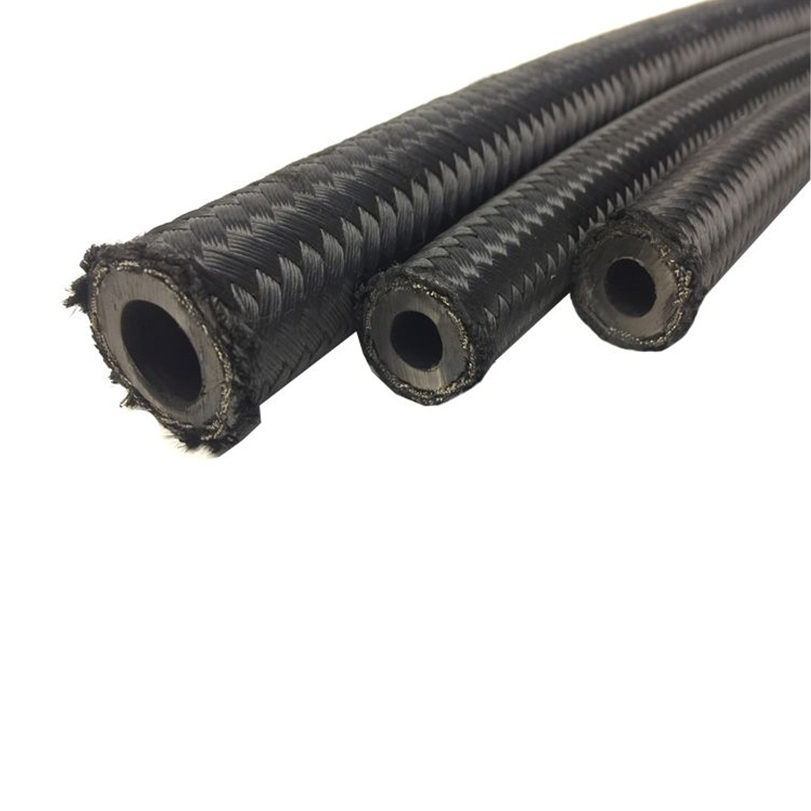
The core materials for EN856 4SH hoses are typically a synthetic rubber blend for the inner tube, multiple layers of high-tensile steel wire for reinforcement, and a synthetic rubber or thermoplastic polyurethane (TPU) outer cover. The inner tube commonly utilizes nitrile rubber (NBR) due to its excellent resistance to petroleum-based hydraulic fluids. However, other elastomers like chlorinated polyethylene (CM) are utilized for improved temperature and fluid compatibility. Steel wire reinforcement is crucial for withstanding high pressures; the wire is generally high-carbon steel, drawn to precise diameters and treated for corrosion resistance (zinc plating or passivation). The outer cover provides protection against abrasion, weathering, and chemical exposure. TPU offers superior abrasion resistance and flexibility, while synthetic rubber covers provide cost-effectiveness and good general-purpose protection.
Manufacturing involves a multi-stage process. First, the inner tube is extruded to the specified dimensions. Following extrusion, the steel wire is spirally wound around the inner tube with precise pitch and tension control. Maintaining consistent wire tension is vital to prevent hose distortion and ensure uniform pressure distribution. The outer cover is then extruded over the reinforced inner tube, bonding securely to create a cohesive structure. Critical parameters during manufacturing include extrusion temperature, wire tension, curing time and temperature, and dimensional accuracy. Quality control measures, including pressure testing to failure (burst pressure), impulse testing, and dimensional inspections, are essential to ensure compliance with EN 856 standards. Variations in material hardness (measured using Shore A durometer), tensile strength, and elongation at break directly influence the hose’s performance and longevity.
Performance & Engineering
The performance of EN856 4SH hoses is fundamentally governed by pressure-temperature ratings and resistance to various environmental factors. The hose's ability to withstand internal pressure without failure is a primary concern. Burst pressure, typically four times the working pressure, is a critical safety parameter. Impulse testing simulates pressure surges and pulsations, assessing the hose's resistance to fatigue failure. Engineering considerations involve force analysis of the steel wire reinforcement under pressure, determining stress distribution and predicting long-term durability. The hose’s flexibility, expressed as bend radius, is crucial for routing in confined spaces.
Environmental resistance includes evaluating the hose's performance in extreme temperatures (both high and low), exposure to ozone, UV radiation, and common hydraulic fluids. Compatibility with hydraulic fluids (mineral oil, synthetic fluids, water-glycol fluids) is essential to prevent swelling, degradation, or embrittlement of the rubber components. Compliance requirements are dictated by EN 856 standards, which mandate specific testing procedures and performance criteria. Hose markings provide essential information, including the manufacturer’s identification, hose type (4SH), size, working pressure, and date of manufacture. Failure to adhere to these standards can result in safety hazards and operational inefficiencies. Proper hose assembly, including selecting compatible fittings and using correct crimping procedures, is equally vital for ensuring reliable performance.
Technical Specifications
| Parameter | Unit | Specification Range | Testing Standard |
|---|---|---|---|
| Working Pressure | MPa | 25 – 42 | EN 856 |
| Burst Pressure | MPa | 100 – 168 | EN 856 |
| Temperature Range | °C | -40 to +100 | EN 856 |
| Inner Tube Material | - | NBR, CM | ASTM D2000 |
| Reinforcement | - | Spiral-Wound Steel Wire | EN 856 |
| Outer Cover Material | - | Synthetic Rubber, TPU | ASTM D2000 |
Failure Mode & Maintenance
Common failure modes for EN856 4SH hoses include fatigue cracking due to repeated pressure cycling, pinhole leaks caused by abrasion or corrosion, and end fitting failure due to improper crimping or material incompatibility. Fatigue cracking typically initiates at stress concentration points, such as near the wire reinforcement or at areas of bending. Pinholes can develop from external abrasion, internal fluid erosion, or chemical attack. End fitting failure can occur through stripping of the threads, cracking of the fitting material, or loss of the crimp. Oxidation of the steel wire, leading to reduced strength and corrosion, is another potential failure mechanism, especially in humid environments. Delamination, where the layers separate, can occur due to poor bonding during manufacturing or prolonged exposure to extreme temperatures.
Preventive maintenance is crucial for extending hose life. Regular visual inspections should be conducted to identify signs of abrasion, cracking, or leakage. Hoses should be replaced if any damage is observed. Proper hose routing is essential to avoid sharp bends and contact with abrasive surfaces. Regularly checking and tightening hose fittings is vital to prevent leakage. Maintaining a clean hydraulic system, including filtering the fluid, minimizes internal abrasion and contamination. Storage of hoses in a cool, dry, and dark environment protects against UV degradation and ozone cracking. When replacing hoses, always use compatible fittings and follow the manufacturer's recommended crimping procedures. Detailed records of hose installation and replacement dates facilitate proactive maintenance scheduling.
Industry FAQ
Q: What is the significance of the ‘4SH’ designation in EN856 hoses?
A: The ‘4SH’ designation signifies a spiral-wound hose with four layers of steel wire reinforcement. This construction provides exceptional pressure capability and resistance to flexing, making it suitable for demanding hydraulic applications. The 'S' indicates steel reinforcement, and the 'H' specifies high pressure capability as defined by the EN 856 standard.
Q: How does temperature affect the working pressure of an EN856 4SH hose?
A: Generally, the working pressure of an EN856 4SH hose decreases as temperature increases. This is due to the reduced strength and elasticity of the rubber materials at elevated temperatures. Manufacturers provide derating factors for specific temperature ranges, indicating the permissible working pressure at different temperatures. Operating beyond these limits can lead to premature failure.
Q: What type of hydraulic fluid is compatible with a standard NBR inner tube in an EN856 4SH hose?
A: Nitrile rubber (NBR) is generally compatible with mineral oil-based hydraulic fluids. However, compatibility with other fluids, such as phosphate esters, water-glycols, or synthetic fluids, should be verified with the hose manufacturer. Using incompatible fluids can cause swelling, degradation, or cracking of the NBR inner tube.
Q: What are the key considerations when selecting fittings for EN856 4SH hoses?
A: Fittings must be specifically designed for EN856 4SH hoses and must match the hose size and pressure rating. Material compatibility between the fitting and the hose is crucial to prevent corrosion or leakage. Correct crimping procedures, using calibrated crimping equipment and dies, are essential to ensure a secure and leak-proof connection. Using improper fittings or crimping techniques can compromise the hose's integrity and lead to catastrophic failure.
Q: How often should EN856 4SH hoses be inspected as part of a preventative maintenance program?
A: The inspection frequency depends on the severity of the operating conditions. For critical applications or harsh environments, inspections should be conducted monthly. For less demanding applications, quarterly inspections may suffice. Inspections should include visual checks for abrasion, cracks, leaks, and damage to the fittings. Detailed records of inspection results should be maintained for tracking trends and identifying potential issues.
Conclusion
EN856 4SH hydraulic hoses are a vital element in numerous industrial applications demanding high-pressure fluid conveyance. Their performance hinges on a complex interplay of material science, precise manufacturing processes, and adherence to stringent industry standards. Understanding the limitations of these hoses – including temperature sensitivity, fluid compatibility, and susceptibility to fatigue and abrasion – is crucial for ensuring safe and reliable operation. Implementing a robust preventative maintenance program, focused on regular inspections, proper hose routing, and correct fitting procedures, is essential for maximizing hose lifespan and minimizing downtime.
The ongoing evolution of hydraulic systems necessitates continuous advancements in hose technology. Future developments may focus on enhancing material properties to increase pressure ratings and temperature resistance, improving corrosion protection, and incorporating smart monitoring systems to provide real-time condition assessment. Proper selection, installation, and maintenance of EN856 4SH hoses, combined with ongoing technological innovation, will continue to ensure the efficient and safe operation of hydraulic systems across a wide range of industries.

