
Apr . 01, 2024 17:55 Back to list
oem en856 4sh factories Performance Analysis
Introduction
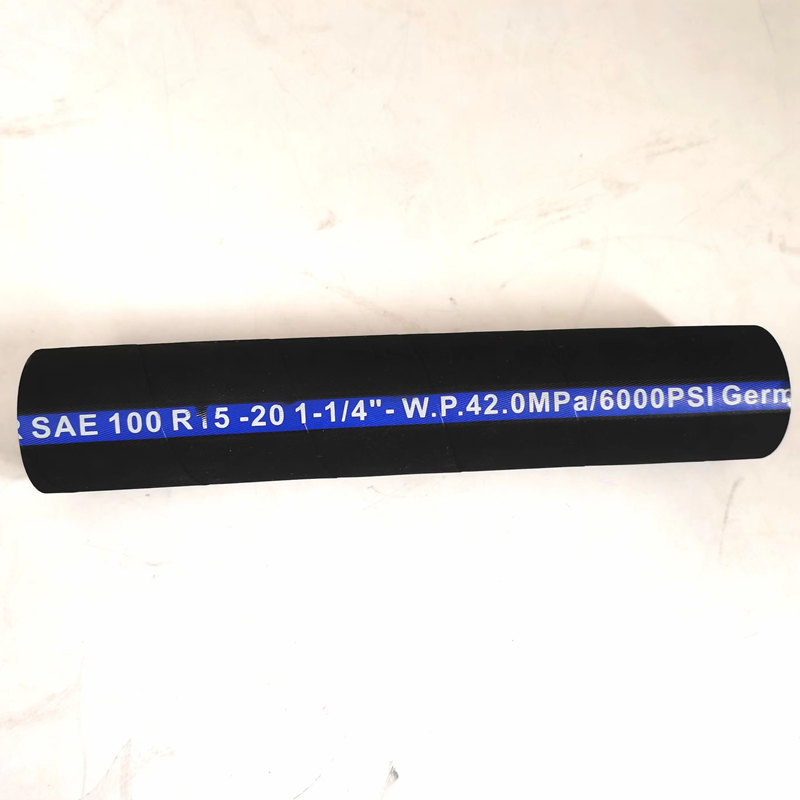
EN856 4SH rubber hose designates a specific type of hydraulic hose manufactured to meet the Society of Automotive Engineers (SAE) J517 standard, specifically the 4SH designation. OEM (Original Equipment Manufacturer) factories producing EN856 4SH hoses represent a critical segment of the fluid power transmission industry, supplying hoses for a wide range of applications including construction equipment, agricultural machinery, material handling systems, and industrial hydraulics. These hoses are characterized by their multi-steel wire reinforcement, providing high pressure capability and resistance to pulsation, making them suitable for demanding hydraulic systems. A core pain point for end-users is ensuring consistent quality and adherence to specifications given the potential for counterfeit or substandard products originating from less reputable manufacturers. Understanding the material composition, manufacturing processes, performance characteristics, and potential failure modes is crucial for procurement professionals and engineers seeking reliable hydraulic hose solutions. This guide provides an in-depth technical overview of EN856 4SH hoses produced by OEM factories, covering material science, manufacturing, performance, failure analysis, and relevant industry standards.
Material Science & Manufacturing
The construction of an EN856 4SH hose involves several key materials and a multi-stage manufacturing process. The inner tube is typically composed of a synthetic rubber compound, most commonly nitrile rubber (NBR) due to its excellent resistance to petroleum-based hydraulic fluids. NBR’s properties are critical: tensile strength ranges from 17-25 MPa, elongation at break is typically 300-500%, and hardness (Shore A) is between 60-80. Alternative inner tube materials include ethylene propylene diene monomer (EPDM) for phosphate ester fluids and fluorocarbon rubber (FKM/Viton) for high-temperature or chemically aggressive environments. The reinforcement layer consists of multiple spirally wound steel wire layers. The steel wire used is typically high-tensile strength carbon steel, with a minimum tensile strength of 1700 MPa. The number of steel wire layers varies but is generally four or more, dictating the hose’s pressure rating. The outer cover is usually a synthetic rubber compound, such as chloroprene rubber (CR) for abrasion resistance and weathering protection. CR exhibits a tensile strength of 14-21 MPa, elongation at break of 200-400%, and Shore A hardness of 60-70. Manufacturing begins with extrusion of the inner tube, followed by precise winding of the steel wire reinforcement under tension. This tension control is paramount, directly impacting the hose’s burst pressure and fatigue life. The outer cover is then extruded over the reinforcement, and the hose is vulcanized, a process of crosslinking the rubber compounds with heat and pressure using sulfur or peroxide curing systems. Key parameters controlled during vulcanization include temperature (140-180°C), pressure (2-4 MPa), and time (30-60 minutes) to ensure optimal rubber properties and adhesion between layers.

Performance & Engineering
EN856 4SH hoses are engineered to withstand high pressures and dynamic loading conditions. The burst pressure, a critical performance parameter, is typically 480-600 bar (7000-8700 psi), determined through rigorous testing based on SAE J517. Working pressure is generally rated at 1/4 of the burst pressure, offering a safety factor. Fatigue resistance is also vital, particularly in applications involving pulsation. Hose flexing under pressure generates stresses within the reinforcement layers, and repeated flexing can lead to fatigue cracking. Finite Element Analysis (FEA) is often employed during the design phase to optimize the reinforcement layer configuration and minimize stress concentrations. Environmental resistance is another key consideration. Exposure to ozone, UV radiation, and extreme temperatures can degrade the rubber compounds, reducing their flexibility and tensile strength. The outer cover material (CR) provides substantial protection, but prolonged exposure can still cause surface cracking. Furthermore, compatibility with the hydraulic fluid is crucial. NBR is generally compatible with most petroleum-based fluids, but incompatibility can lead to swelling or degradation of the inner tube, resulting in leakage and hose failure. Compliance requirements include adherence to REACH (Registration, Evaluation, Authorisation and Restriction of Chemicals) and RoHS (Restriction of Hazardous Substances) directives, restricting the use of certain hazardous substances in the hose’s materials. The hose’s bend radius also impacts performance; exceeding the minimum bend radius can induce excessive stress on the reinforcement and reduce service life.
Technical Specifications
| Parameter | Unit | Typical Value | Testing Standard |
|---|---|---|---|
| Working Pressure | bar (psi) | 120 (1740) | SAE J517 |
| Burst Pressure | bar (psi) | 480 (7000) | SAE J517 |
| Inner Tube Material | - | NBR | ASTM D2000 |
| Reinforcement | Layers | 4 Spiral Steel Wire | SAE J517 |
| Outer Cover Material | - | CR | ASTM D2000 |
| Temperature Range | °C (°F) | -40 to +100 (-40 to +212) | SAE J517 |
Failure Mode & Maintenance
EN856 4SH hoses are subject to various failure modes under operational conditions. Fatigue cracking, originating from repeated flexing under pressure, is a common issue, particularly near the hose ends where stress concentration is highest. Delamination, the separation of layers (inner tube, reinforcement, or outer cover), can occur due to inadequate bonding during vulcanization or prolonged exposure to aggressive fluids. Oxidation and degradation of the rubber compounds, accelerated by heat, ozone, and UV radiation, lead to loss of flexibility and cracking. Abrasion from external sources can damage the outer cover, exposing the reinforcement to corrosion. Internal erosion from particulate contamination in the hydraulic fluid can also damage the inner tube. Pinholes, caused by corrosion of the steel wire, can lead to leakage. Maintenance involves regular visual inspections for signs of damage, such as cracks, abrasions, bulges, or leaks. Hoses should be replaced if any damage is detected. Proper routing and support are crucial to prevent excessive bending and abrasion. Regular fluid filtration is essential to minimize internal erosion. Correct hose end fitting selection and proper crimping are vital to ensure a secure and leak-proof connection. Avoid exceeding the hose’s working pressure and temperature limits. Periodic pressure testing can identify potential weaknesses before catastrophic failure occurs. Storage should be in a cool, dry, and dark environment to minimize degradation of the rubber compounds.
Industry FAQ
Q: What is the significance of the "4SH" designation in EN856 4SH hoses?
A: The “4SH” designation, as defined by SAE J517, specifies the hose’s construction and performance characteristics. ‘4’ indicates four spiral steel wire reinforcement layers, providing high pressure capability. ‘SH’ signifies that the hose is suitable for high-pressure hydraulic systems and offers resistance to pulsation.
Q: How does temperature affect the performance of an EN856 4SH hose?
A: Operating temperatures outside the specified range (-40°C to +100°C) can significantly degrade the hose's performance. High temperatures accelerate rubber degradation, reducing flexibility and tensile strength, while low temperatures can cause the rubber to become brittle and susceptible to cracking.
Q: What type of hydraulic fluid is compatible with a standard EN856 4SH hose?
A: Standard EN856 4SH hoses with NBR inner tubes are generally compatible with petroleum-based hydraulic fluids. However, compatibility should be verified for phosphate ester fluids or other specialized fluids; EPDM or FKM inner tubes are often required for these applications.
Q: What preventative measures can be taken to extend the service life of EN856 4SH hoses?
A: Regular visual inspections, proper routing and support to prevent excessive bending, maintaining clean hydraulic fluid through filtration, using correct fittings and ensuring proper crimping, and avoiding exceeding pressure/temperature limits are all critical preventative measures.
Q: What are the key differences between EN856 4SH and EN853 4SP hoses?
A: EN853 4SP hoses use spirally wrapped steel wire, while EN856 4SH uses spirally wound steel wire. 4SP hoses generally offer higher impulse pressure resistance, making them more suitable for systems with significant pressure pulsations. 4SH typically handles higher working pressures but may be more susceptible to impulse failure.
Conclusion
EN856 4SH hoses are a cornerstone of many hydraulic systems, providing reliable fluid power transmission in demanding applications. Understanding the intricacies of their material composition, manufacturing processes, and performance characteristics is essential for ensuring optimal system reliability and safety. The four-layer steel wire reinforcement provides high pressure capability, but careful consideration must be given to factors such as temperature, fluid compatibility, and potential failure modes.
OEM factories producing these hoses play a critical role in maintaining quality and adhering to industry standards. Proactive maintenance, including regular inspections and proper system design, are vital for maximizing service life and minimizing the risk of catastrophic failure. The continued development of advanced rubber compounds and manufacturing techniques will further enhance the performance and durability of EN856 4SH hoses in the future.

