
Apr . 01, 2024 17:55 Back to list
oem en854 1te supplier Performance Analysis
Introduction
EN854 1TE hose, supplied by OEM manufacturers, represents a critical component in a diverse range of industrial fluid transfer applications. Defined under the European standard EN 854, this specification outlines the requirements for high-pressure hydraulic hoses with a 1TE (Textile Reinforcement, one layer) construction. Its position within the industrial chain is as a vital link between hydraulic power sources – pumps, actuators, and control valves – and the equipment they serve, spanning sectors like construction, agriculture, material handling, and manufacturing. Core performance characteristics center around burst pressure, working pressure, impulse resistance, and temperature range, directly influencing system reliability and safety. The OEM supply chain for these hoses necessitates stringent quality control, material traceability, and adherence to the evolving regulatory landscape surrounding fluid power systems. A critical pain point in the industry lies in maintaining consistent quality across different OEM suppliers, ensuring the hose meets the specific demands of the application, and verifying compliance with increasingly stringent environmental standards regarding phthalate content and overall lifecycle impact.
Material Science & Manufacturing
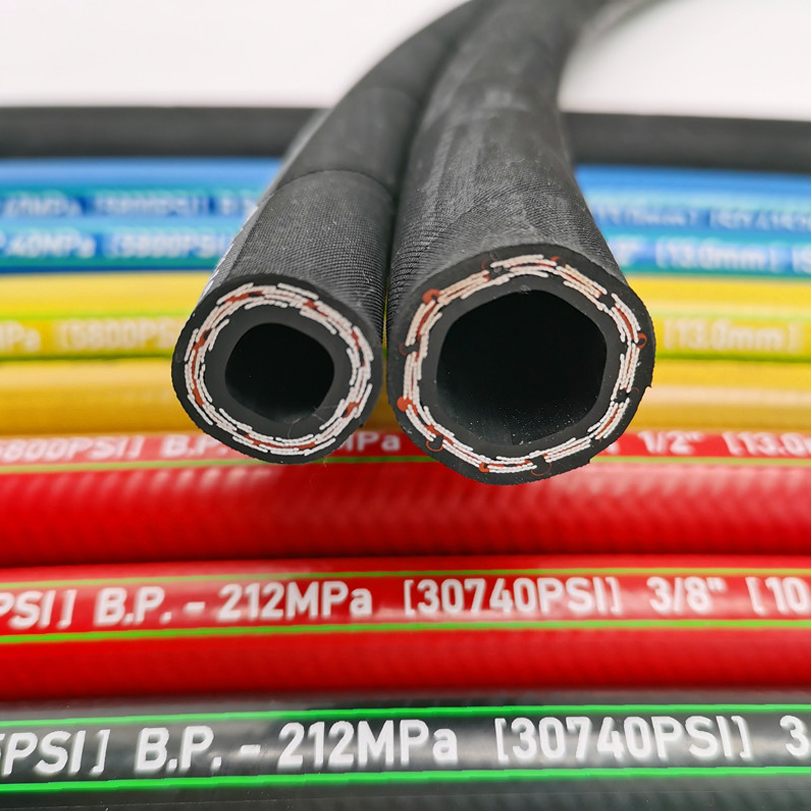
The construction of an EN854 1TE hose begins with the inner tube, typically formulated from Nitrile Rubber (NBR), known for its excellent oil resistance and wide operating temperature range (-40°C to +100°C). NBR’s chemical composition, a copolymer of acrylonitrile and butadiene, dictates its resistance to hydrocarbons, fuels, and hydraulic fluids. Variations in acrylonitrile content influence oil resistance and low-temperature flexibility. The reinforcement layer consists of a single braid of high-tensile strength textile fibers, commonly polyester or aramid. Polyester offers good elasticity and resistance to stretching, while aramid provides superior strength and heat resistance. The outer cover, generally composed of Chloroprene Rubber (CR) – also known as Neoprene – offers abrasion, weather, and ozone resistance. CR’s polymeric structure provides protection against environmental degradation. The manufacturing process involves several key steps: inner tube extrusion, textile braiding, hose assembly, and outer cover extrusion. Precise control of extrusion temperatures, braid angles (typically 55°), and cure times is crucial. Curing is achieved via vulcanization, a chemical process using sulfur or peroxide systems to crosslink the rubber polymers, enhancing strength and elasticity. Parameter control is maintained through continuous monitoring of temperature, pressure, and material flow rates, employing Statistical Process Control (SPC) methods. Post-production testing includes hydrostatic testing to verify burst pressure, impulse testing to evaluate fatigue resistance, and dimensional inspection to ensure adherence to EN854 tolerances.

Performance & Engineering
The performance of an EN854 1TE hose is governed by its ability to withstand internal pressure, external loads, and dynamic stresses. Force analysis dictates that the tensile strength of the reinforcement braid must adequately resist hoop stress generated by internal pressure. The burst pressure, a critical safety parameter, is typically four times the working pressure as defined in EN854. Impulse resistance – the hose's ability to withstand pressure pulsations – is particularly crucial in hydraulic systems with reciprocating pumps or valves. This is assessed through repeated pressure cycling at a specified frequency and amplitude. Environmental resistance is paramount; exposure to extreme temperatures, UV radiation, and corrosive fluids can degrade the rubber compounds, reducing flexibility and increasing the risk of failure. Compliance with REACH (Registration, Evaluation, Authorisation and Restriction of Chemicals) and RoHS (Restriction of Hazardous Substances) directives is mandatory, restricting the use of certain phthalates and heavy metals. Functional implementation requires careful consideration of hose length, bend radius (minimum 4D, where D is the hose diameter), and fitting compatibility. Incorrectly sized fittings or excessive bending can induce localized stress concentrations, leading to premature failure. Proper hose routing and support mechanisms are essential to prevent abrasion and kinking.
Technical Specifications
| Parameter | Unit | EN854 1TE Specification | Typical OEM Range |
|---|---|---|---|
| Working Pressure | MPa | Up to 31.5 | 10 – 25 |
| Burst Pressure | MPa | ≥ 4 x Working Pressure | 40 – 100 |
| Temperature Range | °C | -40 to +100 | -40 to +80 (NBR), -40 to +120 (Special Compounds) |
| Reinforcement | - | Single Textile Braid (Polyester/Aramid) | Polyester/Aramid – Yarn Count Varies |
| Inner Tube | - | Nitrile Rubber (NBR) | NBR – Acrylonitrile Content 36-42% |
| Outer Cover | - | Chloroprene Rubber (CR) | CR – Shore A Hardness 60±5 |
Failure Mode & Maintenance
Common failure modes in EN854 1TE hoses include burst failure due to exceeding the working pressure, fatigue cracking caused by repeated impulse loads, pinhole leaks resulting from abrasion or chemical attack, and hose splitting due to age and environmental degradation. Fatigue cracking often initiates at the braid crossover points or fitting crimps, where stress concentrations are highest. Delamination – separation of the rubber layers – can occur due to inadequate adhesion between the tube, reinforcement, and cover. Oxidation of the rubber compounds, accelerated by exposure to heat and ozone, leads to hardening and cracking. Failure analysis typically involves visual inspection, microscopic examination of the fracture surface, and chemical analysis of the rubber compounds. Maintenance recommendations include regular visual inspections for signs of wear, abrasion, or cracking; periodic pressure testing to verify hose integrity; and proper hose routing to prevent kinking and abrasion. Avoid sharp bends and ensure adequate support to minimize stress. Replace hoses immediately if any signs of damage are detected. Proper storage in a cool, dry, and dark environment is essential to prevent premature aging. Use of compatible fittings is crucial; mismatched fittings can cause leaks and localized stress concentrations.
Industry FAQ
Q: What is the impact of varying acrylonitrile content in the NBR inner tube on hydraulic fluid compatibility?
A: Higher acrylonitrile content increases oil resistance but decreases low-temperature flexibility. For applications involving phosphate ester fluids, a higher acrylonitrile content is crucial to prevent swelling and degradation. Conversely, for applications operating in extremely cold environments, a lower content may be preferred to maintain flexibility.
Q: How does aramid reinforcement compare to polyester in terms of impulse performance and thermal resistance?
A: Aramid reinforcement offers superior impulse performance due to its higher modulus of elasticity and lower creep characteristics. It also exhibits better thermal resistance, maintaining its strength at higher temperatures. However, aramid is more expensive than polyester and can be more susceptible to damage from prolonged UV exposure.
Q: What are the key considerations for selecting hose fittings compatible with EN854 1TE hoses?
A: Fittings must be specifically designed for 1TE hose construction and meet the pressure rating of the hose. Ensure the fitting’s crimp diameter and geometry are appropriate for the hose size and reinforcement type. Using non-compatible fittings can lead to leaks, premature failure, and potential safety hazards.
Q: How do REACH and RoHS regulations impact the manufacturing and sourcing of EN854 1TE hoses?
A: REACH restricts the use of certain hazardous chemicals in the hose materials, requiring manufacturers to register and document the substances used. RoHS restricts the use of heavy metals like lead, cadmium, and mercury. Compliance requires rigorous material testing and sourcing from suppliers who adhere to these regulations.
Q: What is the typical service life expectancy of an EN854 1TE hose in a typical hydraulic system?
A: Service life varies significantly based on operating conditions. Under normal conditions (moderate temperature, pressure, and fluid compatibility), a properly maintained EN854 1TE hose can last 5-7 years. However, harsh environments, frequent impulse loads, or incompatible fluids can significantly reduce its lifespan. Regular inspections are crucial for early detection of potential issues.
Conclusion
The EN854 1TE hose represents a foundational element in hydraulic power transmission, demanding a comprehensive understanding of material science, manufacturing processes, and performance characteristics. The OEM supply landscape necessitates stringent quality control and adherence to international standards to ensure reliability and safety. Proper selection, installation, and maintenance are critical to maximizing service life and preventing catastrophic failures.
Future trends point towards the development of more sustainable hose materials, including bio-based rubbers and recyclable reinforcement fibers. Advancements in hose monitoring technologies – incorporating sensors to track pressure, temperature, and degradation – will enable predictive maintenance and enhance system uptime. Continued refinement of EN854 standards will address evolving application demands and environmental concerns.

