
Apr . 01, 2024 17:55 Back to list
oem double fiber braid hydraulic hose suppliers Performance Analysis
Introduction
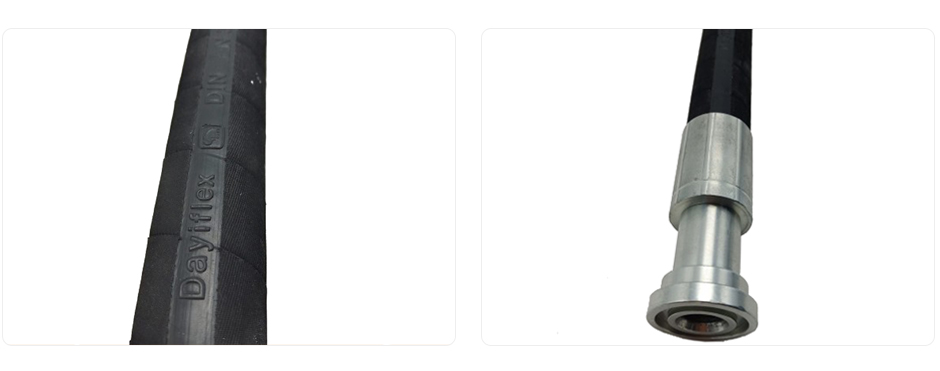
OEM double fiber braid hydraulic hoses are critical components in fluid power systems across diverse industries, including construction, agriculture, material handling, and manufacturing. These hoses facilitate the transmission of hydraulic fluid under high pressure, enabling the operation of heavy machinery and complex equipment. Their construction, employing a synthetic rubber inner tube reinforced with two layers of high-tensile steel fiber braid, distinguishes them from other hose types. This design delivers superior pressure capacity, flexibility, and durability compared to single-braid or non-reinforced hoses. Understanding the nuances of their material composition, manufacturing processes, performance characteristics, and potential failure modes is paramount for procurement managers, engineers, and maintenance personnel seeking reliable and safe hydraulic systems. The increasing demand for precise control, higher operating pressures, and extended service life drives continuous innovation in double fiber braid hose technology. This guide provides a comprehensive overview of these critical parameters.
Material Science & Manufacturing
The core of a double fiber braid hydraulic hose begins with the inner tube, typically constructed from a synthetic rubber compound formulated for compatibility with the hydraulic fluid being conveyed (e.g., mineral oil, synthetic fluids, water-glycol). Common rubber formulations include Nitrile (NBR), Ethylene Propylene Diene Monomer (EPDM), and Chlorinated Polyethylene (CM). NBR offers excellent resistance to petroleum-based fluids, while EPDM excels in applications involving water and phosphate ester fluids. CM provides superior ozone and weather resistance. The reinforcement layers are composed of high-strength steel wire braid, meticulously woven in a double-helix pattern. The braid angle is critical; typically around 55 degrees, optimized to balance flexibility and pressure resistance. The outer cover, usually a synthetic rubber like Polyurethane, provides abrasion, ozone, and weather protection. Manufacturing involves several key processes: inner tube extrusion, braid application (typically using a braiding machine with precisely controlled tension and pitch), hose assembly, curing (vulcanization) to cross-link the rubber compounds, and final inspection. Parameter control during extrusion (temperature, pressure, screw speed) is crucial for consistent tube dimensions and material properties. Braid tension directly impacts pressure rating; uneven tension leads to localized stress concentrations and potential failure. Curing time and temperature must be optimized to achieve full cross-linking without degrading the rubber. Quality control employs hydrostatic testing, impulse testing, and dimensional checks to ensure adherence to specifications.
Performance & Engineering
Double fiber braid hydraulic hoses are engineered to withstand extreme pressures, temperatures, and dynamic loads. Force analysis focuses on hoop stress within the hose wall due to internal pressure. The steel braid provides the primary resistance to this stress, preventing expansion and potential rupture. Burst pressure is a critical performance metric, typically four times the working pressure. Flexibility is equally important, allowing for routing around obstacles and minimizing stress caused by bending. Fatigue life, the number of pressure cycles the hose can endure before failure, is a key indicator of durability. Environmental resistance considerations include exposure to ozone, UV radiation, and corrosive fluids. The hose must maintain its integrity and performance characteristics over a wide temperature range. Compliance requirements vary by region and application. For example, SAE J517 (USA) and EN 853 (Europe) specify dimensional tolerances, pressure ratings, and test methods. In safety-critical applications (e.g., aerospace, mining), additional certifications may be required. Proper hose routing, fitting selection (critical to prevent leaks and stress concentrations), and guard protection are essential for maximizing performance and ensuring operational safety. Improper installation or inadequate protection can significantly reduce hose lifespan and create hazardous conditions.
Technical Specifications
| Parameter | Unit | Typical Value (SAE 100R2AT Equivalent) | Test Standard |
|---|---|---|---|
| Working Pressure | psi | 2250 | SAE J517 |
| Burst Pressure | psi | 9000 | SAE J517 |
| Temperature Range | °F | -40 to +212 | SAE J517 |
| Inner Tube Material | - | NBR (Nitrile Rubber) | ASTM D2000 |
| Reinforcement | - | Two Steel Wire Braids | SAE J517 |
| Outer Cover Material | - | Polyurethane | ASTM D2000 |
Failure Mode & Maintenance
Common failure modes in double fiber braid hydraulic hoses include: 1) Burst Failure: Caused by exceeding the working pressure or fatigue weakening of the reinforcement braid. Typically occurs suddenly with significant fluid release. 2) Pinholing: Develops in the inner tube due to erosion from fluid contaminants or degradation of the rubber compound. Results in slow leaks. 3) Cover Abrasion: Wears through the outer cover due to external abrasion, exposing the braid and accelerating corrosion. 4) Fitting Failure: Leaks or separation at the hose-fitting interface due to improper installation, corrosion, or material incompatibility. 5) Kinking & Twisting: Restricts fluid flow and induces stress concentrations, leading to premature failure. Maintenance practices to mitigate these failures include regular visual inspections for abrasions, kinks, and leaks; pressure testing to verify hose integrity; and proper fluid maintenance (filtration, contamination control). Damaged hoses should be replaced immediately. Avoid sharp bends and excessive twisting during installation. Use compatible fittings and ensure proper crimping. Implement a preventative maintenance schedule based on operating conditions and hose usage. Corrosion can be prevented through the application of protective coatings and the use of corrosion-resistant fittings. Careful monitoring of fluid conditions (viscosity, temperature, contamination levels) is also vital.
Industry FAQ
Q: What is the primary advantage of a double fiber braid hose over a single braid hose?
A: The primary advantage is a significantly higher pressure rating and improved fatigue life. The double braid construction provides twice the reinforcement, allowing the hose to withstand substantially higher pressures and repeated pressure cycles without failure. This translates to a longer service life and increased safety in demanding applications.
Q: How does hose layline marking contribute to traceability and quality control?
A: Hose layline markings provide critical information about the manufacturer, date of manufacture, pressure rating, and hose specification. This allows for easy traceability in case of a failure investigation and verifies that the hose meets the required standards. Proper layline markings are a key indicator of a reputable supplier.
Q: What impact does hydraulic fluid compatibility have on hose lifespan?
A: Incorrect fluid compatibility can lead to rapid degradation of the inner tube, causing swelling, softening, and eventual failure. It’s crucial to select a hose with an inner tube material specifically designed for the intended hydraulic fluid. Refer to compatibility charts provided by hose manufacturers.
Q: What are the best practices for storing hydraulic hoses to prevent degradation?
A: Hoses should be stored in a cool, dry, and dark environment, away from direct sunlight, ozone sources (e.g., electric motors), and extreme temperatures. Avoid bending or kinking the hoses during storage. Properly cap the ends to prevent contamination. Rotating stock helps ensure older hoses are used first.
Q: What role do fittings play in the overall performance and reliability of a hydraulic hose assembly?
A: Fittings are critically important. Incorrectly sized or improperly crimped fittings can create stress concentrations, leading to leaks and premature failure. Fittings must be compatible with the hose material and rated for the system’s operating pressure. Using high-quality fittings and following proper crimping procedures are essential for a reliable assembly.
Conclusion
OEM double fiber braid hydraulic hoses represent a robust and reliable solution for high-pressure fluid conveyance in demanding industrial applications. Their performance is directly linked to the meticulous selection of materials, precise manufacturing processes, and adherence to stringent industry standards. Understanding the interplay between hose construction, operating parameters, and potential failure modes is essential for optimizing system performance, ensuring operational safety, and minimizing downtime.
Future advancements in this field will likely focus on developing even more durable rubber compounds, implementing advanced braid technologies (e.g., spiral reinforcement), and incorporating intelligent sensing capabilities for real-time monitoring of hose condition. Proper selection, installation, and maintenance remain paramount for maximizing the lifespan and reliability of these critical components.