
Apr . 01, 2024 17:55 Back to list
oem double fiber braid hydraulic hose manufacturers Performance Analysis
Introduction
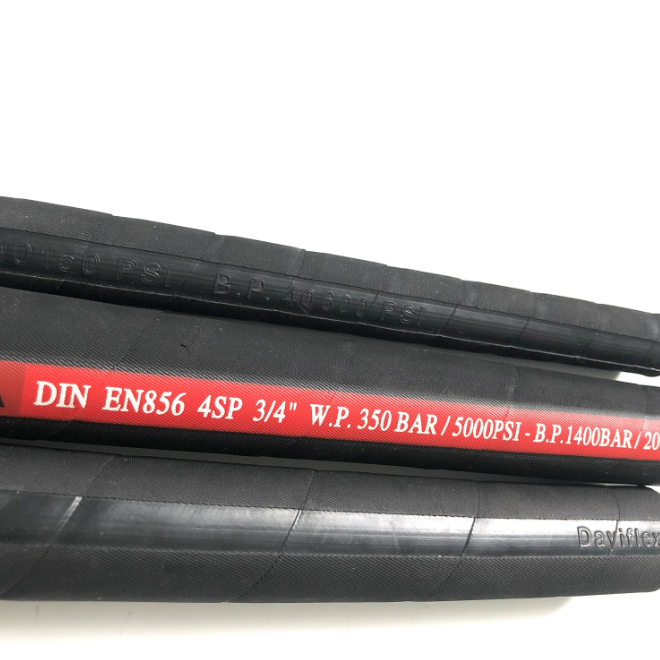
OEM double fiber braid hydraulic hose represents a critical component in fluid power systems across diverse industrial applications. These hoses are engineered to convey hydraulic fluid under high pressure, transferring power from pumps to actuators. Their construction differentiates them from single-wire braid hoses through the inclusion of two layers of high-tensile steel wire braid reinforcement, offering significantly enhanced pressure capacity, flexibility, and durability. Positioned within the industrial supply chain, they serve as a vital link between hydraulic power units and their operational endpoints – encompassing construction equipment, agricultural machinery, material handling systems, and various manufacturing processes. Core performance metrics revolve around burst pressure, working pressure, impulse pressure resistance, temperature range, and fluid compatibility. Understanding these parameters is paramount for engineers and procurement managers to select the appropriate hose for a given application, minimizing downtime and maximizing operational safety.
Material Science & Manufacturing
The construction of a double fiber braid hydraulic hose begins with the inner tube, typically composed of synthetic rubbers exhibiting resistance to the conveyed fluid. Commonly used materials include nitrile rubber (NBR) for petroleum-based fluids, ethylene propylene diene monomer (EPDM) for phosphate ester fluids, and fluorocarbon (FKM/Viton) for aggressive chemicals and high temperatures. The physical properties of these elastomers—tensile strength, elongation at break, and hardness—directly impact the hose’s flexibility and resistance to permeation. The reinforcement layers consist of high-tensile steel wire, precisely braided in a double helix configuration. Wire diameter, braid angle, and the number of wires per inch dictate the hose’s pressure rating and bend radius. The outer cover, usually a synthetic rubber like chloroprene (CR) or polyurethane (PU), provides abrasion, ozone, and weathering resistance. Manufacturing involves a multi-stage process. First, the inner tube is extruded. Subsequently, the steel wire braids are applied utilizing automated braiding machines, maintaining consistent tension and coverage. Following braiding, the outer cover is extruded over the reinforcement, and the hose is vulcanized – a process employing heat and pressure to crosslink the rubber compounds, achieving the desired physical and chemical properties. Critical parameters during vulcanization include temperature, time, and pressure, as these influence the rubber’s elasticity and resistance to degradation.
Performance & Engineering
The performance of a double fiber braid hydraulic hose is governed by several engineering principles. Force analysis focuses on hoop stress – the stress exerted on the hose wall due to internal pressure. The double braid reinforcement significantly mitigates this stress, preventing rupture. Burst pressure is determined by standardized testing (SAE J517, EN 853, ISO 3862), exceeding the maximum working pressure by a safety factor (typically 4:1). Impulse pressure resistance, crucial in applications with pulsating flows, is assessed by subjecting the hose to cyclic pressure fluctuations. Fatigue life is a critical parameter; repeated flexing and pressure cycling can lead to fatigue cracking. Finite Element Analysis (FEA) is employed to model stress distribution and predict fatigue life under various operating conditions. Environmental resistance is paramount. Exposure to extreme temperatures, UV radiation, and corrosive substances can degrade the rubber compounds. Material selection must account for the specific operating environment. Compliance with industry standards—including SAE (Society of Automotive Engineers), EN (European Norms), and ISO (International Organization for Standardization)—is mandatory, ensuring interchangeability, safety, and reliable performance. The bend radius is also a crucial engineering consideration. Exceeding the minimum bend radius can lead to kinking and hose failure, while a too-large bend radius can impact system efficiency.
Technical Specifications
| Parameter | Unit | Specification Range (Typical) | Test Standard |
|---|---|---|---|
| Working Pressure | MPa | 10 – 42 | SAE J517 |
| Burst Pressure | MPa | 40 – 168 | SAE J517 |
| Impulse Pressure | Cycles to Failure | > 100,000 @ 1.5x Working Pressure | ISO 3862 |
| Temperature Range | °C | -40 to +100 (NBR), -30 to +150 (EPDM) | SAE J517 |
| Inner Tube Material | - | NBR, EPDM, FKM | ASTM D2000 |
| Reinforcement | - | Double Steel Wire Braid | SAE J517 |
Failure Mode & Maintenance
Double fiber braid hydraulic hoses are susceptible to several failure modes. Fatigue cracking, originating from repeated flexing and pressure cycling, is a common issue, particularly in applications with high vibration or frequent bending. This can be mitigated by minimizing bend radius and ensuring proper hose routing. Abrasion of the outer cover, caused by contact with abrasive surfaces, weakens the hose and can lead to reinforcement exposure and corrosion. Regular inspection for cuts, abrasions, and wear is critical. Permeation of hydraulic fluid through the inner tube, resulting in fluid loss and reduced system efficiency, can occur with incompatible fluids or aging rubber. Utilizing the correct fluid and periodic hose replacement are crucial. Corrosion of the steel wire braid, initiated by moisture ingress or exposure to corrosive environments, weakens the reinforcement. Protecting the hose from exposure to harsh chemicals and applying corrosion inhibitors can help. Kinking, caused by exceeding the minimum bend radius, restricts fluid flow and can permanently damage the hose. Maintenance involves regular visual inspections, leak checks, and pressure testing. Hoses should be replaced if any signs of damage, wear, or degradation are observed. Proper storage – away from direct sunlight, extreme temperatures, and ozone sources – is essential to prolong hose life. Always depressurize the system before disconnecting or replacing a hose.
Industry FAQ
Q: What is the primary advantage of a double braid hose over a single braid hose?
A: The primary advantage lies in the significantly higher pressure capacity and increased impulse pressure resistance. The double braid construction provides enhanced strength and flexibility, making it suitable for demanding applications involving high-pressure hydraulic systems and pulsating flows. It also exhibits a longer service life under similar operating conditions.
Q: How does temperature affect the performance of a hydraulic hose?
A: Extreme temperatures can degrade the rubber compounds used in the inner tube and outer cover. High temperatures accelerate oxidation and hardening, reducing flexibility and increasing the risk of cracking. Low temperatures can cause the rubber to become brittle and less resistant to impact. Selecting a hose with a temperature range appropriate for the operating environment is crucial.
Q: What fluid compatibility considerations are important when selecting a hydraulic hose?
A: Incompatibility between the hydraulic fluid and the inner tube material can lead to swelling, softening, and permeation, resulting in fluid loss and hose failure. It's essential to consult a fluid compatibility chart to ensure the hose material is resistant to the specific fluid being used. NBR is suitable for petroleum-based fluids, EPDM for phosphate ester fluids, and FKM for aggressive chemicals.
Q: What are the key factors to consider when determining the proper hose length?
A: Hose length should account for system layout, movement during operation, and bend radius limitations. Avoid excessive length, as this can introduce slack and increase the risk of abrasion. Ensure sufficient length to accommodate all expected movements and maintain a safe bend radius. Accurate measurement is critical to prevent binding or kinking.
Q: How frequently should hydraulic hoses be inspected and replaced?
A: Regular visual inspections should be conducted at least monthly, or more frequently in demanding applications. Inspect for cuts, abrasions, leaks, kinks, and any signs of degradation. Hoses should be replaced immediately if any damage is detected, or according to the manufacturer's recommended service life, typically every 5-7 years regardless of visual condition.
Conclusion
OEM double fiber braid hydraulic hoses are engineered components demanding precise material selection, manufacturing control, and diligent maintenance. Their performance is intrinsically linked to understanding the interplay between pressure ratings, fluid compatibility, temperature resistance, and environmental factors. Selecting the appropriate hose for a specific application requires a thorough assessment of operating conditions and adherence to relevant industry standards.
Looking forward, advancements in material science – including the development of more durable and chemically resistant elastomers – will continue to enhance hose performance and longevity. Predictive maintenance techniques, leveraging sensor technology and data analytics, will enable proactive identification of potential failures, minimizing downtime and maximizing system reliability. Continued adherence to stringent quality control measures throughout the manufacturing process remains paramount to ensuring the safe and efficient operation of hydraulic systems across a broad spectrum of industrial applications.