
Apr . 01, 2024 17:55 Back to list
oem double fiber braid hydraulic hose factories Performance Engineering
Introduction
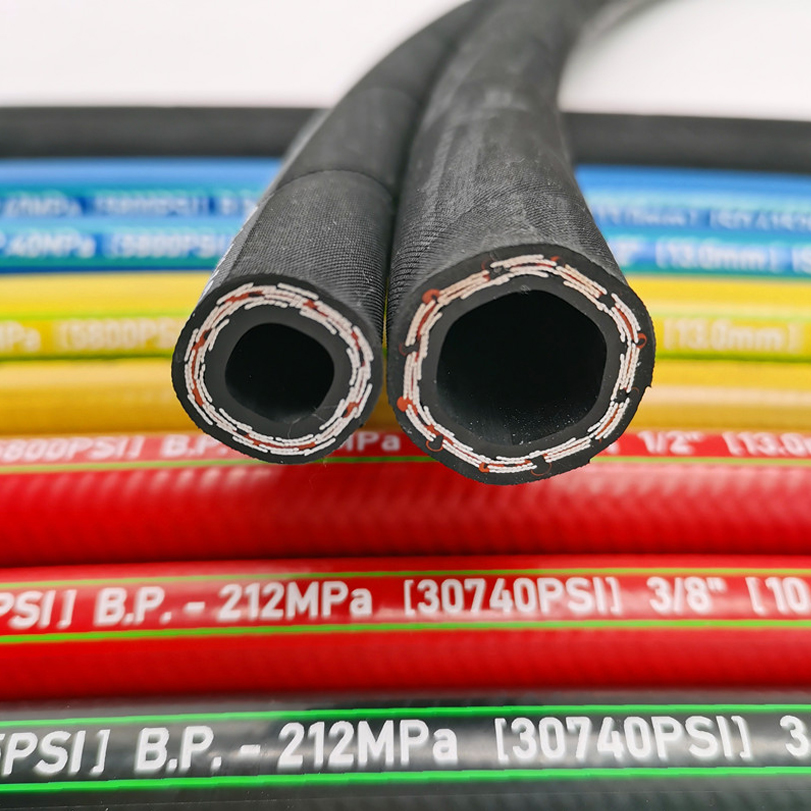
OEM double fiber braid hydraulic hoses are critical components in fluid power systems across a diverse range of industries, including construction, agriculture, manufacturing, and transportation. These hoses are engineered to safely and reliably transmit hydraulic fluid under high pressure and in challenging environmental conditions. Their construction, featuring an inner tube, multiple layers of reinforcement (specifically, a double fiber braid), and an outer cover, differentiates them from simpler hose types. The core function lies in the safe transmission of hydraulic power, directly impacting system efficiency and operational safety. The market demands consistently high performance, durability, and adherence to stringent industry standards. Key performance characteristics include pressure rating, temperature range, fluid compatibility, and resistance to abrasion and kinking. The increasing demand for miniaturization and higher operating pressures is driving ongoing innovation in material science and hose construction techniques within OEM manufacturing.
Material Science & Manufacturing
The manufacturing of double fiber braid hydraulic hoses begins with the selection of appropriate materials. The inner tube is typically composed of synthetic rubber compounds, such as nitrile (NBR), ethylene propylene diene monomer (EPDM), or fluorocarbon (FKM), chosen for their compatibility with various hydraulic fluids. Nitrile offers excellent resistance to petroleum-based fluids, EPDM is well-suited for phosphate ester fluids, and FKM provides superior resistance to high temperatures and aggressive chemicals. The reinforcement layer consists of high-tensile strength fibers, commonly polyester or aramid (Kevlar), braided in a double helix pattern. This braid provides the hose’s pressure resistance and flexibility. The outer cover is usually made of chloroprene (CR) rubber, known for its resistance to abrasion, weathering, and ozone. The manufacturing process involves several key steps: inner tube extrusion, fiber braiding, hose assembly, and outer cover extrusion. Precise control of braiding tension is critical; inconsistent tension leads to localized weaknesses and premature failure. Vulcanization, a chemical process involving heating the rubber compounds with sulfur or peroxides, is essential for crosslinking the polymer chains, enhancing strength, elasticity, and resistance to degradation. Post-curing processes ensure dimensional stability and optimal physical properties. Regular testing of raw materials (tensile strength, elongation, hardness) and in-process quality control (braid angle, wall thickness) are vital to ensure consistent product quality.
Performance & Engineering
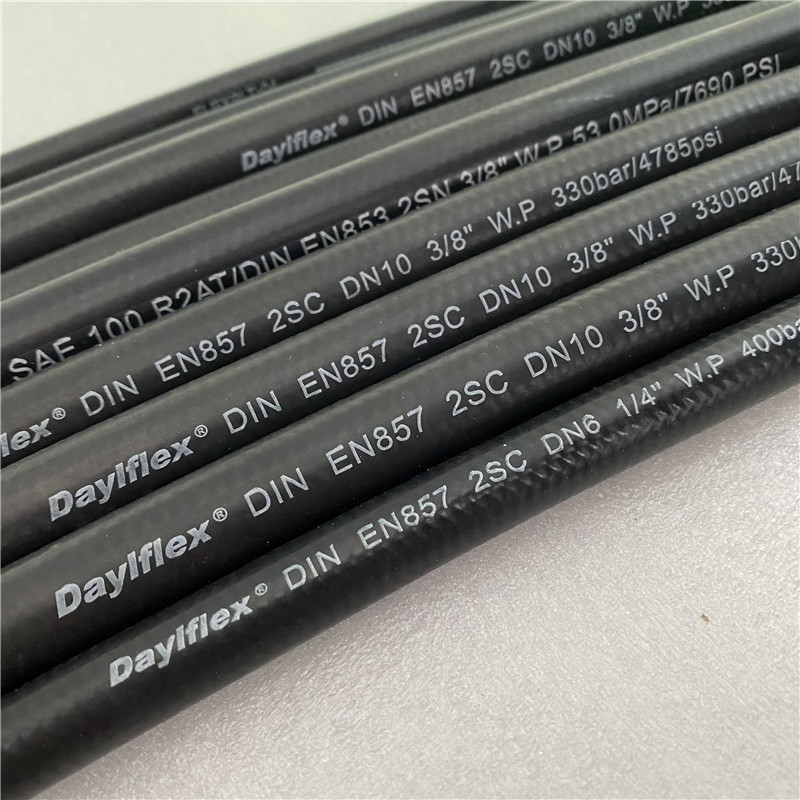
The performance of a double fiber braid hydraulic hose is governed by several engineering principles. Burst pressure, working pressure, and safety factor are primary considerations. Burst pressure represents the maximum pressure the hose can withstand before failure, while working pressure is the maximum recommended operating pressure, typically expressed as a fraction of the burst pressure (e.g., 1/4). The safety factor accounts for pressure surges, temperature fluctuations, and dynamic loading. Hose flexibility is determined by the braid angle and the inner tube material’s elasticity. A tighter braid angle generally increases pressure resistance but reduces flexibility. Environmental resistance is crucial. Ozone cracking, caused by exposure to ozone in the atmosphere, can degrade the rubber compounds. UV radiation can also cause embrittlement and discoloration. Fluid compatibility is paramount; incompatibility leads to swelling, softening, or degradation of the inner tube, resulting in leaks and failure. Fatigue resistance is assessed through cyclic pressure testing, simulating the repeated pressure fluctuations experienced in hydraulic systems. The hose’s ability to withstand bending and flexing without cracking or delaminating is vital. Compliance with industry standards such as SAE J517 and EN 853 dictates minimum performance requirements and testing procedures. Finite Element Analysis (FEA) is increasingly used to optimize hose designs and predict performance under various loading conditions.
Technical Specifications
| Parameter | Unit | Typical Value (NBR Inner Tube, Polyester Braid, CR Cover) | Testing Standard |
|---|---|---|---|
| Working Pressure | MPa | 20 | SAE J517 |
| Burst Pressure | MPa | 80 | SAE J517 |
| Temperature Range | °C | -40 to +100 | SAE J517 |
| Inner Tube Material | - | Nitrile Rubber (NBR) | ASTM D2000 |
| Reinforcement Braid | - | Polyester Fiber (Double Braid) | ASTM D792 |
| Outer Cover Material | - | Chloroprene Rubber (CR) | ASTM D2000 |
| Minimum Bend Radius | mm | 4D (D = Hose Inner Diameter) | Manufacturer Specification |
Failure Mode & Maintenance
Double fiber braid hydraulic hoses are susceptible to several failure modes. Fatigue cracking, caused by repeated flexing and pressure cycling, is a common issue, often initiating at the braid crossover points. Abrasion, resulting from contact with abrasive surfaces, can wear through the outer cover, exposing the reinforcement braid and leading to corrosion. Kinking, caused by sharp bends, can restrict fluid flow and damage the inner tube. Chemical degradation, due to incompatibility with the hydraulic fluid, can cause swelling, softening, or cracking of the rubber compounds. Corrosion of the reinforcement braid, particularly in marine environments or when exposed to corrosive fluids, weakens the hose and increases the risk of rupture. Thermal degradation, caused by prolonged exposure to high temperatures, can lead to hardening and cracking of the rubber compounds. Regular visual inspections are essential to identify signs of wear, damage, or leaks. Hoses should be replaced immediately if any signs of damage are detected. Proper routing and support are crucial to prevent kinking and abrasion. Using the correct hydraulic fluid and maintaining a clean fluid system helps to prevent chemical degradation and corrosion. Periodic pressure testing can help to identify hoses that are nearing the end of their service life. Proper storage conditions (cool, dry, and dark) are essential to prevent degradation of the rubber compounds.
Industry FAQ
Q: What is the significance of the safety factor in hydraulic hose selection?
A: The safety factor is a critical design parameter that accounts for unforeseen pressure surges, temperature variations, and dynamic loading in the hydraulic system. A higher safety factor provides a greater margin of protection against hose failure. Industry standards typically recommend a safety factor of 4:1, meaning the burst pressure should be at least four times the working pressure. Choosing a hose with an inadequate safety factor increases the risk of catastrophic failure, potentially causing injury or damage to equipment.
Q: How does the choice of inner tube material affect hose performance?
A: The inner tube material must be compatible with the hydraulic fluid being used. Incompatibility can lead to swelling, softening, or degradation of the inner tube, resulting in leaks and failure. Nitrile rubber (NBR) is commonly used for petroleum-based fluids, while ethylene propylene diene monomer (EPDM) is suitable for phosphate ester fluids. Fluorocarbon (FKM) offers superior resistance to high temperatures and aggressive chemicals. Selecting the wrong inner tube material can drastically reduce hose life and compromise system reliability.
Q: What are the primary causes of hose fatigue failure?
A: Hose fatigue failure is typically caused by repeated flexing and pressure cycling. The constant bending and stretching of the hose materials weaken the structure over time, leading to crack initiation and propagation. Factors that exacerbate fatigue failure include high operating pressures, sharp bends, and abrasive environments. Proper hose routing and support, along with the use of hoses with high fatigue resistance, can help to mitigate this risk.
Q: What is the role of the fiber braid in hydraulic hose construction?
A: The fiber braid provides the hose’s pressure resistance and flexibility. The braided fibers, typically polyester or aramid, are interlaced in a helical pattern, creating a strong and resilient structure that can withstand high internal pressures. The braid angle influences both pressure resistance and flexibility; a tighter braid angle increases pressure resistance but reduces flexibility. A double braid construction provides significantly higher pressure capacity compared to a single braid.
Q: How important is proper hose routing and support?
A: Proper hose routing and support are critical for maximizing hose life and preventing premature failure. Hoses should be routed away from sharp edges, hot surfaces, and abrasive materials. Support clamps should be used to prevent excessive bending and vibration. Avoid twisting the hose during installation, as this can weaken the reinforcement braid. Correct routing and support minimize stress on the hose, reducing the risk of kinking, abrasion, and fatigue failure.
Conclusion
OEM double fiber braid hydraulic hoses represent a sophisticated engineering solution for the safe and reliable transmission of hydraulic power. Their performance is fundamentally linked to the careful selection of materials, precise manufacturing processes, and adherence to rigorous industry standards. Understanding the interplay between pressure ratings, temperature ranges, fluid compatibility, and environmental resistance is crucial for optimizing hose selection and ensuring long-term system reliability.
Ongoing advancements in material science and hose construction techniques continue to push the boundaries of performance. The increasing demand for higher operating pressures, improved flexibility, and enhanced durability will drive further innovation in this field. Proper installation, maintenance, and regular inspection are essential to maximize hose life and prevent catastrophic failure, ultimately contributing to the overall safety and efficiency of hydraulic systems.