
Apr . 01, 2024 17:55 Back to list
oem dayco hydraulic hose suppliers Performance Analysis

Introduction
Hydraulic hoses supplied as OEM components to Dayco represent a critical link in the power transmission systems of diverse industrial and mobile applications. These aren't merely conduits for pressurized fluid; they are engineered systems designed to withstand extreme conditions, maintain fluid cleanliness, and ensure operational reliability. The demand for high-performance hydraulic hoses is driven by increasing machine complexity, higher operating pressures, and stringent safety requirements. OEM Dayco hydraulic hose suppliers must demonstrate mastery of material science, precision manufacturing, and adherence to rigorous quality control standards to meet the exacting needs of Dayco and its customer base. This guide details the critical aspects of these hoses, from material composition and manufacturing processes to performance characteristics, failure modes, and relevant industry standards. The industry faces core pain points surrounding hose life prediction, compatibility with emerging hydraulic fluids, and the need for reduced weight without compromising structural integrity.
Material Science & Manufacturing
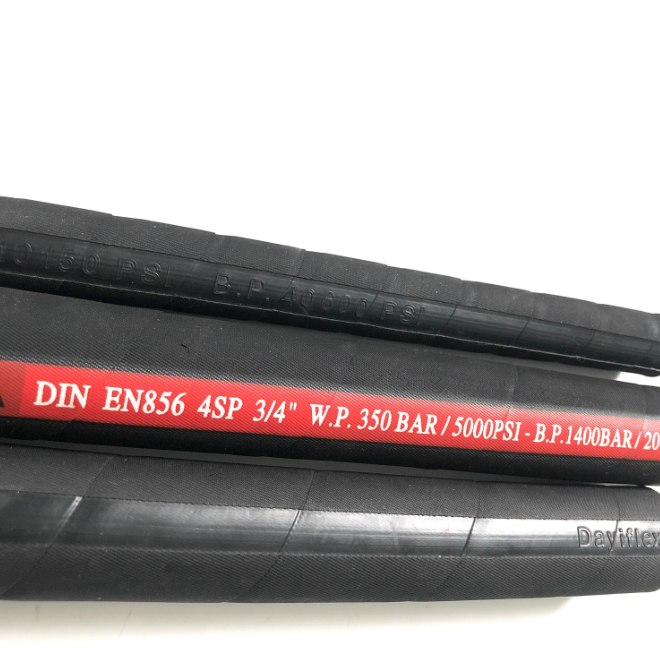
The foundation of any high-performance hydraulic hose lies in the careful selection and processing of its constituent materials. The core components typically include an inner tube, reinforcement layers, and an outer cover. Inner tubes are commonly constructed from nitrile rubber (NBR) for oil resistance, or fluoropolymers like PTFE for compatibility with aggressive fluids. Reinforcement layers, vital for pressure containment, often comprise multiple braids of high-tensile steel wire. Aramid fiber reinforcement is also employed to provide flexibility and reduce weight, though typically for lower-pressure applications. The outer cover, protecting the hose from abrasion, weathering, and chemical attack, generally consists of synthetic rubbers like polyurethane (PU) or chlorinated polyethylene (CPE).
Manufacturing processes are equally critical. The inner tube is often extruded, ensuring dimensional accuracy and consistent wall thickness. Reinforcement layers are applied through a braiding process, meticulously controlling braid angle and tension. Proper adhesion between layers is essential, typically achieved through chemical bonding and surface preparation. The outer cover is then extruded over the reinforcement. Key process parameters include extrusion temperature, braiding pressure, and curing time. Maintaining precise control over these parameters is paramount to achieving consistent mechanical properties and preventing defects such as porosity or delamination. Quality control measures at each stage, including dimensional checks, pressure testing, and material analysis, are mandatory. Specific Dayco specifications will dictate precise material grades, ply counts, and manufacturing tolerances. The use of non-destructive testing (NDT) methods, like ultrasonic inspection, is increasingly common for verifying reinforcement integrity.
Performance & Engineering
Hydraulic hose performance is dictated by its ability to withstand internal pressure, external loads, temperature fluctuations, and fluid compatibility. Force analysis is fundamental; hoses must resist burst pressure, working pressure (with a significant safety factor), and axial tension. Finite element analysis (FEA) is routinely used to model stress distribution under various loading conditions. The hose's bend radius is also critical; exceeding the minimum bend radius induces stress concentrations that can lead to premature failure. Environmental resistance is another key consideration. Exposure to ozone, UV radiation, and extreme temperatures can degrade the rubber compounds, reducing their flexibility and strength. Hydraulic fluids themselves pose challenges; incompatibility can cause swelling, softening, or cracking of the inner tube.
Compliance requirements are extensive, varying by region and application. SAE J517, for example, specifies performance standards for hydraulic hoses, including pressure ratings, temperature ranges, and bend radii. ISO 6897 covers minimum requirements for performance testing. In mobile applications, hoses must meet the requirements of ISO 10628, focusing on resistance to shock and vibration. Engineering design considerations include the selection of appropriate end fittings (e.g., crimped, threaded, or flanged) and the implementation of protective sleeves to prevent abrasion. The dynamic behavior of the hose, particularly in pulsating flow systems, must be analyzed to mitigate fatigue damage. Furthermore, considerations around fluid impulse resistance, and the effect of fluid velocity on hose life, are crucial.
Technical Specifications
| Parameter | Unit | Typical Value (NBR Inner Tube, Steel Wire Reinforcement) | Typical Value (PTFE Inner Tube, Aramid Reinforcement) |
|---|---|---|---|
| Working Pressure | MPa | 21 | 14 |
| Burst Pressure | MPa | 63 | 42 |
| Temperature Range | °C | -40 to +100 | -60 to +260 |
| Minimum Bend Radius | mm | 4D (D = Hose ID) | 6D (D = Hose ID) |
| Tensile Strength (Reinforcement) | MPa | 1770 | 3000 |
| Fluid Compatibility | - | Petroleum-based fluids | Wide range, including aggressive chemicals |
Failure Mode & Maintenance
Hydraulic hose failures can stem from a variety of causes. Fatigue cracking, induced by repeated flexing and pressure cycling, is a common failure mode, particularly in dynamic applications. Delamination, the separation of reinforcement layers from the inner tube or outer cover, weakens the hose and can lead to catastrophic failure. Abrasion, caused by external contact with abrasive surfaces, degrades the outer cover and exposes the reinforcement. Chemical attack, resulting from incompatibility with the hydraulic fluid, causes swelling, softening, or cracking of the rubber compounds. Oxidation, induced by exposure to oxygen and heat, degrades the rubber, reducing its elasticity and strength. Improper installation, such as excessive bending or incorrect crimping of end fittings, introduces stress concentrations and accelerates failure.
Preventative maintenance is crucial. Regular visual inspections should be conducted to identify signs of wear, such as cracks, abrasions, or swelling. Hose routing should be optimized to minimize bending and contact with abrasive surfaces. Fluid compatibility should be verified to prevent chemical attack. Hoses should be replaced at recommended intervals, or sooner if signs of damage are detected. When replacing hoses, ensure the correct specifications are followed, including pressure rating, temperature range, and fluid compatibility. Proper crimping techniques are essential for ensuring a secure and leak-free connection between the hose and end fittings. Implementing a hose management program, including record-keeping and scheduled inspections, is a best practice for maximizing hose life and preventing costly downtime.
Industry FAQ
Q: What is the impact of impulse pressure on hydraulic hose lifespan?
A: Impulse pressure, or pressure pulsations, significantly reduces hose life. Each pulse induces cyclic stress, leading to fatigue failure. Hoses designed for high-impulse applications utilize specialized reinforcement constructions and materials to withstand these stresses. Suppliers must thoroughly understand the operating conditions and select hoses rated for the expected impulse pressure.
Q: How does the selection of end fittings affect hose performance and reliability?
A: End fittings are critical. Incorrectly sized or incompatible fittings can lead to leaks or premature failure. Fittings must be rated for the hose's working pressure and compatible with the fluid being used. Proper crimping techniques are essential to ensure a secure connection. Corrosion resistance of the fitting material is also important, especially in harsh environments.
Q: What considerations are important when switching to a new hydraulic fluid?
A: Fluid compatibility is paramount. New fluids may not be compatible with existing hose materials, leading to swelling, softening, or cracking. Suppliers must verify the hose material’s compatibility with the new fluid before switching. A complete system flush may be necessary to remove any residual incompatible fluid.
Q: How can we mitigate the risk of abrasion damage to hydraulic hoses?
A: Implement protective measures such as hose guards, sleeves, or strategic routing to avoid contact with abrasive surfaces. Regularly inspect hoses for signs of wear and replace them proactively. Consider using hoses with abrasion-resistant outer covers.
Q: What are the key differences between spiral and braided hydraulic hose construction?
A: Braided hoses offer greater flexibility and are suitable for lower-pressure applications. Spiral hoses, with their continuous winding of reinforcement, provide higher pressure ratings and greater resistance to kinking. The choice depends on the specific application requirements.
Conclusion
OEM Dayco hydraulic hose suppliers operate within a technically demanding environment requiring precise material selection, manufacturing control, and a deep understanding of hydraulic system dynamics. The performance and longevity of these critical components directly impact the reliability and safety of the end application. Addressing the industry's pain points – predicting hose life, accommodating new fluids, and optimizing weight-to-strength ratios – requires continuous innovation and adherence to evolving industry standards.
Successful suppliers prioritize rigorous quality control, invest in advanced testing capabilities, and maintain close collaboration with Dayco to meet its specific needs. Future trends, such as the adoption of smart hose technologies incorporating sensors for condition monitoring, will further enhance performance and preventative maintenance. Ultimately, a comprehensive approach to hydraulic hose engineering, encompassing material science, manufacturing expertise, and a commitment to continuous improvement, is essential for success in this competitive market.