
Apr . 01, 2024 17:55 Back to list
oem dayco hydraulic hose supplier Performance Analysis
Introduction
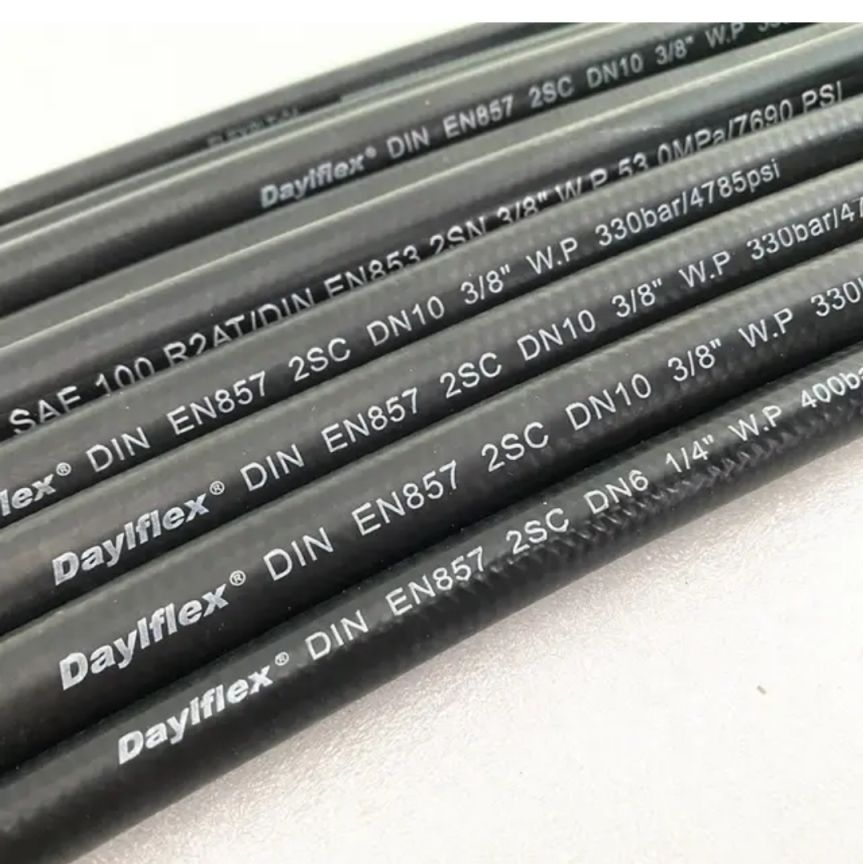
OEM Dayco hydraulic hoses represent a critical component within fluid power systems across a diverse range of industries, including construction, agriculture, mining, and manufacturing. Positioned within the supply chain as a crucial intermediary between raw material producers and equipment manufacturers, these hoses are engineered to reliably transmit hydraulic fluid, enabling the operation of heavy machinery and precision control systems. Their performance is dictated by several factors, including pressure rating, temperature range, fluid compatibility, and abrasion resistance. Core performance characteristics center around maintaining consistent fluid delivery under demanding conditions, preventing leaks, and ensuring prolonged operational life, directly impacting overall system efficiency and minimizing downtime. The increasing demand for higher operating pressures and environmentally-resistant materials drives continuous innovation in hydraulic hose design and manufacturing, requiring a deep understanding of material science and engineering principles.
Material Science & Manufacturing
The construction of Dayco hydraulic hoses typically involves several layers, each contributing to specific performance characteristics. The innermost layer, the tube, is commonly composed of synthetic rubber compounds like nitrile (NBR), ethylene propylene diene monomer (EPDM), or fluoropolymers (FKM/Viton), selected for their compatibility with the intended hydraulic fluid. NBR offers good resistance to petroleum-based fluids, while EPDM excels in phosphate ester fluid compatibility, and FKM provides superior resistance to high temperatures and aggressive chemicals. The reinforcement layer, crucial for withstanding high pressures, utilizes multiple plies of high-tensile steel wire, spirally or braided, depending on the pressure rating requirement. Braided construction generally provides higher burst pressure than spiral wound. An intermediate cover layer of synthetic rubber provides adhesion between the reinforcement and the outer cover. Finally, the outer cover, typically a blend of synthetic rubbers like polyurethane or chloroprene, provides abrasion, ozone, and weathering resistance.
Manufacturing processes begin with extrusion of the inner tube, followed by precise winding or braiding of the reinforcement layers. Precise tension control during reinforcement application is paramount, as it directly impacts the hose’s burst pressure and fatigue life. The outer cover is then extruded over the reinforcement, followed by vulcanization – a curing process utilizing heat and pressure to crosslink the rubber polymers, imparting elasticity and durability. Key parameter control during vulcanization includes temperature uniformity, pressure consistency, and curing time, directly affecting the final product's physical properties, such as hardness, tensile strength, and elongation at break. Post-vulcanization, hoses undergo rigorous testing, including pressure testing, impulse testing, and dimensional verification, to ensure compliance with industry standards.

Performance & Engineering
Hydraulic hose performance is fundamentally governed by principles of fluid mechanics and material stress analysis. The primary performance metric is working pressure, defined as the maximum continuous operating pressure at a specified temperature. Burst pressure, typically four times the working pressure, represents the point of catastrophic failure. Impulse testing simulates the effects of pressure pulsations, a common occurrence in hydraulic systems, and assesses the hose’s resistance to fatigue cracking. Factors impacting hose life include pressure magnitude, frequency of pressure cycles, fluid temperature, and external abrasion. Force analysis focuses on hoop stress within the hose wall, which increases with pressure and decreases with hose diameter.
Environmental resistance is critical. Ozone cracking is mitigated through the use of protective polymers in the outer cover. UV exposure can degrade rubber compounds, necessitating the inclusion of UV stabilizers. Chemical compatibility is paramount; incompatible fluids can cause swelling, softening, or degradation of the inner tube, leading to leaks and failure. Compliance requirements are stringent, varying by region. SAE J517 (USA), EN 853 (Europe), and GB/T 3686 (China) are key standards defining hose construction, performance, and marking requirements. Correct hose assembly, including proper fitting selection and crimping, is critical. Improper crimping can lead to premature failure due to fitting blow-off or hose deformation.
Technical Specifications
| Parameter | Unit | Typical Value (NBR Tube, Steel Wire Braid) | Typical Value (EPDM Tube, Spiral Wire Reinforcement) |
|---|---|---|---|
| Working Pressure | PSI | 2000 | 3000 |
| Burst Pressure | PSI | 8000 | 12000 |
| Temperature Range | °F | -40 to 212 | -40 to 250 |
| Inner Tube Material | - | Nitrile Rubber (NBR) | Ethylene Propylene Diene Monomer (EPDM) |
| Reinforcement | - | Steel Wire Braid (Multiple Plies) | Spiral Wound Steel Wire |
| Outer Cover | - | Polyurethane | Chloroprene |
Failure Mode & Maintenance
Common failure modes in hydraulic hoses include burst failure due to exceeding pressure limits, fatigue cracking caused by repeated pressure cycles and vibration, abrasion damage from external contact, and degradation of the rubber compounds due to chemical attack or UV exposure. Pinholes can develop in the inner tube due to internal corrosion or particulate contamination in the hydraulic fluid. Fitting failures, such as blow-off or deformation, are often attributed to improper crimping or incorrect fitting selection.
Preventative maintenance is crucial. Regular visual inspections should identify signs of abrasion, cracking, bulging, or leakage. Fluid analysis can detect contamination or degradation, indicating the need for fluid replacement. Proper hose routing, avoiding sharp bends and direct contact with abrasive surfaces, extends hose life. Crimping procedures must adhere to manufacturer specifications, utilizing calibrated crimping equipment. When replacing hoses, ensure compatibility with the hydraulic fluid. Store hoses in a cool, dry, and dark environment to minimize degradation. Damaged hoses should be replaced immediately; patching is not recommended as it compromises structural integrity. Implementing a hose management program that tracks hose age, usage, and maintenance history improves reliability and safety.
Industry FAQ
Q: What is the impact of hydraulic fluid type on hose selection?
A: Hydraulic fluid compatibility is paramount. Different fluids require different tube materials. For example, phosphate ester fluids require EPDM, while petroleum-based fluids are generally compatible with NBR. Using an incompatible fluid will lead to swelling, softening, and ultimately, hose failure. It's crucial to consult fluid compatibility charts and manufacturer recommendations.
Q: How does temperature affect hydraulic hose performance?
A: Temperature extremes significantly impact hose performance. High temperatures can accelerate rubber degradation and reduce burst pressure. Low temperatures can decrease flexibility and increase the risk of cracking. Hose specifications include operating temperature ranges; exceeding these limits compromises hose integrity.
Q: What are the key considerations when selecting a hose reinforcement type (braided vs. spiral)?
A: Braided reinforcement offers higher burst pressure in a more compact design, making it suitable for applications with space constraints. Spiral reinforcement provides greater flexibility and is often preferred for applications requiring tight bend radii, but typically has a lower burst pressure for the same size hose.
Q: What are the consequences of improper hose crimping?
A: Improper crimping is a leading cause of hose failure. Under-crimping can lead to fitting blow-off under pressure. Over-crimping can deform the hose and reduce its burst pressure. Using calibrated crimping equipment and following manufacturer's specifications is essential.
Q: How often should hydraulic hoses be inspected and replaced?
A: The inspection frequency depends on the application and operating conditions. A visual inspection should be performed at least annually, and more frequently in harsh environments. Hoses should be replaced immediately if any signs of damage are observed, or after a predetermined service life, even if no visible damage is present.
Conclusion
OEM Dayco hydraulic hoses are engineered solutions requiring a comprehensive understanding of material science, manufacturing processes, and application-specific performance requirements. Their reliable operation is contingent on selecting the correct hose construction, ensuring proper assembly, and implementing a robust preventative maintenance program. The industry continues to evolve, with a focus on developing hoses that can withstand higher pressures, operate at wider temperature ranges, and resist increasingly aggressive fluids.
Future trends include the development of lightweight hose materials, smart hoses with integrated sensors for condition monitoring, and environmentally friendly hose formulations. Adhering to relevant industry standards like SAE, EN, and GB/T is crucial for ensuring product safety, performance, and longevity. Careful consideration of these factors is vital for minimizing downtime, maximizing efficiency, and ensuring the safe operation of hydraulic systems.