
Apr . 01, 2024 17:55 Back to list
oem competitive price hydraulic hose manufacturer Performance Analysis
Introduction
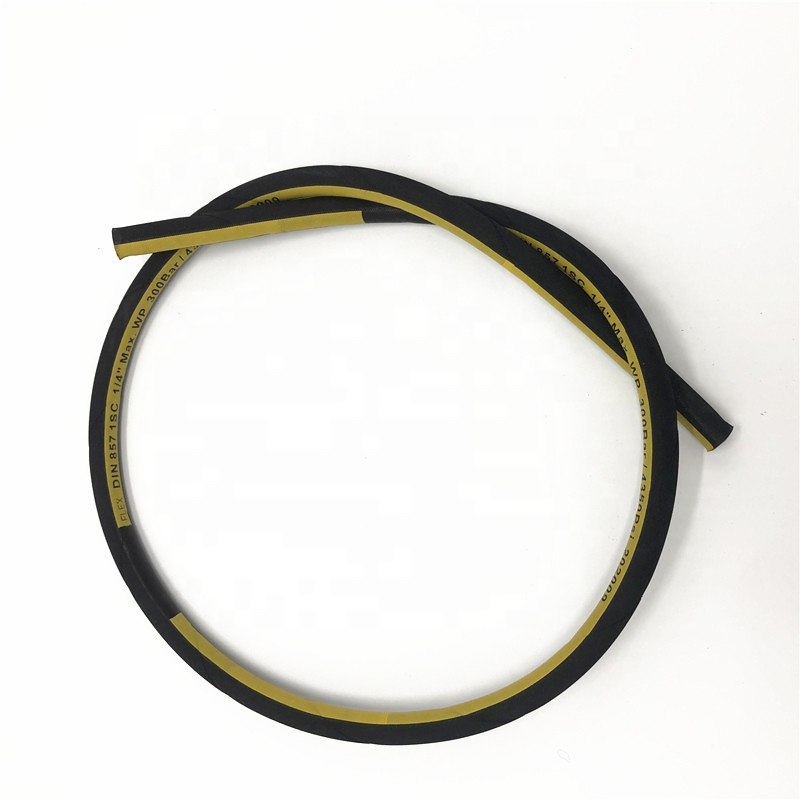
Hydraulic hoses, integral components in fluid power systems, transmit hydraulic fluid to actuators and other components. The 'oem competitive price hydraulic hose manufacturer' sector focuses on producing hoses designed for Original Equipment Manufacturers (OEMs), demanding stringent quality control, customization capabilities, and cost-effectiveness. These hoses are found in a diverse range of applications, including construction equipment, agricultural machinery, material handling, and industrial manufacturing. Core performance characteristics center around pressure rating, temperature resistance, flexibility, and resistance to fluid compatibility and external abrasion. Industry pain points revolve around maintaining consistent quality across large production runs, achieving precise dimensional tolerances for integration into complex systems, and navigating increasingly demanding regulatory compliance regarding material composition and environmental impact. The selection of appropriate hose construction – reinforcement type, inner tube material, and outer cover material – directly impacts performance and lifespan in specific applications.
Material Science & Manufacturing
Hydraulic hose construction fundamentally relies on a combination of synthetic rubbers, reinforcing layers, and protective coverings. The inner tube, in contact with the hydraulic fluid, is commonly composed of Nitrile Rubber (NBR) for general-purpose petroleum-based fluids, Ethylene Propylene Diene Monomer (EPDM) for phosphate ester fluids, or Fluorocarbon (FKM/Viton) for aggressive fluids like synthetic hydrocarbons. NBR exhibits good abrasion resistance and tensile strength but limited temperature range. EPDM provides excellent heat and ozone resistance but lower oil resistance. FKM offers superior resistance to chemicals and high temperatures but is more expensive. Reinforcement layers are critical for withstanding internal pressure and consist of multiple braids or spirals of high-tensile steel wire. The number and configuration of these layers dictate the pressure rating of the hose. A protective outer cover, typically made of Chloroprene (CR) rubber, provides abrasion, ozone, and weathering resistance. Manufacturing processes begin with extrusion of the inner tube and outer cover, followed by the application of reinforcement layers through braiding or spiraling machines. Parameter control is crucial at each stage. Extrusion temperature, screw speed, and die geometry affect rubber compound homogeneity and dimensional accuracy. Tension control during braiding/spiraling directly impacts hose pressure capacity. Curing – vulcanization – is a critical step that crosslinks the rubber molecules, achieving desired mechanical properties. Improper curing leads to reduced strength and premature failure. Post-processing includes inspection for defects, dimensional verification, and pressure testing.
Performance & Engineering
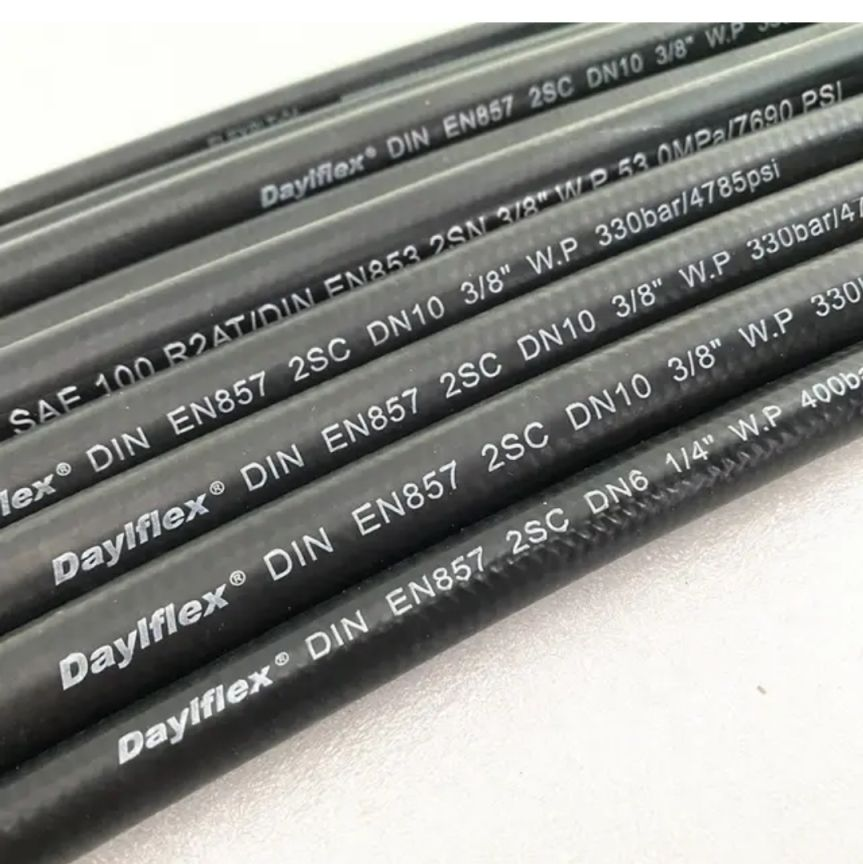
Hydraulic hose performance is governed by a complex interplay of force analysis, environmental resistance, and compliance requirements. Static burst pressure, working pressure, and impulse pressure are key performance metrics. Burst pressure represents the maximum pressure the hose can withstand before catastrophic failure. Working pressure is a fraction of burst pressure, typically defined by a safety factor (e.g., 4:1). Impulse pressure considers cyclical pressure fluctuations, inducing fatigue stress on the hose reinforcement. Finite Element Analysis (FEA) is employed during hose design to predict stress distribution under various loading conditions. Environmental resistance is crucial. Temperature extremes affect rubber flexibility and strength; prolonged exposure to UV radiation causes degradation; and exposure to chemicals can lead to swelling or cracking. Hose bend radius is a critical engineering consideration. Exceeding the minimum bend radius induces excessive stress on the reinforcement, leading to fatigue failure. Compliance requirements vary by region. SAE J517 and EN 853 are commonly referenced standards specifying performance criteria and testing procedures. Proper hose assembly, including the selection of compatible fittings and correct crimping procedures, is vital. Improperly crimped fittings can lead to leakage or hose blow-off. Further, hose twist is a significant concern; twisting introduces torsional stress, reducing the hose's effective burst pressure.
Technical Specifications
| Parameter | Unit | Specification Range (Typical) | Testing Standard |
|---|---|---|---|
| Working Pressure | MPa | 10 - 420 | SAE J517 / EN 853 |
| Burst Pressure | MPa | 40 - 1680 | SAE J517 / EN 853 |
| Temperature Range | °C | -40 to +100 (NBR) / -40 to +120 (EPDM) / -20 to +150 (FKM) | SAE J517 / EN 853 |
| Inner Tube Material | - | NBR, EPDM, FKM | ASTM D2000 |
| Reinforcement | - | 1SP, 2SP, 4SP (Steel Wire Braids) / Spiral Wire | SAE J517 / EN 853 |
| Outer Cover Material | - | CR (Chloroprene) | ASTM D2000 |
Failure Mode & Maintenance
Hydraulic hose failures commonly manifest as leakage, bursting, or reduced flow. Fatigue cracking, caused by repeated pressure cycles and flexing, is a primary failure mode, particularly near fittings. Delamination, the separation of reinforcement layers from the rubber matrix, occurs due to inadequate bonding or exposure to aggressive fluids. Rubber degradation, resulting from ozone attack, UV exposure, or chemical incompatibility, leads to hardening, cracking, and loss of flexibility. Oxidation of the rubber compound also contributes to material embrittlement. Internal abrasion, caused by fluid contaminants, wears away the inner tube. External abrasion damages the outer cover, exposing the reinforcement to corrosion. Proper maintenance is crucial for extending hose lifespan. Regular visual inspections should identify cracks, bulges, or abrasions. Fluid cleanliness is paramount; utilizing filtration systems removes abrasive particles. Avoid exceeding the hose’s working pressure or bending beyond the minimum bend radius. Hose assemblies should be inspected after initial installation and periodically thereafter. Replace hoses exhibiting signs of damage or degradation. Storage of hoses should be in a cool, dry, and dark environment, away from ozone sources and direct sunlight. Proper handling during installation and operation minimizes stress and premature failure.
Industry FAQ
Q: What is the significance of 'spiral' versus 'braided' reinforcement in hydraulic hoses?
A: Braided reinforcement, typically using multiple layers of interwoven steel wire, provides excellent resistance to bending and kinking, making it suitable for applications requiring frequent flexing. Spiral reinforcement, consisting of a single, continuously wound steel wire, offers higher pressure ratings and greater resistance to impulse pressures, ideal for high-pressure, static applications. The choice depends on the specific application's pressure requirements and flexibility needs.
Q: How does fluid compatibility impact hydraulic hose selection?
A: Incorrect fluid compatibility can lead to swelling, softening, or degradation of the inner tube material, resulting in leakage or failure. NBR is generally suitable for petroleum-based fluids, but not for phosphate esters. EPDM excels with phosphate esters, while FKM provides the broadest chemical resistance, including synthetic hydrocarbons and aggressive chemicals. Careful consideration of the hydraulic fluid type is critical.
Q: What role does the fitting play in hydraulic hose performance and longevity?
A: Fittings are integral to the hose assembly and significantly impact performance. Incompatible fittings or improper crimping can cause leakage, blow-off, or premature failure. Fittings must be rated for the hose’s working pressure and compatible with the fluid being conveyed. Correct crimping ensures a secure and leak-proof connection between the hose and fitting.
Q: What are the common causes of hose 'kinking' and how can it be prevented?
A: Kinking occurs when the hose is bent beyond its minimum bend radius, causing internal collapse and restricting fluid flow. It's often caused by inadequate hose routing or insufficient clearance. Prevention involves ensuring proper hose routing, maintaining an appropriate bend radius, and utilizing kink-resistant hose constructions where necessary.
Q: How important is preventative maintenance for hydraulic hoses, and what should be included in a routine inspection?
A: Preventative maintenance is crucial for maximizing hose lifespan and preventing catastrophic failures. Routine inspections should include visual checks for cracks, abrasions, bulges, leaks, and damaged fittings. Also, verify proper hose routing, bend radius, and secure mounting. Regular fluid analysis can detect contamination that can contribute to internal abrasion.
Conclusion
The selection and implementation of hydraulic hoses represent a critical aspect of fluid power system reliability and safety. ‘Oem competitive price hydraulic hose manufacturer’ success depends on the rigorous application of material science principles, precise manufacturing control, and a thorough understanding of operational demands. Choosing the correct hose construction – inner tube material, reinforcement type, and outer cover – is paramount, dictated by fluid compatibility, pressure requirements, temperature range, and application-specific constraints.
Future trends in hydraulic hose technology emphasize the development of more durable materials, improved hose designs to minimize weight and increase flexibility, and the integration of sensor technologies for real-time monitoring of hose condition. Adherence to international standards and proactive maintenance programs remain essential for maximizing hose lifespan and ensuring the safe and efficient operation of hydraulic systems.