
Apr . 01, 2024 17:55 Back to list
oem cat hydraulic hose suppliers Performance Analysis

Introduction
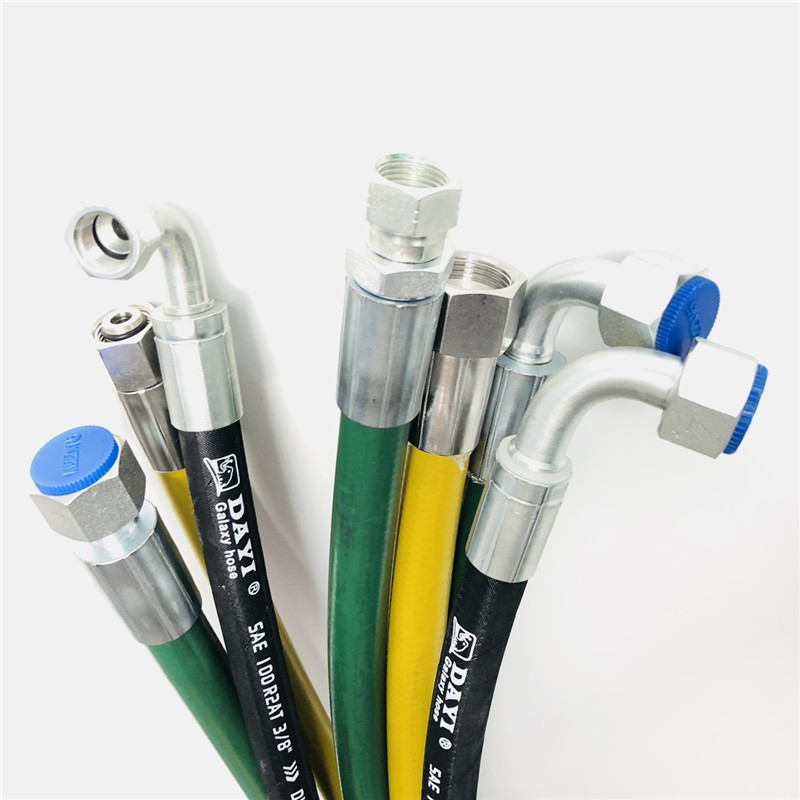
OEM Cat hydraulic hoses represent a critical component within heavy equipment fluid power systems. These hoses are engineered for high-pressure fluid conveyance, primarily hydraulic oil, in applications ranging from construction and mining to agriculture and forestry. Their function is to reliably transmit force generated by hydraulic pumps to actuators, enabling the operation of machinery. This technical guide details the material science, manufacturing processes, performance characteristics, potential failure modes, and maintenance protocols associated with OEM Cat hydraulic hoses. The core performance metrics revolve around burst pressure, working pressure, temperature resistance, and fluid compatibility. The industry faces challenges related to maintaining hose integrity in harsh operating environments, minimizing fluid leaks, and ensuring compliance with stringent safety standards. A key pain point for equipment operators and maintenance personnel is unexpected hose failure leading to downtime and potential safety hazards.
Material Science & Manufacturing
The construction of OEM Cat hydraulic hoses typically involves multiple layers, each contributing to specific performance characteristics. The innermost layer, the tube, is commonly composed of synthetic rubbers such as nitrile rubber (NBR) for oil resistance or fluoroelastomers (FKM) for compatibility with more aggressive fluids and higher temperatures. NBR offers good abrasion resistance and is cost-effective, while FKM provides superior chemical resistance and thermal stability. The reinforcement layer is crucial for pressure containment and consists of multiple braids or spirals of high-tensile steel wire. The number and configuration of these reinforcements directly dictate the hose's working pressure and burst pressure. The cover layer, typically made of synthetic rubber like chloroprene (CR) or polyurethane (PU), provides abrasion resistance, weather protection, and resistance to ozone degradation.
Manufacturing processes commence with extrusion of the inner tube, followed by the precise winding of steel wire reinforcement layers. This winding process is meticulously controlled to ensure uniform tension and consistent layer density, preventing stress concentrations that could initiate failure. The outer cover is then extruded over the reinforcement layer, and the hose undergoes curing – a vulcanization process that crosslinks the rubber compounds, imparting their final physical and chemical properties. Key parameters during curing include temperature, pressure, and time. Post-curing, the hoses are subjected to rigorous quality control testing, including hydrostatic pressure testing to verify burst pressure and impulse testing to assess fatigue resistance. Specialized crimping techniques are utilized to attach end fittings, ensuring a leak-proof and mechanically robust connection.
Performance & Engineering
The performance of OEM Cat hydraulic hoses is fundamentally governed by fluid mechanics and material strength. Force analysis focuses on hoop stress within the hose wall due to internal pressure. The reinforcement layers are engineered to withstand these stresses, maintaining hose dimensional stability and preventing rupture. Environmental resistance is critical; hoses must withstand temperature fluctuations, exposure to UV radiation, and contact with various contaminants such as oil, fuel, and hydraulic fluids. The selection of rubber compounds directly impacts chemical compatibility and resistance to degradation.
Compliance requirements are dictated by industry standards such as SAE J517 (Hydraulic Hose) and ISO 6898 (Hydraulic Accessories). These standards specify requirements for burst pressure, working pressure, temperature range, and impulse testing. Finite element analysis (FEA) is often employed during the design phase to optimize hose geometry and reinforcement configuration, ensuring structural integrity under extreme operating conditions. Flexibility is also a critical engineering consideration; hoses must be able to bend and flex without kinking or experiencing excessive stress. This is achieved through careful selection of rubber compounds and optimization of the hose's construction. Furthermore, understanding the impact of fluid velocity and flow rate on pressure drop and hose vibration is crucial for designing robust hydraulic systems.
Technical Specifications
| Parameter | Unit | Typical Value (1" Hose) | Testing Standard |
|---|---|---|---|
| Working Pressure | PSI | 4,000 | SAE J517 |
| Burst Pressure | PSI | 16,000 | SAE J517 |
| Temperature Range | °F | -40 to +212 | SAE J517 |
| Reinforcement Type | - | Multiple Steel Wire Braids (4SP/6SP) | SAE J517 |
| Inner Tube Material | - | Nitrile Rubber (NBR) | SAE J517 |
| Outer Cover Material | - | Chloroprene (CR) | SAE J517 |
Failure Mode & Maintenance
Hydraulic hose failure can manifest in various forms. Fatigue cracking, resulting from repeated bending and flexing, is a common failure mode, particularly in applications with high cycle rates. Delamination, the separation of layers within the hose wall, can occur due to inadequate bonding between materials or exposure to harsh chemicals. Abrasion, caused by external contact with abrasive surfaces, can erode the outer cover, exposing the reinforcement layers to corrosion. Oxidation, triggered by exposure to oxygen and elevated temperatures, can degrade rubber compounds, reducing their elasticity and strength. Improper installation, such as over-tightening or incorrect routing, can introduce stress concentrations and accelerate failure.
Preventative maintenance is crucial for maximizing hose life. Regular visual inspections should be conducted to identify signs of wear, abrasion, cracking, or leakage. Hoses should be routed correctly, avoiding sharp bends and contact with hot surfaces or abrasive materials. Proper crimping of end fittings is essential to ensure a leak-proof connection. Fluid cleanliness is also critical; contamination can accelerate wear and damage internal components. Regularly replacing hoses according to manufacturer’s recommendations, even if no visible damage is present, is a best practice. In the event of a hose failure, a thorough root cause analysis should be performed to identify the contributing factors and prevent recurrence. Utilizing hose guard protection can significantly reduce abrasion damage in exposed locations.
Industry FAQ
Q: What is the impact of using incompatible hydraulic fluid with a specific hose construction?
A: Using incompatible hydraulic fluid can lead to severe degradation of the inner tube material. This results in swelling, softening, and ultimately, cracking. The fluid can leach plasticizers from the rubber, reducing its elasticity and increasing its permeability. This can cause a loss of pressure and eventual hose failure.
Q: How does impulse pressure affect the lifespan of a hydraulic hose?
A: Impulse pressure, or pressure surges, creates dynamic stresses within the hose wall. Repeated impulse pressures contribute to fatigue failure, particularly in the reinforcement layers. Hoses designed for higher impulse pressure ratings utilize more robust reinforcement configurations to withstand these cyclical stresses.
Q: What are the key considerations when selecting a hose for high-temperature applications?
A: For high-temperature applications, the inner tube and outer cover materials must be capable of withstanding the elevated temperatures without degradation. Fluoroelastomers (FKM) are often preferred for their superior thermal stability. The reinforcement layer must also maintain its strength at high temperatures.
Q: What are the best practices for storing hydraulic hoses to prevent premature failure?
A: Hydraulic hoses should be stored in a cool, dry, and dark environment, away from direct sunlight and ozone sources. They should be stored in a coiled position to prevent kinking. Avoid storing hoses in contact with sharp objects or corrosive materials. Inspect hoses periodically for signs of deterioration even during storage.
Q: How important is proper end fitting crimping, and what can happen if it’s not done correctly?
A: Proper end fitting crimping is paramount for ensuring a leak-proof and mechanically secure connection. Under-crimping can lead to leakage, while over-crimping can damage the hose reinforcement, reducing its pressure rating and potentially causing premature failure. Using calibrated crimping tools and following manufacturer’s specifications are essential.
Conclusion
OEM Cat hydraulic hoses are engineered systems demanding careful consideration of material science, manufacturing precision, and operational factors. Their performance is directly linked to the integrity of each layer, the quality of the crimping process, and adherence to industry standards. Understanding the potential failure modes – fatigue cracking, delamination, abrasion, and oxidation – is crucial for implementing effective preventative maintenance strategies.
Looking forward, advancements in hose technology will likely focus on developing more durable and chemically resistant materials, optimizing hose designs for reduced weight and increased flexibility, and integrating sensor technology for real-time monitoring of hose condition. Continued adherence to rigorous testing protocols and industry standards will be essential for ensuring the safety and reliability of hydraulic systems. Prioritizing proactive maintenance and informed hose selection will minimize downtime and maximize the operational lifespan of heavy equipment.