
Apr . 01, 2024 17:55 Back to list
oem cat hydraulic hose manufacturers Performance Analysis

Introduction
OEM Cat hydraulic hoses represent a critical component in heavy equipment operation, engineered for the rigorous demands of construction, mining, agriculture, and forestry. These hoses are not merely fluid conduits; they are precision-engineered systems integral to the safe and efficient transfer of hydraulic power. Their role extends beyond simple fluid delivery, impacting machine responsiveness, durability, and overall operational safety. Manufactured to Caterpillar’s stringent specifications, these hoses demonstrate superior performance characteristics compared to general industrial hoses, demanding specialized material science, manufacturing processes, and quality control. This guide provides an in-depth technical analysis of OEM Cat hydraulic hoses, covering material properties, manufacturing techniques, performance parameters, failure modes, maintenance protocols, and relevant industry standards. A core industry pain point is maintaining consistent performance under extreme conditions – pressure spikes, temperature fluctuations, and exposure to abrasive contaminants.
Material Science & Manufacturing
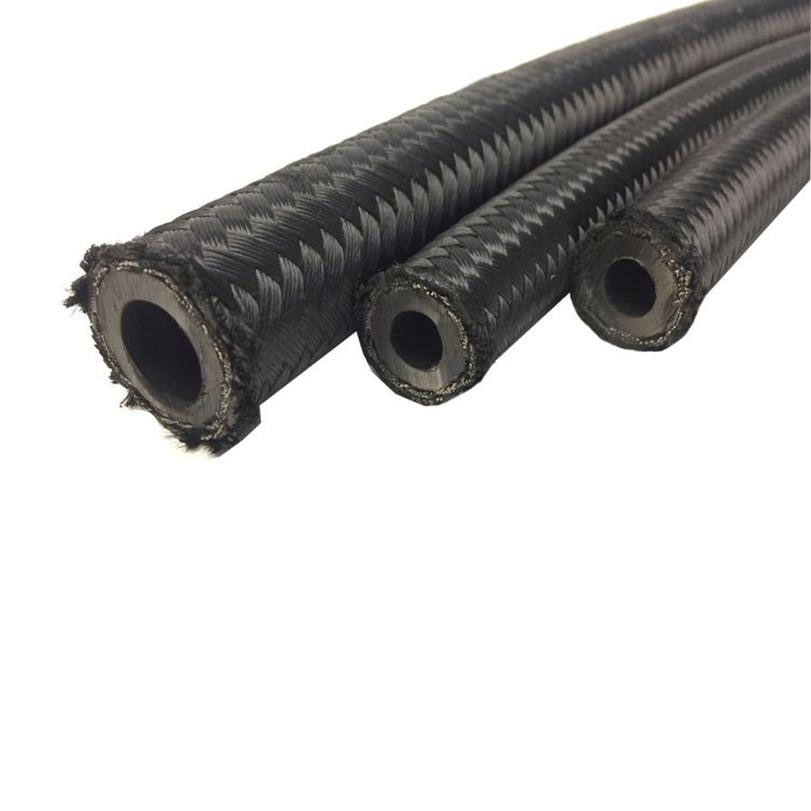
The core material for OEM Cat hydraulic hoses is a specialized synthetic rubber compound, typically a blend of nitrile rubber (NBR), styrene-butadiene rubber (SBR), and polychloroprene (CR), often further enhanced with ethylene propylene diene monomer (EPDM) for improved ozone and weathering resistance. NBR provides excellent resistance to petroleum-based hydraulic fluids, while SBR contributes to abrasion resistance and flexibility. CR enhances resistance to heat and aging. Reinforcement layers are critical; high-tensile steel wire, often spiral-wound, provides the pressure-withstanding capability. The number of wire spirals and wire diameter dictate the hose’s working pressure rating. Manufacturing involves a multi-stage process. Initially, the rubber compound is mixed and extruded into a seamless inner tube. The reinforcement layers are then applied via a winding process, followed by the application of an outer cover composed of a weather-resistant rubber compound, often with a braided textile layer for additional protection against abrasion and puncture. Key parameter control includes precise temperature regulation during extrusion to ensure consistent rubber density, accurate tension control during wire winding to maintain structural integrity, and rigorous adhesion testing between layers to prevent delamination. Post-manufacturing, each hose undergoes hydrostatic testing to verify its pressure holding capacity and leak-proof performance. The curing process, utilizing specific temperature and time profiles, dictates the final mechanical properties of the rubber compounds. Precise control of these parameters is crucial for meeting Caterpillar's exacting standards.
Performance & Engineering
The performance of a hydraulic hose is dictated by several key engineering parameters. Burst pressure, working pressure, and impulse pressure are critical. Working pressure represents the maximum continuous operating pressure, while burst pressure is the pressure at which the hose will fail catastrophically. Impulse pressure addresses the hose’s ability to withstand pressure surges, a common occurrence in hydraulic systems. Flexibility, or bend radius, is also paramount, affecting the hose's ability to navigate tight spaces without kinking or experiencing excessive stress. Tensile strength, the resistance to longitudinal pull, is essential for maintaining structural integrity during operation. Environmental resistance, including resistance to ozone, UV radiation, and a range of hydraulic fluids, ensures long-term durability. Finite element analysis (FEA) is employed during the design phase to optimize hose geometry and reinforcement layer configuration for specific operating conditions. Compliance requirements are stringent, often exceeding industry standards. Caterpillar’s specifications require adherence to specific dimensional tolerances, material properties, and performance criteria. Force analysis considers the combined stresses from internal pressure, external bending, and axial tension. Fatigue life is a crucial consideration, particularly in applications involving cyclic loading. Correct hose assembly, utilizing properly sized fittings and ensuring proper crimp depth, is essential for maximizing performance and preventing premature failure.
Technical Specifications
| Parameter | Unit | Typical Value (1" ID Hose) | Testing Standard |
|---|---|---|---|
| Working Pressure | psi | 4500 | SAE J517 |
| Burst Pressure | psi | 13500 | SAE J517 |
| Impulse Pressure (100,000 cycles) | psi | 6000 | ISO 6802 |
| Minimum Bend Radius | inches | 6 | Manufacturer Specification |
| Temperature Range | °F | -40 to +212 | SAE J517 |
| Tensile Strength (Reinforcement) | psi | 250,000 | ASTM E8 |
Failure Mode & Maintenance
Hydraulic hose failures typically fall into several categories. Fatigue cracking, initiated by repeated bending and pressure cycling, is a common cause, often starting at the fitting interface. Abrasion, caused by contact with abrasive surfaces or contaminants within the hydraulic fluid, can erode the outer cover and eventually compromise the reinforcement layers. Delamination, the separation of layers within the hose construction, reduces pressure-withstanding capability and can lead to catastrophic failure. Oxidation and chemical degradation, resulting from exposure to high temperatures, ozone, or incompatible hydraulic fluids, can cause the rubber compound to become brittle and lose its elasticity. Fitting corrosion can weaken the connection between the hose and the fitting, leading to leaks or separation. Maintenance involves regular visual inspections for cracks, abrasions, or leaks. Hose assemblies should be replaced if any damage is detected. Hydraulic fluid should be maintained at the proper level and filtered to remove contaminants. Proper hose routing and support are essential to prevent excessive bending and abrasion. Regularly check the crimp connections on fittings to ensure they are secure. Avoid over-bending hoses during installation and operation. A proactive maintenance program can significantly extend hose life and prevent costly downtime.
Industry FAQ
Q: What differentiates OEM Cat hydraulic hoses from standard industrial hoses in terms of durability?
A: OEM Cat hoses utilize specifically formulated rubber compounds, higher tensile strength reinforcement layers, and undergo more rigorous testing than standard industrial hoses. The Cat specification requires superior resistance to abrasion, temperature extremes, and fluid compatibility, resulting in a significantly longer service life in demanding applications.
Q: What is the impact of improper hose assembly on performance and safety?
A: Improper hose assembly, such as using incorrect fitting sizes or inadequate crimp depths, can drastically reduce the hose's working pressure and burst pressure. This increases the risk of leaks, hose rupture, and potential injury to personnel.
Q: How does temperature affect the performance of a hydraulic hose?
A: Extreme temperatures can degrade the rubber compound, reducing its elasticity and resistance to pressure. High temperatures accelerate oxidation and chemical degradation, while low temperatures can cause the hose to become brittle and prone to cracking.
Q: What are the best practices for storing hydraulic hoses to prevent degradation?
A: Hydraulic hoses should be stored in a cool, dry, and dark environment, away from direct sunlight, ozone sources, and extreme temperatures. Hoses should be coiled loosely and protected from physical damage.
Q: What role does hydraulic fluid cleanliness play in extending hose life?
A: Contaminated hydraulic fluid contains abrasive particles that can erode the inner hose lining and damage critical components. Maintaining fluid cleanliness through regular filtration is crucial for minimizing wear and extending hose life.
Conclusion
OEM Cat hydraulic hoses represent a highly engineered solution for demanding hydraulic applications. Their superior performance stems from a carefully selected combination of advanced materials, precision manufacturing processes, and stringent quality control. Understanding the core principles of material science, performance engineering, and potential failure modes is critical for ensuring safe and reliable operation. The ongoing focus on improving material durability and manufacturing techniques will continue to enhance the performance and longevity of these essential components.
Effective maintenance practices, including regular inspections, proper fluid management, and correct hose assembly, are paramount for maximizing service life and preventing costly downtime. Adherence to industry standards and Caterpillar’s specific requirements ensures optimal performance and safety. Continued advancements in hose technology will likely focus on developing more robust materials, smarter monitoring systems, and more sustainable manufacturing processes.