
Apr . 01, 2024 17:55 Back to list
oem car washing hose suppliers Performance Analysis
Introduction
OEM car washing hose suppliers provide critical components for the automotive detailing and vehicle maintenance sectors. These hoses are not mere conduits for water; they represent a complex engineering challenge requiring consideration of pressure resistance, material compatibility with detergents and water temperatures, flexibility for ease of use, and long-term durability. Within the industry chain, these suppliers typically operate between raw material manufacturers (polymer, textile reinforcement, and fitting producers) and automotive parts distributors or directly to automotive manufacturers for pre-installed systems. Core performance characteristics revolve around burst pressure, working pressure, kink resistance, and resistance to chemical degradation, ultimately impacting user safety and operational efficiency. The prevalent industry pain point resides in achieving a balance between cost-effectiveness and meeting increasingly stringent performance requirements driven by demanding detailing practices and regulatory pressures related to water conservation and material safety.
Material Science & Manufacturing
Car washing hoses are predominantly constructed from thermoplastic elastomers (TPEs), polyvinyl chloride (PVC), or reinforced rubber compounds. TPEs offer excellent flexibility and abrasion resistance but can be more expensive than PVC. PVC provides cost-effectiveness and good chemical resistance but can become brittle at lower temperatures. Rubber, specifically nitrile butadiene rubber (NBR) and ethylene propylene diene monomer (EPDM) rubber, delivers superior flexibility, temperature resistance, and chemical resistance, making it ideal for high-performance applications. Reinforcement layers are typically woven from polyester or nylon yarns, providing tensile strength and preventing kinking. The manufacturing process varies based on the chosen material. PVC hoses are commonly produced via extrusion, where molten PVC is forced through a die to form the tube shape. Rubber hoses often involve a process of mixing the rubber compound, calendaring the reinforcement fabric, and then vulcanizing the assembly under heat and pressure. TPE hoses also utilize extrusion, often with co-extrusion techniques to create multi-layer structures. Critical parameters during manufacturing include precise temperature control during extrusion to prevent material degradation, consistent reinforcement yarn tension to ensure uniform strength, and proper vulcanization timing and temperature to achieve optimal rubber cross-linking. Chemical compatibility of the polymer with cleaning agents (alkaline, acidic) is paramount; NBR excels in oil and fuel resistance, while EPDM demonstrates high resistance to ozone, weathering, and heat.

Performance & Engineering
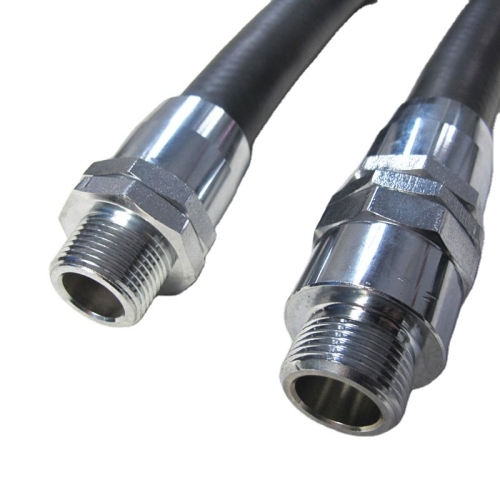
The performance of a car washing hose is fundamentally governed by its ability to withstand internal pressure without failure. Force analysis involves calculating the hoop stress within the hose wall, dependent on the internal pressure and hose dimensions. Burst pressure is typically several times the working pressure, providing a safety margin. Kink resistance is engineered through the reinforcement layer’s weave pattern and the hose’s outer diameter to inner diameter ratio. A smaller ratio enhances kink resistance. Environmental resistance is crucial; UV exposure can degrade PVC and some TPEs, necessitating the incorporation of UV stabilizers. Temperature resistance must account for both hot and cold water. Compliance requirements differ regionally. In the US, EPA regulations concerning lead content in drinking water apply to hose materials. European standards (REACH and RoHS) restrict the use of hazardous substances. Functional implementation requires consideration of fitting compatibility (NPT, BSP, garden hose thread) and the hose's flexibility to maneuver around vehicles. Fatigue analysis is important; repeated flexing and uncoiling induce stress concentrations, leading to potential failure. Engineering considerations extend to the selection of fitting materials – brass, stainless steel, and polypropylene are common choices – and their secure attachment to the hose, preventing leaks under pressure.
Technical Specifications
| Parameter | Unit | Typical Value (Standard Grade PVC) | Typical Value (Reinforced Rubber) |
|---|---|---|---|
| Working Pressure | psi | 150 | 300 |
| Burst Pressure | psi | 450 | 900 |
| Tensile Strength | psi | 2,000 | 4,500 |
| Elongation at Break | % | 300 | 500 |
| Operating Temperature Range | °F | 32-122 | -40-185 |
| Diameter | inches | 0.5-0.75 | 0.5-1.0 |
Failure Mode & Maintenance
Common failure modes in car washing hoses include burst failure due to exceeding working pressure, kink failure caused by localized stress concentration, and degradation of the material from UV exposure or chemical attack. Fatigue cracking occurs from repeated flexing, initiating at stress concentrators such as fitting attachment points. Delamination of the reinforcement layer can occur if the bonding agent fails, compromising the hose’s strength. Oxidation of rubber compounds leads to embrittlement and cracking over time. Maintenance strategies focus on preventing these failures. Avoid exceeding the rated working pressure. Store hoses out of direct sunlight when not in use. Rinse the hose thoroughly after each use to remove detergent residue. Inspect regularly for signs of cracking, bulging, or delamination. Properly drain the hose before storing to prevent freezing in cold climates. For rubber hoses, applying a silicone-based lubricant can help maintain flexibility and prevent cracking. Failure analysis involves examining the fracture surface to determine the root cause – whether it’s a material defect, overpressure, fatigue, or environmental degradation. This helps improve future hose designs and material selections.
Industry FAQ
Q: What is the significance of the ‘burst pressure’ rating for a car wash hose?
A: Burst pressure represents the maximum pressure the hose can withstand before catastrophic failure. It's a critical safety parameter, as it provides a margin of safety above the normal working pressure. A higher burst pressure indicates a more robust hose capable of handling pressure surges or accidental over-pressurization. It is typically 3-4 times the working pressure.
Q: How does the reinforcement material impact a hose’s kink resistance?
A: The reinforcement material, typically polyester or nylon, plays a vital role in preventing kinking. A tighter weave and higher yarn density provide greater structural support, resisting deformation when bent. The ratio of the outer diameter to the inner diameter also influences kink resistance; a smaller ratio generally offers better kink resistance.
Q: What chemical resistance properties should I look for in a car wash hose?
A: The hose material must be resistant to a wide range of cleaning agents commonly used in car washing, including alkaline detergents, acidic wheel cleaners, and solvents. Nitrile rubber (NBR) offers excellent resistance to oils and fuels, while Ethylene Propylene Diene Monomer (EPDM) excels in resistance to ozone, weathering and heat, making them suitable choices. PVC is generally resistant to many common chemicals but can be affected by some strong solvents.
Q: What are the implications of REACH and RoHS compliance for car wash hose suppliers?
A: REACH (Registration, Evaluation, Authorisation and Restriction of Chemicals) and RoHS (Restriction of Hazardous Substances) are European Union directives that restrict the use of certain hazardous substances in products. Compliance ensures that the hose does not contain prohibited materials like lead, cadmium, mercury, or certain flame retardants, making them safer for both users and the environment.
Q: How does UV exposure affect the lifespan of a car washing hose?
A: Prolonged exposure to ultraviolet (UV) radiation from sunlight can cause the polymer material to degrade, leading to cracking, embrittlement, and reduced flexibility. This is particularly true for PVC and some TPE formulations. Manufacturers mitigate this by adding UV stabilizers to the material, but even with stabilizers, long-term exposure will eventually lead to degradation. Proper storage out of direct sunlight is essential.
Conclusion
The selection of an appropriate car washing hose hinges on a thorough understanding of material properties, manufacturing processes, and performance requirements. OEM suppliers must prioritize durability, chemical resistance, and compliance with relevant safety regulations. The interplay between polymer selection (PVC, TPE, Rubber), reinforcement materials (polyester, nylon), and manufacturing controls (extrusion, vulcanization) ultimately dictates the hose’s operational lifespan and reliability.
Future developments will likely focus on the incorporation of sustainable materials, improved UV resistance technologies, and enhanced hose designs to minimize kinking and maximize flow rates. A comprehensive approach, encompassing robust testing, diligent quality control, and a commitment to continuous improvement, is essential for OEM car washing hose suppliers to meet the evolving demands of the automotive detailing industry and maintain a competitive edge.