
Apr . 01, 2024 17:55 Back to list
oem car washing hose supplier Performance Analysis

Introduction
OEM car washing hoses represent a critical component within the automotive detailing and car wash industry supply chain. These hoses, manufactured to Original Equipment Manufacturer specifications, are not merely conduits for water; they are engineered systems designed for consistent performance, durability, and compatibility with a range of cleaning agents. The industry’s core demand centers around reliability – preventing bursts or leaks during operation – and resistance to chemical degradation from common car wash soaps, waxes, and detergents. A key pain point for car wash operators is hose lifespan, directly impacting operational costs and downtime. OEM hoses aim to mitigate these issues through optimized material selection and robust manufacturing processes. Core performance characteristics include burst pressure, tensile strength, kink resistance, and UV stability, all dictated by the application – ranging from residential car washing to high-volume commercial facilities. This guide provides an in-depth exploration of the material science, manufacturing techniques, performance parameters, failure modes, and relevant industry standards governing OEM car washing hoses.
Material Science & Manufacturing
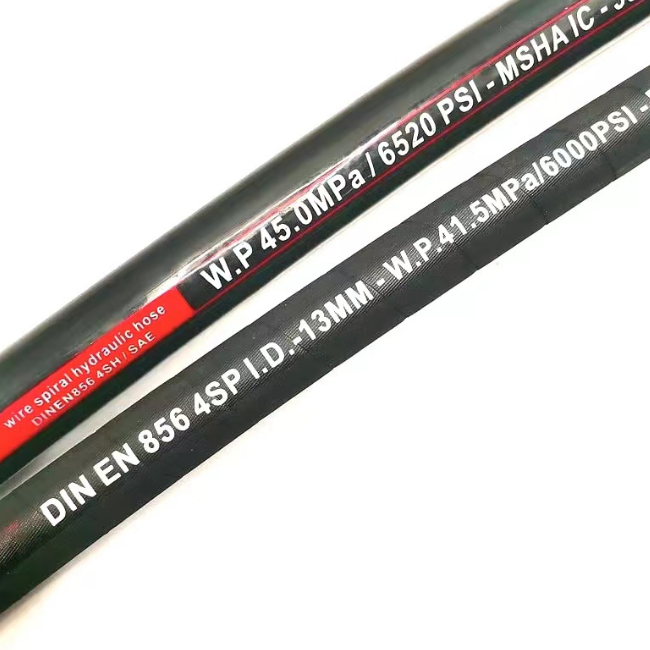
Car washing hoses are typically constructed from a layered composition designed to optimize performance and longevity. The core material is most commonly a synthetic rubber, primarily Polyvinyl Chloride (PVC) or Thermoplastic Polyurethane (TPU). PVC offers cost-effectiveness and decent abrasion resistance, with a typical hardness durometer ranging from 70A to 85A. However, PVC can become brittle at lower temperatures. TPU provides superior flexibility, abrasion resistance, and low-temperature performance, generally with a durometer between 95A and 110A, but at a higher cost. Reinforcement layers are critical, typically consisting of a high-tensile strength textile braid (polyester or nylon) embedded within the rubber matrix. This braid provides burst pressure resistance and prevents kinking. The outer cover layer, often also PVC or TPU, provides UV protection and abrasion resistance. Manufacturing processes begin with compound mixing, where raw polymers are blended with plasticizers, stabilizers, and pigments. Extrusion is then employed to form the inner tube and outer cover. The textile braid is simultaneously applied during the extrusion process. Critical parameters during extrusion include die temperature, screw speed, and pull speed, all influencing the final hose dimensions and material properties. Curing, typically utilizing a hot air vulcanization process, crosslinks the rubber molecules, enhancing its strength and elasticity. Quality control measures include hydrostatic pressure testing to verify burst strength and dimensional checks to ensure consistency.
Performance & Engineering
The performance of a car washing hose is dictated by several key engineering principles. Burst pressure is paramount, determined by the tensile strength of the reinforcement braid and the rubber compound's elongation at break. Hydrostatic testing, conducted in accordance with SAE J302E, simulates operating pressures with a safety factor. Tensile strength, measured via ASTM D412, quantifies the hose's ability to withstand pulling forces without rupture. Kink resistance is a function of the hose’s wall thickness, material flexibility, and reinforcement braid geometry. Environmental resistance, particularly UV stability, is critical for outdoor applications. Prolonged exposure to ultraviolet radiation can cause rubber degradation, leading to cracking and reduced flexibility. UV stabilizers are incorporated into the rubber compound to mitigate this effect. Chemical compatibility is also crucial. Car wash soaps and detergents can contain aggressive chemicals that attack the rubber polymer. Testing according to ASTM D471 assesses the hose’s resistance to swelling and degradation when exposed to specific chemicals. Furthermore, flow rate and friction loss are important performance characteristics. A narrower inner diameter increases water velocity but also increases friction loss, reducing overall efficiency. Hose construction needs to balance these factors to optimize water delivery.
Technical Specifications
| Parameter | Unit | PVC Hose (Standard Grade) | TPU Hose (Premium Grade) |
|---|---|---|---|
| Burst Pressure | psi | 300 | 500 |
| Tensile Strength | MPa | 15 | 25 |
| Working Pressure | psi | 90 | 150 |
| Inner Diameter | inch | 0.5 | 0.625 |
| Outer Diameter | inch | 0.75 | 0.875 |
| UV Resistance (ASTM G154) | Hours to 50% Loss of Tensile Strength | 200 | 500 |
| Temperature Range | °F | -20 to 150 | -40 to 176 |
Failure Mode & Maintenance
Common failure modes in car washing hoses include bursting due to exceeding the burst pressure, kinking causing restricted flow, cracking from UV degradation, and chemical attack leading to material swelling and weakening. Fatigue cracking can occur in the reinforcement braid due to repeated flexing and pressure cycling. Failure analysis often reveals that burst failures are initiated by microscopic defects in the rubber matrix or braid. Kinking is more prevalent in hoses with insufficient reinforcement or overly rigid materials. UV degradation manifests as surface cracking and loss of elasticity. Chemical attack is typically localized to areas exposed to concentrated detergents. Maintenance primarily involves rinsing the hose thoroughly after each use to remove residual chemicals. Avoiding prolonged exposure to direct sunlight can mitigate UV degradation. Inspecting the hose regularly for cracks, bulges, or signs of wear is crucial. Damaged hoses should be replaced immediately to prevent catastrophic failure. Proper storage – coiled loosely and protected from extreme temperatures – also extends hose lifespan. Avoid sharp bends or twisting during use, as this can stress the reinforcement braid.
Industry FAQ
Q: What is the significance of the reinforcement braid material (polyester vs. nylon)?
A: The reinforcement braid material impacts burst pressure and kink resistance. Nylon typically offers higher tensile strength and better resistance to stretching, leading to higher burst pressures. Polyester, however, exhibits better resistance to moisture absorption and creep, maintaining dimensional stability over time. The choice depends on the specific application requirements and cost considerations. For high-pressure commercial applications, nylon is generally preferred.
Q: How does the hose's inner diameter affect performance?
A: A larger inner diameter reduces friction loss, resulting in a higher flow rate for a given water pressure. However, it also increases the hose’s weight and cost. A smaller inner diameter increases water velocity but also increases friction loss. The optimal diameter is a compromise between flow rate, pressure loss, and hose weight.
Q: What are the key differences between PVC and TPU hoses in terms of durability?
A: TPU hoses are generally more durable than PVC hoses. TPU offers superior abrasion resistance, flexibility, and low-temperature performance. It is also more resistant to cracking and degradation from exposure to chemicals and UV radiation. However, TPU is more expensive than PVC.
Q: How important is UV resistance, and what testing methods are used to evaluate it?
A: UV resistance is critically important for hoses used outdoors. Prolonged UV exposure can cause rubber degradation, leading to cracking and reduced flexibility. UV resistance is typically evaluated using accelerated weathering tests, such as ASTM G154, which simulates years of outdoor exposure in a matter of weeks.
Q: What chemical resistance standards are relevant for car washing hoses?
A: ASTM D471 is a key standard for assessing the resistance of rubber materials to degradation from exposure to various chemicals, including those commonly found in car wash soaps and detergents. Testing involves immersing the hose sample in the chemical for a specified period and then measuring changes in volume, weight, and physical properties.
Conclusion
OEM car washing hoses are engineered products requiring a careful balance of material selection, manufacturing process control, and performance optimization. The choice between PVC and TPU hinges on the application's demands for flexibility, temperature resistance, and longevity. Understanding the core failure modes – bursting, kinking, UV degradation, and chemical attack – is crucial for selecting the appropriate hose and implementing preventative maintenance procedures.
Future advancements in hose technology may focus on developing new rubber compounds with enhanced UV resistance and chemical compatibility, as well as incorporating smart sensors to monitor hose pressure and detect potential leaks. Prioritizing quality and adherence to industry standards (SAE, ASTM) remains paramount for ensuring reliable and long-lasting performance in demanding car wash environments.