
Apr . 01, 2024 17:55 Back to list
oem car washing hose manufacturers Performance Engineering

Introduction
OEM car washing hoses represent a critical component in the automotive detailing and maintenance industry. These hoses are not merely conduits for water; they are engineered systems designed to withstand specific pressures, temperatures, and chemical exposures inherent in car wash applications. Positioned between the water source (whether professional car wash systems or domestic taps) and the washing implement (spray gun, nozzle), their performance directly impacts wash quality, efficiency, and longevity of associated equipment. Core performance characteristics include burst pressure, kink resistance, abrasion resistance, and resistance to degradation from common car wash chemicals. A critical pain point for OEMs lies in balancing cost-effectiveness with the increasingly stringent demands for durability and material compatibility, especially with the shift towards more aggressive, concentrated cleaning agents.
Material Science & Manufacturing
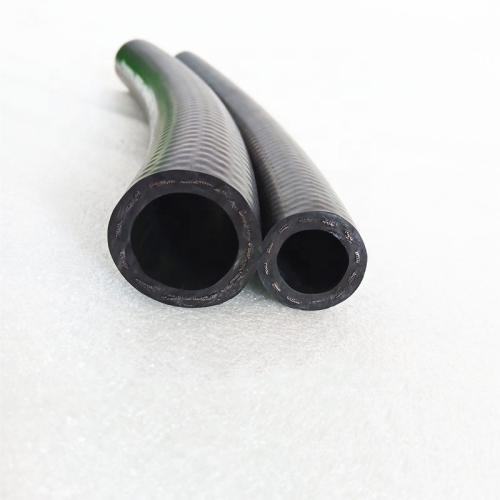
The dominant material for car wash hose construction is thermoplastic elastomer (TPE), specifically blends of styrene-butadiene-styrene (SBS) and styrene-ethylene/butylene-styrene (SEBS). These materials offer a superior balance of flexibility, abrasion resistance, and cost compared to traditional rubber compounds like natural rubber or EPDM. Reinforcement is typically achieved through a high-tensile strength textile braid, often polyester or nylon, embedded within the TPE matrix. The manufacturing process begins with the compounding of the TPE resin with plasticizers, stabilizers (UV and thermal), and pigments. This compound is then extruded through a die, forming the hose’s inner and outer layers. Simultaneously, the reinforcement braid is wound onto a mandrel, and the extruded TPE encapsulates it. Critical parameters during extrusion include die temperature (180-220°C), screw speed (30-60 RPM), and cooling rate. Inconsistent cooling can lead to internal stresses and premature failure. Following extrusion, the hose undergoes dimensional inspection, pressure testing, and coiling. Chemical compatibility is enhanced through the use of specific additives – for instance, incorporating polypropylene (PP) into the TPE formulation can improve resistance to certain solvents. The ratio of TPE to reinforcement material impacts burst pressure and kink resistance, requiring precise control during manufacturing.
Performance & Engineering
Performance of car wash hoses is fundamentally governed by the principles of fluid mechanics and material stress-strain relationships. Burst pressure, typically ranging from 300 to 600 PSI (20-40 bar), is determined by the tensile strength of the reinforcement braid and the adhesion between the braid and the TPE matrix. Finite Element Analysis (FEA) is employed during the design phase to optimize braid geometry and TPE thickness for maximum pressure resistance. Kink resistance, a significant operational concern, is influenced by the hose’s wall thickness and the flexibility of the TPE material. A tighter bend radius induces higher stress concentrations within the hose wall, potentially leading to collapse. Environmental resistance is paramount; prolonged exposure to UV radiation, ozone, and varying temperatures (freezing to high heat) can cause material degradation. ASTM D412 (tensile properties) and ASTM D2671 (water absorption) are crucial tests. Compliance requirements vary by region, with European standards (EN 13887) dictating specific performance criteria related to chemical resistance and leaching of harmful substances. Force analysis during operation must account for water hammer – the sudden pressure surge when a valve is rapidly closed – which can significantly exceed the static working pressure.
Technical Specifications
| Parameter | Unit | Typical Value (Standard Duty) | Typical Value (Heavy Duty) |
|---|---|---|---|
| Working Pressure | PSI | 300 | 500 |
| Burst Pressure | PSI | 900 | 1500 |
| Tensile Strength (TPE) | MPa | 15 | 20 |
| Elongation at Break (TPE) | % | 300 | 400 |
| Operating Temperature Range | °C | -20 to 60 | -40 to 80 |
| Inner Diameter | mm | 13 | 19 |
Failure Mode & Maintenance
Common failure modes in car wash hoses include: 1) Fatigue Cracking: Repeated flexing and pressure cycling induce micro-cracks in the TPE, eventually leading to complete rupture. This is exacerbated by material defects or improper manufacturing processes. 2) Kink-Induced Failure: Prolonged kinking creates localized stress concentrations, causing the hose wall to thin and eventually fail. 3) Chemical Degradation: Exposure to harsh detergents, solvents, and pH imbalances can cause swelling, softening, or embrittlement of the TPE. 4) Abrasion: Contact with abrasive surfaces (e.g., rough vehicle undercarriages) wears away the outer layer, exposing the reinforcement braid. 5) UV Degradation: Prolonged exposure to sunlight causes the TPE to become brittle and lose its elasticity. Preventive maintenance includes regular visual inspection for cracks, kinks, or abrasion. Hoses should be properly stored when not in use, away from direct sunlight and extreme temperatures. Avoid exposing hoses to incompatible chemicals. In cases of minor abrasion, a protective sleeve can be applied. Replace hoses exhibiting signs of significant degradation or damage immediately. Failure analysis should involve microscopic examination of the fracture surface to determine the root cause of failure (e.g., fatigue, chemical attack, or material defect).
Industry FAQ
Q: What is the optimal TPE formulation for maximizing chemical resistance in a high-volume car wash environment?
A: The optimal formulation typically involves a blend of SEBS and SBS, incorporating a significant percentage of polypropylene (PP) to enhance resistance to commonly used car wash detergents and solvents. Additionally, stabilizers such as hindered amine light stabilizers (HALS) and antioxidants are critical for preventing degradation from UV exposure and thermal oxidation. The specific ratios need to be tailored based on the specific chemical composition of the detergents used by the end-user.
Q: How does the reinforcement braid material impact the hose’s lifespan and performance?
A: Polyester braid generally offers superior abrasion resistance and dimensional stability compared to nylon, but nylon boasts higher tensile strength. The choice depends on the application. For heavy-duty applications with frequent abrasion, polyester is preferred. The braid’s weave density and construction also play a crucial role; a tighter weave provides better support and resistance to deformation.
Q: What are the key considerations when selecting a hose diameter for different car wash applications?
A: Hose diameter influences water flow rate and pressure drop. A larger diameter reduces pressure drop but increases hose weight and cost. Selection should be based on the flow rate requirements of the spray gun or nozzle and the distance between the water source and the washing point. Typically, 13mm to 19mm inner diameters are used, with larger diameters for high-flow applications.
Q: What quality control tests are essential for ensuring consistent hose performance?
A: Essential tests include: burst pressure testing (to verify the hose’s ability to withstand maximum pressure), tensile strength testing (to assess material integrity), elongation at break testing (to evaluate flexibility), ozone resistance testing, and chemical resistance testing (immersion in representative car wash chemicals). Regular dimensional inspection is also crucial.
Q: How do variations in water temperature affect the performance and lifespan of the hose?
A: Extreme temperatures can significantly impact the hose. High temperatures can soften the TPE, reducing its tensile strength and increasing its susceptibility to creep. Conversely, low temperatures can make the hose brittle and prone to cracking. The TPE formulation should be selected to withstand the expected operating temperature range. Thermal cycling (repeated exposure to varying temperatures) can accelerate material degradation.
Conclusion
The selection and manufacture of OEM car washing hoses require a nuanced understanding of material science, engineering principles, and industry-specific performance requirements. The TPE material, reinforced with a high-tensile braid, represents the current state-of-the-art, offering a balance of flexibility, durability, and cost-effectiveness. Maintaining consistent quality control throughout the manufacturing process, focusing on parameters like extrusion temperature, cooling rates, and braid tension, is crucial for ensuring reliable performance and preventing premature failure.
Future development trends are likely to focus on incorporating bio-based and recycled TPE materials to enhance sustainability, and exploring new reinforcement technologies to further improve burst pressure and kink resistance. Additionally, the development of smart hoses with integrated sensors to monitor pressure, temperature, and chemical exposure could provide valuable insights for predictive maintenance and optimize operational efficiency.