
Apr . 01, 2024 17:55 Back to list
oem car washing hose manufacturer Performance Analysis
Introduction
OEM car washing hoses represent a critical component within the automotive aftermarket and detailing industries. These hoses, typically manufactured to specifications provided by original equipment manufacturers (OEMs) or aftermarket suppliers, are designed for the delivery of pressurized water for vehicle cleaning. Their performance is dictated by several key factors including burst pressure, kink resistance, abrasion resistance, and chemical compatibility with detergents and cleaning agents. The industry faces increasing demand for hoses capable of withstanding higher pressures (associated with pressure washers) and exhibiting prolonged service life despite exposure to harsh environmental conditions. This guide details the material science, manufacturing processes, performance characteristics, failure modes, and relevant industry standards pertaining to OEM car washing hose production, providing a comprehensive overview for engineers, procurement specialists, and quality control personnel.
Material Science & Manufacturing
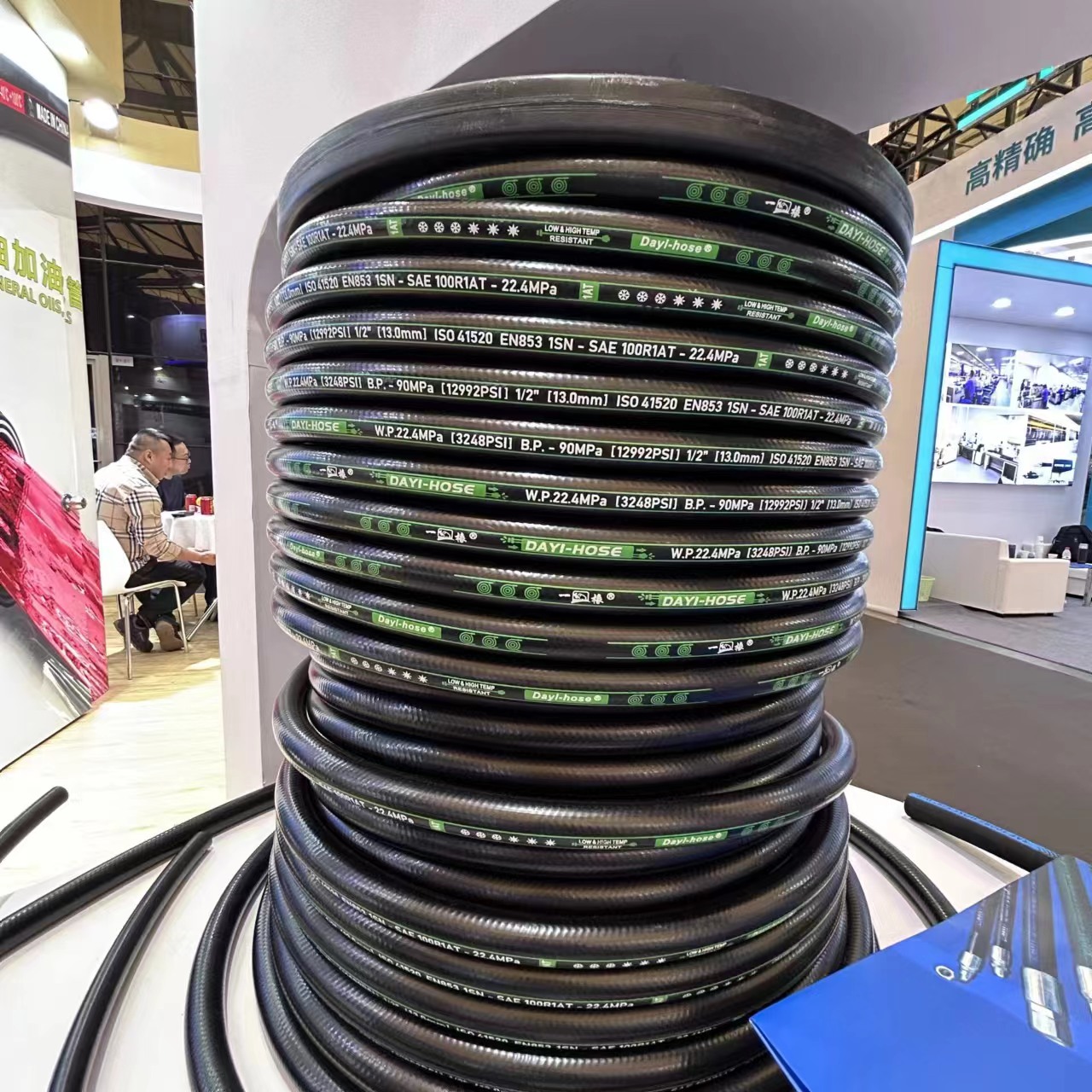
The core material for most car washing hoses is a thermoplastic elastomer (TPE) or a reinforced polyvinyl chloride (PVC) compound. TPEs, specifically those based on styrene-butadiene-styrene (SBS) or styrene-ethylene/butylene-styrene (SEBS), are favored for their flexibility and resistance to cracking at low temperatures. PVC provides a cost-effective solution, but typically requires plasticizers to achieve adequate flexibility. Reinforcement is crucial for pressure resistance. Common reinforcing materials include high-tensile strength polyester yarn or spiraled steel wire. The manufacturing process typically involves extrusion. The chosen polymer is melted and extruded through a die that forms the inner tube. Reinforcement layers are applied, followed by an outer jacket extrusion for abrasion and UV protection. Key process parameters include extrusion temperature, die speed, cooling rate, and reinforcement tension. Precise control of these parameters directly impacts the hose’s dimensional stability, burst pressure, and overall durability. Compounding of the PVC or TPE also plays a vital role; the type and concentration of plasticizers, stabilizers, and fillers affect flexibility, UV resistance, and chemical compatibility. Quality control at this stage includes rigorous testing of the compound’s physical properties (tensile strength, elongation at break, hardness) and chemical resistance.
Performance & Engineering
Performance of a car washing hose is heavily reliant on its ability to withstand internal pressure without failure. Burst pressure testing, conducted according to industry standards (see footer), is paramount. Engineering considerations include the hose’s wall thickness, reinforcement layer configuration, and material selection. Finite Element Analysis (FEA) is increasingly used to model stress distribution within the hose under various loading conditions, optimizing design for maximum pressure resistance and minimizing weight. Kink resistance is another critical performance attribute, particularly important for hoses used with retractable reels. This is achieved through careful material selection (avoiding overly rigid compounds) and potentially through the incorporation of internal support structures. Abrasion resistance is essential to prevent premature wear and tear from contact with vehicle surfaces or abrasive cleaning tools. The outer jacket material must exhibit high resistance to scuffing and abrasion. Chemical compatibility is a key concern, as car washing hoses are frequently exposed to a wide range of detergents, soaps, and cleaning agents. The hose materials must be resistant to swelling, cracking, or degradation upon contact with these chemicals. Environmental resistance, specifically UV resistance and ozone resistance, is vital for preventing material degradation and extending service life when the hose is exposed to sunlight and atmospheric conditions.
Technical Specifications
| Parameter | Unit | Typical Value (Standard Grade PVC Hose) | Typical Value (Premium TPE Hose) |
|---|---|---|---|
| Burst Pressure | PSI | 300 | 500 |
| Working Pressure | PSI | 90 | 150 |
| Tensile Strength | MPa | 12 | 18 |
| Elongation at Break | % | 250 | 400 |
| Diameter (Inner) | mm | 12.7 (1/2 inch) | 12.7 (1/2 inch) |
| Diameter (Outer) | mm | 19.1 | 22.2 |
| Operating Temperature Range | °C | -10 to 60 | -40 to 80 |
Failure Mode & Maintenance
Common failure modes for car washing hoses include burst failure due to exceeding the working pressure, cracking due to UV degradation, kinking leading to localized stress concentrations and eventual rupture, and degradation of the material due to chemical exposure. Fatigue cracking can occur in reinforced hoses subjected to repeated flexing and pressure cycles. Failure analysis often reveals that burst failures are caused by pre-existing defects in the reinforcement layer or localized thinning of the hose wall. UV degradation manifests as surface cracking and loss of flexibility. Chemical attack can cause swelling, softening, and ultimately, structural failure. Preventative maintenance includes regular inspection for cracks, kinks, and abrasions. Hoses should be stored out of direct sunlight when not in use. Avoid exposing the hose to harsh chemicals for prolonged periods. After each use, the hose should be thoroughly rinsed to remove detergent residue. When coiling the hose, avoid tight bends that can induce stress concentrations. If damage is detected, the hose should be replaced immediately. Correct storage and handling are vital to prolonging service life and preventing catastrophic failure.
Industry FAQ
Q: What is the significance of the reinforcement material in a car washing hose?
A: The reinforcement material is critical for providing burst strength and preventing hose failure under pressure. Polyester yarn is a common and cost-effective option, while spiraled steel wire offers significantly higher burst pressure capabilities. The type and configuration of the reinforcement directly dictate the hose's ability to withstand internal pressure and maintain its structural integrity.
Q: How does UV exposure affect the lifespan of a car washing hose?
A: Prolonged exposure to ultraviolet (UV) radiation from sunlight can cause significant degradation of the hose material, particularly PVC. UV exposure leads to chain scission in the polymer, resulting in cracking, loss of flexibility, and ultimately, failure. Adding UV stabilizers to the compound can mitigate this effect, but regular storage out of direct sunlight is still recommended.
Q: What is the role of plasticizers in PVC car washing hoses?
A: Plasticizers are added to PVC compounds to increase their flexibility and workability. Without plasticizers, PVC would be rigid and brittle. However, plasticizers can leach out over time, leading to a loss of flexibility and potentially causing the hose to become cracked or brittle. The type and concentration of plasticizer significantly influence the hose's performance and durability.
Q: How important is chemical resistance when selecting a car washing hose?
A: Chemical resistance is extremely important, as car washing hoses are routinely exposed to a variety of detergents, soaps, and cleaning agents. These chemicals can cause swelling, softening, or degradation of the hose material if it is not adequately resistant. Selecting a hose with a compound that is specifically formulated for chemical resistance is crucial for ensuring long-term performance.
Q: What testing is typically performed to ensure the quality of a car washing hose?
A: Typical quality control testing includes burst pressure testing, tensile strength testing, elongation at break testing, abrasion resistance testing, and chemical resistance testing. Dimensional checks are also performed to ensure the hose meets specified tolerances. Accelerated aging tests are used to simulate long-term exposure to UV radiation and other environmental factors.
Conclusion
OEM car washing hose manufacturing is a complex process demanding careful consideration of material science, engineering principles, and rigorous quality control. The selection of appropriate polymers, reinforcement materials, and manufacturing parameters are critical for achieving optimal performance characteristics, including burst pressure, kink resistance, abrasion resistance, and chemical compatibility. Understanding the common failure modes and implementing preventative maintenance measures are essential for maximizing the service life and reliability of these hoses.
Looking forward, advancements in materials science, such as the development of novel TPE formulations with enhanced UV and chemical resistance, will likely drive further improvements in car washing hose performance. The increasing adoption of FEA and other simulation techniques will enable more efficient design optimization. Furthermore, a greater emphasis on sustainable materials and manufacturing processes is expected to shape the future of the industry.