
Apr . 01, 2024 17:55 Back to list
oem black wire braid hydraulic hose suppliers Performance Analysis

Introduction
Black wire braid hydraulic hoses are a critical component in fluid power systems across numerous industries, including construction, agriculture, manufacturing, and automotive. These hoses are designed to convey hydraulic fluid under high pressure, transmitting power for operating heavy machinery and equipment. OEM (Original Equipment Manufacturer) suppliers of these hoses specialize in producing customized solutions tailored to specific application requirements, often involving stringent quality control and adherence to industry standards. The core performance of a wire braid hose is dictated by its pressure rating, burst strength, flexibility, and resistance to fluid degradation and environmental factors. The selection of appropriate hose construction – encompassing inner tube material, reinforcement type and count, and cover material – is paramount to ensuring system reliability and longevity. A key pain point in the industry is consistently meeting increasing pressure demands while maintaining hose flexibility, and mitigating issues related to fluid compatibility and abrasion resistance. This guide provides an in-depth technical overview of black wire braid hydraulic hoses, encompassing material science, manufacturing processes, performance characteristics, failure modes, and relevant industry standards.
Material Science & Manufacturing
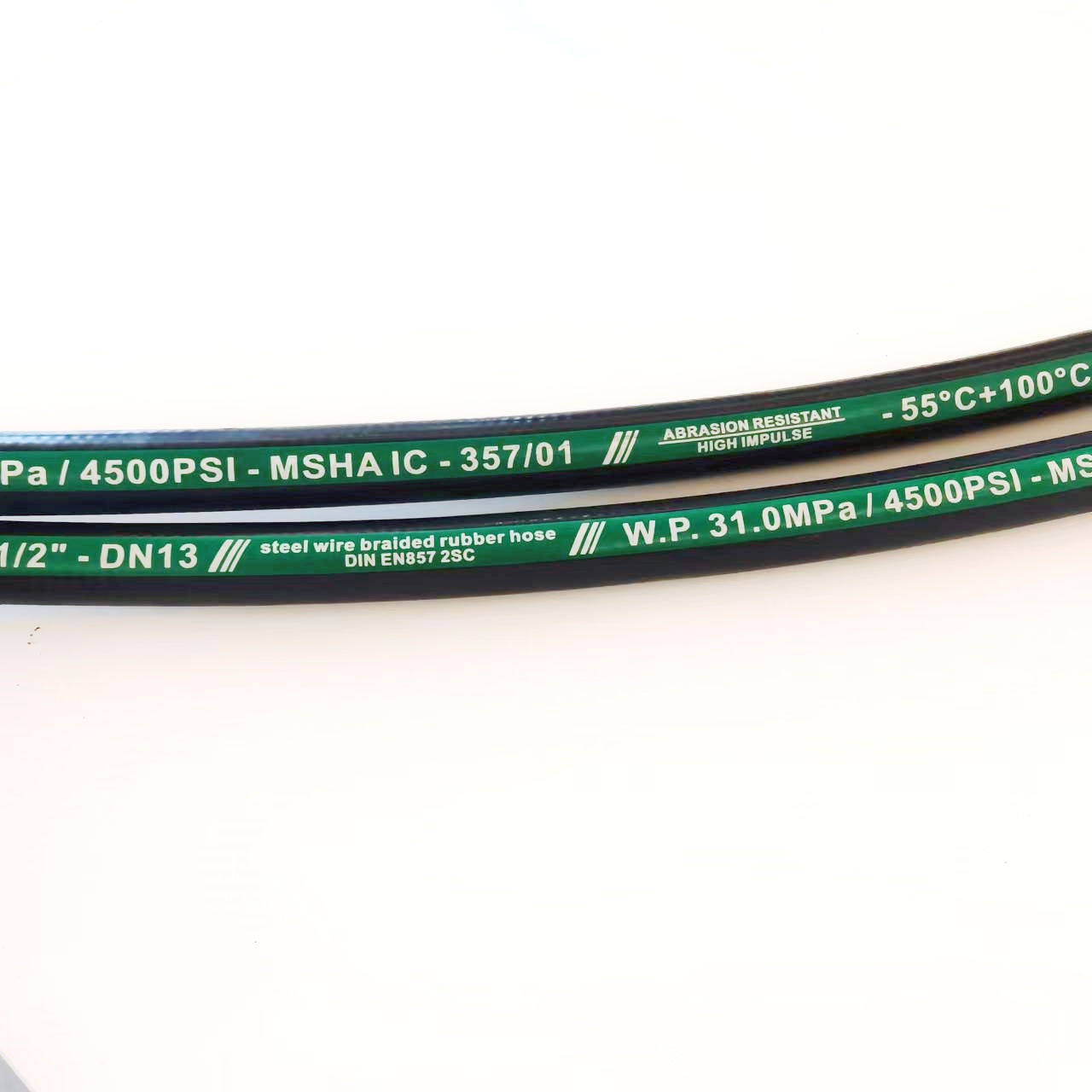
The construction of a black wire braid hydraulic hose fundamentally relies on three key material components: the inner tube, the reinforcement, and the outer cover. The inner tube is typically composed of synthetic rubbers selected for fluid compatibility. Common materials include Nitrile (NBR) for petroleum-based fluids, Ethylene Propylene Diene Monomer (EPDM) for phosphate ester fluids, and Fluorocarbon (FKM/Viton) for aggressive chemical environments. NBR offers good abrasion resistance and is cost-effective, but its temperature range is limited. EPDM exhibits excellent resistance to heat, ozone, and weathering but may swell in contact with petroleum oils. FKM provides superior chemical resistance and high-temperature performance but is considerably more expensive. The reinforcement layer, responsible for withstanding internal pressure, consists of one or more braids of high-strength steel wire. The wire gauge, braid angle (typically 55-70 degrees), and number of braids dictate the hose's pressure capacity. A higher braid count provides increased strength but reduces flexibility. The cover protects the reinforcement from corrosion, abrasion, and environmental degradation. Commonly used cover materials include Chloroprene (CR) offering good oil and weather resistance, and Polyurethane (PU) providing exceptional abrasion resistance. Manufacturing involves a multi-stage process: inner tube extrusion, reinforcement braiding, hose assembly, end termination (crimping or swaging), and quality control testing. Precise control of extrusion parameters – temperature, pressure, and screw speed – is critical to ensure consistent inner tube dimensions and material properties. Braid tension and coverage must be carefully monitored during the braiding process. End terminations require precise tooling and procedures to create a secure, leak-free seal. Non-destructive testing, such as pressure testing and dimensional inspection, is essential for verifying product integrity.
Performance & Engineering
The performance of a black wire braid hydraulic hose is dictated by a complex interplay of mechanical stresses and environmental factors. Burst pressure, working pressure, and impulse pressure are critical parameters. Burst pressure represents the maximum pressure the hose can withstand before failure, while working pressure is the recommended maximum operating pressure, typically 50-75% of the burst pressure. Impulse pressure refers to pressure fluctuations and spikes that occur during system operation. Hose flexibility is crucial for ease of installation and routing, especially in confined spaces. It's governed by the hose diameter, reinforcement structure, and cover material. Static and dynamic bending radii must be considered to prevent kinking and damage. Environmental resistance involves assessing the hose's ability to withstand exposure to temperature extremes, UV radiation, ozone, and various chemicals. Temperature range impacts the rubber compound's elasticity and performance. UV radiation can cause polymer degradation, leading to cracking and loss of strength. Chemical compatibility dictates the suitability of the inner tube material for the conveyed fluid. Force analysis, utilizing finite element analysis (FEA), can be employed to predict stress distribution within the hose under various loading conditions. Compliance requirements, such as those stipulated by SAE J517 and EN 853, mandate specific testing procedures and performance criteria. Proper hose routing, support, and protection are essential for maximizing service life and preventing premature failure. Vibration damping and shock absorption characteristics should also be considered in applications involving dynamic loads.
Technical Specifications
| Parameter | Unit | Specification (Typical) | Test Standard |
|---|---|---|---|
| Working Pressure | PSI | 2000-5000 | SAE J517 |
| Burst Pressure | PSI | 8000-20000 | SAE J517 |
| Inner Tube Material | - | NBR, EPDM, FKM | ASTM D2000 |
| Reinforcement | - | Steel Wire Braid (1-6 Layers) | SAE J517 |
| Cover Material | - | CR, PU | ASTM D2000 |
| Temperature Range | °F | -40 to 212 | SAE J517 |
Failure Mode & Maintenance
Black wire braid hydraulic hoses are susceptible to several failure modes, primarily stemming from fatigue, abrasion, chemical attack, and improper installation. Fatigue cracking, induced by cyclic pressure fluctuations and bending, is a common cause of failure, particularly in high-cycle applications. Cracks typically initiate at stress concentration points, such as at the hose ends or where the hose is bent sharply. Abrasion, caused by external contact with abrasive surfaces, can damage the cover, exposing the reinforcement to corrosion. Chemical attack occurs when the inner tube material is incompatible with the conveyed fluid, leading to swelling, softening, and eventual degradation. Improper installation, including incorrect end termination, excessive bending, and inadequate support, can significantly reduce hose life. Kinking can cause localized stress concentrations and lead to cracking. Maintenance involves regular visual inspection for signs of damage, such as cracks, abrasions, bulges, and leaks. Hose should be replaced if any signs of damage are detected. Periodic pressure testing can verify the hose's integrity. Proper storage is essential to prevent degradation. Hoses should be stored in a cool, dry, and dark environment, away from direct sunlight and ozone sources. Regular cleaning can remove contaminants and prevent abrasion. Implementing a preventative maintenance program, including scheduled inspections and replacements, is crucial for minimizing downtime and ensuring system reliability. Failure analysis, involving microscopic examination of fractured surfaces, can help identify the root cause of failure and prevent recurrence.
Industry FAQ
Q: What is the significance of the “dash size” designation in hydraulic hose specifications?
A: The dash size (e.g., -4, -6, -8) refers to the hose's inner diameter in sixteenths of an inch. A dash-8 hose has an inner diameter of 8/16 inch, or 0.5 inch. It is a crucial parameter for determining flow capacity and compatibility with fittings and other components. Selecting the correct dash size is vital to optimize system performance and prevent pressure drop.
Q: How does the number of wire braids affect the hose’s performance?
A: Increasing the number of wire braids directly increases the hose's pressure rating and burst strength. However, it also reduces flexibility. A single braid hose offers good flexibility for general applications, while multiple braids (e.g., 4 or 6) are used in high-pressure systems where strength is paramount. The optimal braid count is a trade-off between pressure capacity and flexibility.
Q: What are the key considerations when selecting a hose cover material?
A: The cover material should be chosen based on the operating environment and potential exposure to abrasion, chemicals, and weather. Chloroprene (CR) offers good all-around resistance, while Polyurethane (PU) provides superior abrasion resistance. If the hose will be exposed to harsh chemicals, a more specialized cover material, such as FKM, may be required.
Q: What is the role of proper hose end termination in ensuring reliability?
A: Correct end termination is critical for preventing leaks and ensuring the hose can withstand the full rated pressure. Improper crimping or swaging can lead to loosening, deformation, or failure of the end connection. Using the correct tooling and following manufacturer's specifications are essential.
Q: How does temperature affect the performance of a hydraulic hose?
A: Temperature extremes can significantly affect the hose's performance. High temperatures can cause the rubber compounds to soften and lose elasticity, reducing pressure capacity and increasing the risk of leaks. Low temperatures can make the rubber brittle and prone to cracking. Selecting a hose material with an appropriate temperature range for the application is essential.
Conclusion
Black wire braid hydraulic hoses represent a fundamental element in countless industrial and mobile hydraulic systems. Their performance is intrinsically linked to the interplay of material selection – impacting fluid compatibility and temperature resistance – meticulous manufacturing processes, and adherence to stringent industry standards. Understanding the nuances of hose construction, failure modes, and preventative maintenance is critical for maximizing operational efficiency and minimizing costly downtime.
Looking ahead, the demand for higher-performing, more durable, and environmentally sustainable hydraulic hoses will continue to drive innovation in materials science and manufacturing techniques. Development of novel rubber compounds, advanced reinforcement structures, and more efficient termination methods will be key to meeting the evolving needs of demanding applications. A proactive approach to hose management, incorporating regular inspections, preventative maintenance, and proper installation practices, remains the cornerstone of a reliable hydraulic system.