
Apr . 01, 2024 17:55 Back to list
oem black wire braid hydraulic hose factory Performance Analysis
Introduction
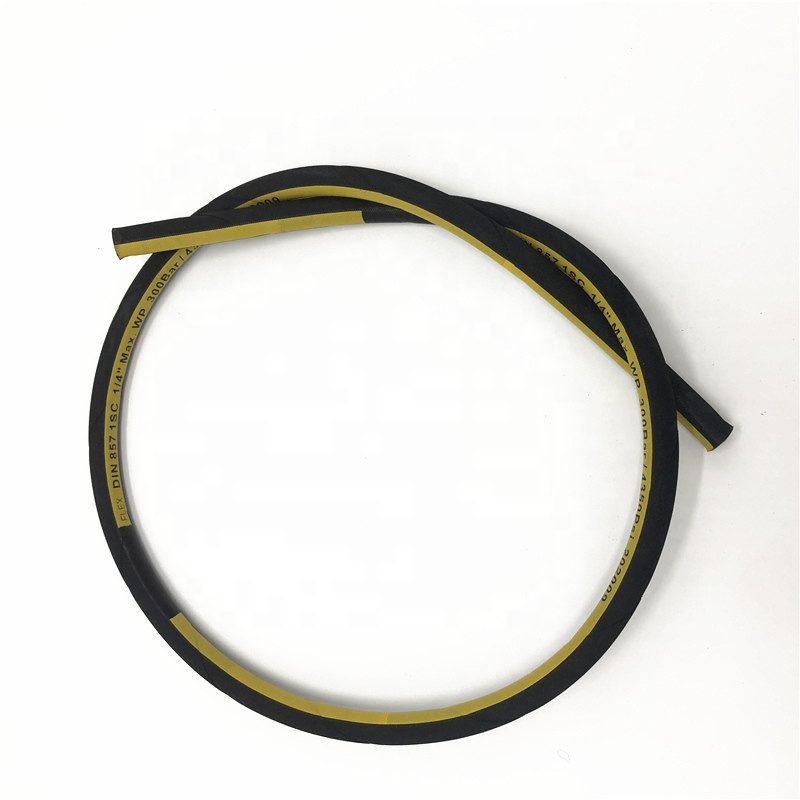
OEM black wire braid hydraulic hose represents a critical component in fluid power systems across diverse industries including construction, agriculture, manufacturing, and automotive. These hoses are engineered to reliably transmit hydraulic fluid under high pressure, facilitating the operation of heavy machinery and precision control systems. Their construction, utilizing multiple layers of reinforcement, distinguishes them from simpler hose types. This guide provides a comprehensive technical overview, detailing material science, manufacturing processes, performance characteristics, potential failure modes, and relevant industry standards. The primary functional requirement is to convey hydraulic fluid safely and efficiently while withstanding significant pressure, temperature fluctuations, and potential mechanical stresses. Core performance metrics revolve around burst pressure, working pressure, impulse pressure resistance, and fluid compatibility. Demand for these hoses is driven by the expansion of industries utilizing hydraulic systems, with a growing emphasis on durability, safety, and fluid resistance.
Material Science & Manufacturing
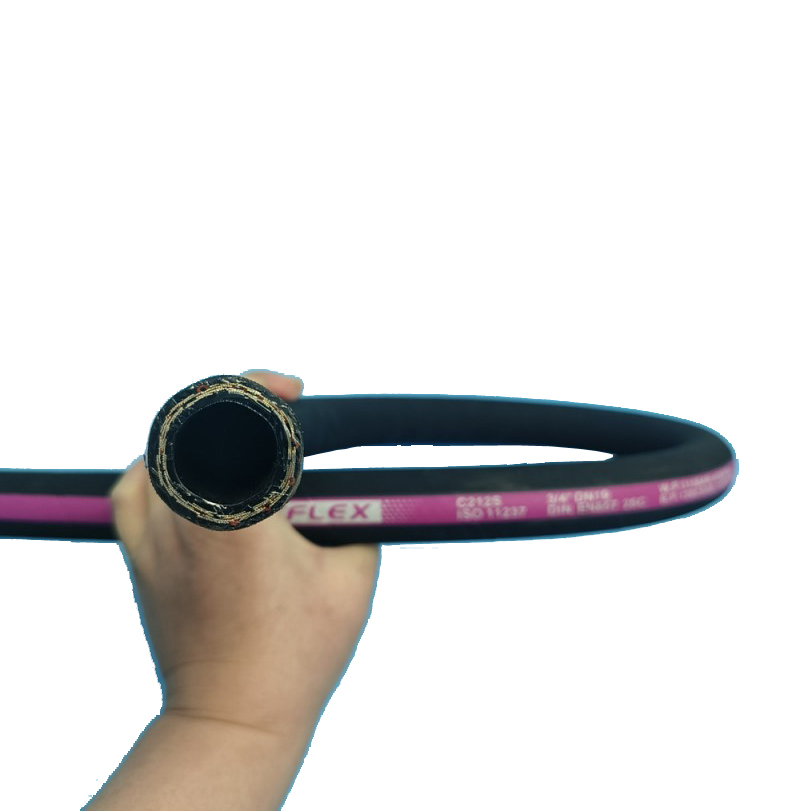
The core of a black wire braid hydraulic hose is typically constructed from an inner tube of synthetic rubber, commonly nitrile rubber (NBR) for oil-based hydraulic fluids, or fluoroelastomers (FKM) for aggressive fluids like phosphate esters. NBR offers good abrasion resistance and cost-effectiveness, while FKM provides superior temperature and chemical resistance. The reinforcement layer, critical to pressure handling, consists of one or more braids of high-strength steel wire. Wire diameter, braid angle, and the number of braids directly influence the hose’s pressure rating. An outer cover, generally composed of chloroprene rubber (CR) or polyurethane (PU), provides abrasion, weather, and ozone resistance.
Manufacturing involves several key stages. First, the inner tube is extruded through a die to achieve the desired dimensions. This extrusion process requires precise temperature control and consistent material feed to ensure uniform wall thickness. The steel wire braid is then applied over the inner tube, typically through a braiding machine that interlocks the wires to form a tight, flexible structure. This braiding process is crucial; inconsistent braid tension can lead to localized weak points. Following braiding, the outer cover is extruded over the reinforcement layer. Curing is the final step, involving vulcanization of the rubber compounds to achieve the desired elasticity, strength, and resistance to degradation. Precise control of curing time and temperature is paramount to achieving optimal material properties. Post-curing inspection includes pressure testing, dimensional checks, and visual inspection for defects.
Performance & Engineering
The performance of a wire braid hydraulic hose is fundamentally governed by its ability to withstand internal pressure without failure. This is quantified by burst pressure (the pressure at which the hose ruptures), working pressure (the maximum recommended operating pressure), and impulse pressure (the ability to withstand pressure surges). Force analysis involves calculating hoop stress in the hose wall, which is directly proportional to pressure and radius, and inversely proportional to wall thickness. Reinforcement layers significantly reduce this stress. Environmental resistance is crucial, as hoses are often exposed to extreme temperatures, UV radiation, and corrosive fluids. Material selection and compounding formulations are optimized to mitigate these effects.
Compliance requirements are stringent, dictated by standards like SAE J517 (hydraulic hose – construction and performance) and EN 853/857 (hydraulic hoses – steel wire reinforced). These standards specify testing procedures for pressure, temperature, impulse, and fluid compatibility. Functional implementation requires careful consideration of hose length, bend radius, and fitting compatibility. Exceeding the minimum bend radius can cause kinking and localized stress concentrations, leading to premature failure. Proper fitting selection and installation are also critical to prevent leaks and ensure a secure connection. The selection of the correct hose for a given application necessitates a thorough understanding of the operating conditions and fluid compatibility.
Technical Specifications
| Parameter | Unit | Typical Value (1/2" Hose) | Test Standard |
|---|---|---|---|
| Working Pressure | psi | 2220 | SAE J517 |
| Burst Pressure | psi | 6660 | SAE J517 |
| Impulse Pressure (100,000 cycles) | psi | 3000 | SAE J517 |
| Temperature Range | °F | -40 to +212 | SAE J517 |
| Inner Tube Material | - | NBR | ASTM D2000 |
| Reinforcement | - | 2 Wire Braid (Steel) | SAE J517 |
| Outer Cover Material | - | CR | ASTM D2000 |
Failure Mode & Maintenance
Common failure modes in wire braid hydraulic hoses include fatigue cracking (caused by repeated flexing and pressure cycling), burst failure (due to exceeding the working pressure), and leakage at fittings. Fatigue cracking typically initiates at localized stress concentrations, such as near braid terminations or at points of sharp bending. Delamination can occur between the rubber layers, leading to a loss of pressure containment. Degradation of the rubber compounds due to exposure to ozone, UV radiation, or incompatible fluids can also contribute to failure. Oxidation of the steel wire reinforcement can reduce its strength and flexibility.
Preventative maintenance is crucial to extending hose life. Regular visual inspections should be conducted to identify cracks, abrasions, bulges, or leaks. Hoses should be replaced if any signs of damage are detected. Proper routing and support are essential to minimize stress and prevent abrasion. Avoid sharp bends and ensure adequate clearance from moving parts. Fluid contamination can accelerate degradation, so regular fluid filtration is recommended. When replacing hoses, always use compatible fittings and ensure proper installation torque. Implementing a scheduled replacement program based on operating hours or calendar time can further reduce the risk of unexpected failures.
Industry FAQ
Q: What is the significance of the wire braid angle in a hydraulic hose?
A: The wire braid angle profoundly impacts the hose’s pressure rating and flexibility. A steeper braid angle provides higher pressure resistance, as the wires are more effectively loaded in tension. However, a steeper angle reduces flexibility, making the hose more difficult to route in confined spaces. Conversely, a shallower angle increases flexibility but reduces pressure capability. Optimizing the braid angle involves a trade-off between these two factors, tailored to the specific application requirements.
Q: How does fluid compatibility affect hose selection?
A: Fluid compatibility is paramount. Using a hose with an incompatible inner tube material can lead to swelling, softening, or degradation of the rubber, resulting in premature failure and potential leaks. For example, standard NBR hoses are not suitable for phosphate ester fluids, which require FKM or other specialized materials. A detailed compatibility chart should be consulted to ensure the hose material is resistant to the specific hydraulic fluid being used.
Q: What are the best practices for preventing hose kinking?
A: Kinking occurs when the hose is bent beyond its minimum bend radius, causing internal damage and restricting fluid flow. To prevent kinking, adhere to the manufacturer's specified minimum bend radius. Proper hose routing and support are crucial, ensuring the hose is not subjected to excessive bending or twisting. Use hose guards or sleeves to protect the hose from abrasion and external forces that could cause bending.
Q: How important is proper fitting installation, and what are common mistakes?
A: Proper fitting installation is critical for ensuring a leak-free and reliable connection. Common mistakes include over-tightening (which can damage the hose or fitting) and under-tightening (which can lead to leaks). Always use a calibrated torque wrench and follow the manufacturer’s recommended torque specifications. Ensure the fitting is clean and free of debris before installation. Using incorrect fitting types or sizes can also lead to failure.
Q: What is the role of impulse pressure testing, and why is it important?
A: Impulse pressure testing simulates the effects of pressure surges or pulsations that can occur in hydraulic systems. These surges can exert significant stress on the hose, potentially leading to fatigue failure. The test involves subjecting the hose to repeated cycles of high-pressure pulses. Passing this test demonstrates the hose’s ability to withstand dynamic loading and ensures long-term reliability in applications with pulsating flows.
Conclusion
OEM black wire braid hydraulic hoses are engineered components demanding careful material selection, precise manufacturing control, and meticulous attention to application-specific requirements. The interplay between inner tube material, reinforcement braid configuration, and outer cover properties dictates the hose’s performance characteristics, including pressure rating, temperature resistance, and fluid compatibility. Understanding potential failure modes – encompassing fatigue, burst, and degradation – is essential for implementing effective preventative maintenance strategies and ensuring operational safety.
The continued evolution of hydraulic technology necessitates ongoing advancements in hose design and materials. Future trends include the development of lighter-weight hoses with enhanced flexibility, improved chemical resistance, and integrated sensor capabilities for real-time monitoring of hose condition. Adherence to relevant international standards, such as SAE J517 and EN 853/857, remains paramount for ensuring quality, reliability, and interchangeability within the global hydraulic systems market.